2013 grand prize winner

Inviting you into the Sea House Pavilion, in a magic carpet way

Inviting you for tea or cocktails at the Sea House Pavilion, via magic carpet

Having the Sea House Pavilion win the Grand Prize award in HBS’s 2013 Creatin’ Contest feels like this pic: dreamy, delightful, unbelievable. Completely unexpected. Truly an honor.
Come sit down

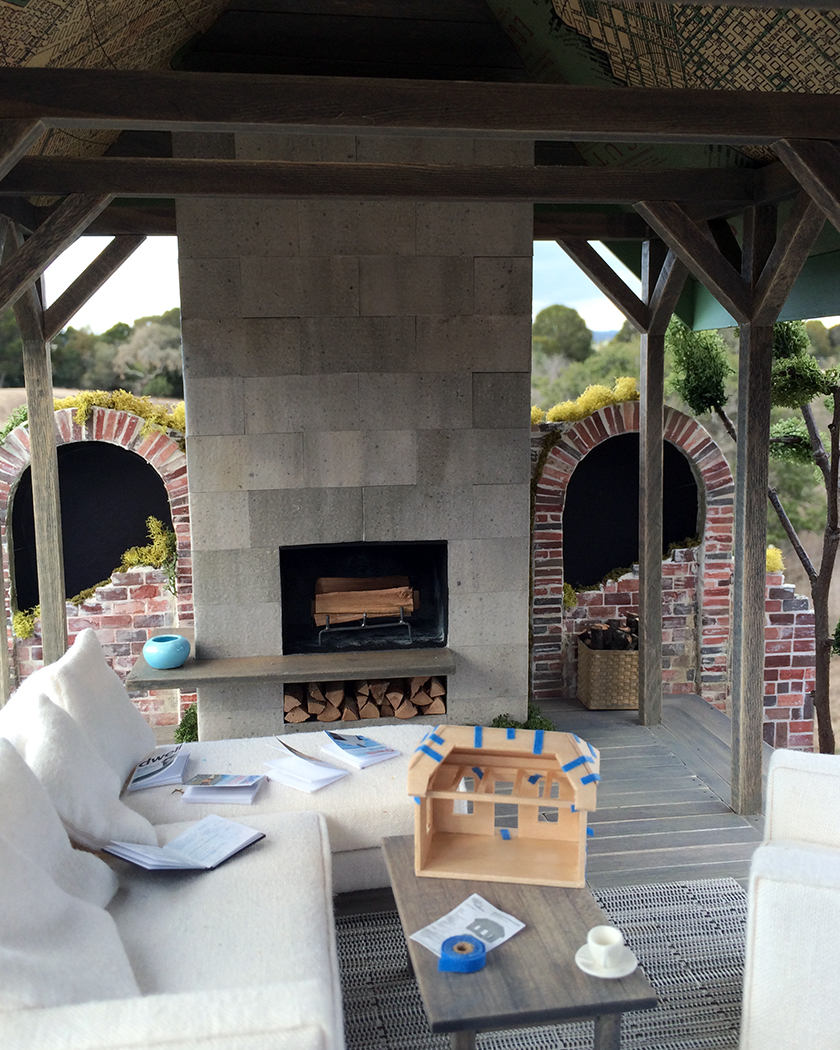
Come sit down and hang out

And it has afforded me the opportunity to learn to spell pavilion correctly (I still keep wanting it to have two Ls).

I mentioned in an earlier post that I made a tiny version of my notebook, open to some of my first sketches done in April 2013 (seen above, on the couch).

Computer, enhance.

Some of my sketches and notes for the Charming Cottage

Some of my sketches and notes for the Charming Cottage

I spent most of last year getting our house in Rhode Island ready to sell, then packing it up and driving across the United States in a 31-foot motor home with my husband, our very large dog and two disgruntled cats, to return to Northern California, where I am from. (We shipped all our stuff, except the guitars.) The starting kit Charming Cottage in blue tape dry fit was as far as I had gotten before the move until Mid-September, when I was able to unpack my studio, try to decipher my notes and begin to build in earnest.

I worked on it nights, weekends, holidays and vacations right up to the deadline. I was so happy when I learned we could make a digital contest submission this year.

SH_Pavilion_side

The sun is starting to set. Might we get some rain?

The Sea House Pavilion is part of a compound in coastal Northern California, in the same town where Loft No. 1961 is, my first-ever build and a First-time Entrants’ Award winner in the 2012 HBS contest. More about that later :)

Enge_Loft_003

Loft No. 1961, the studio of a woman writing a book about her father’s death
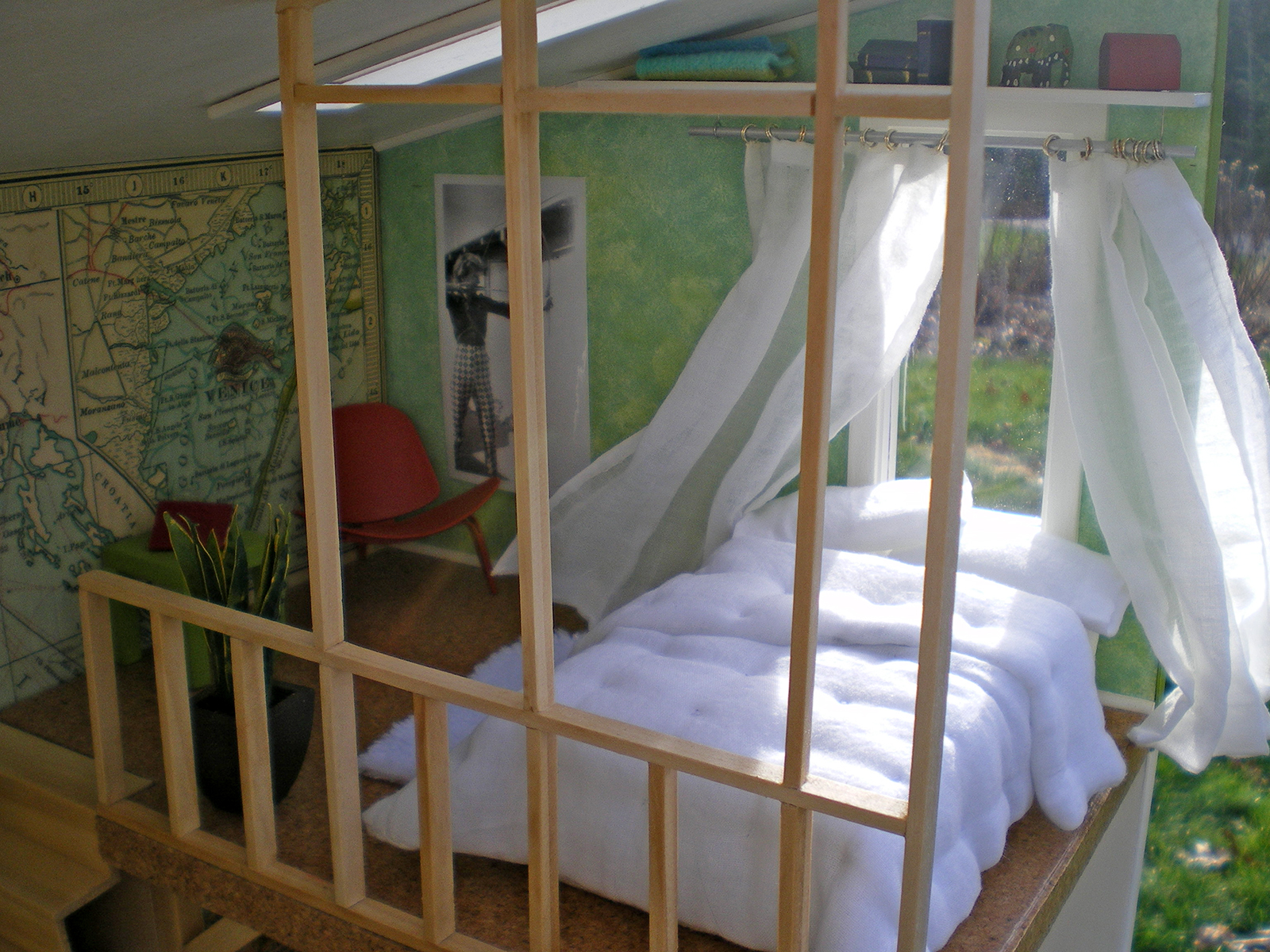
The loft bed where she can sleep when she’s worked late

The loft bed where the writer can sleep to dream

You might notice some themes that seem to carry through my builds :)

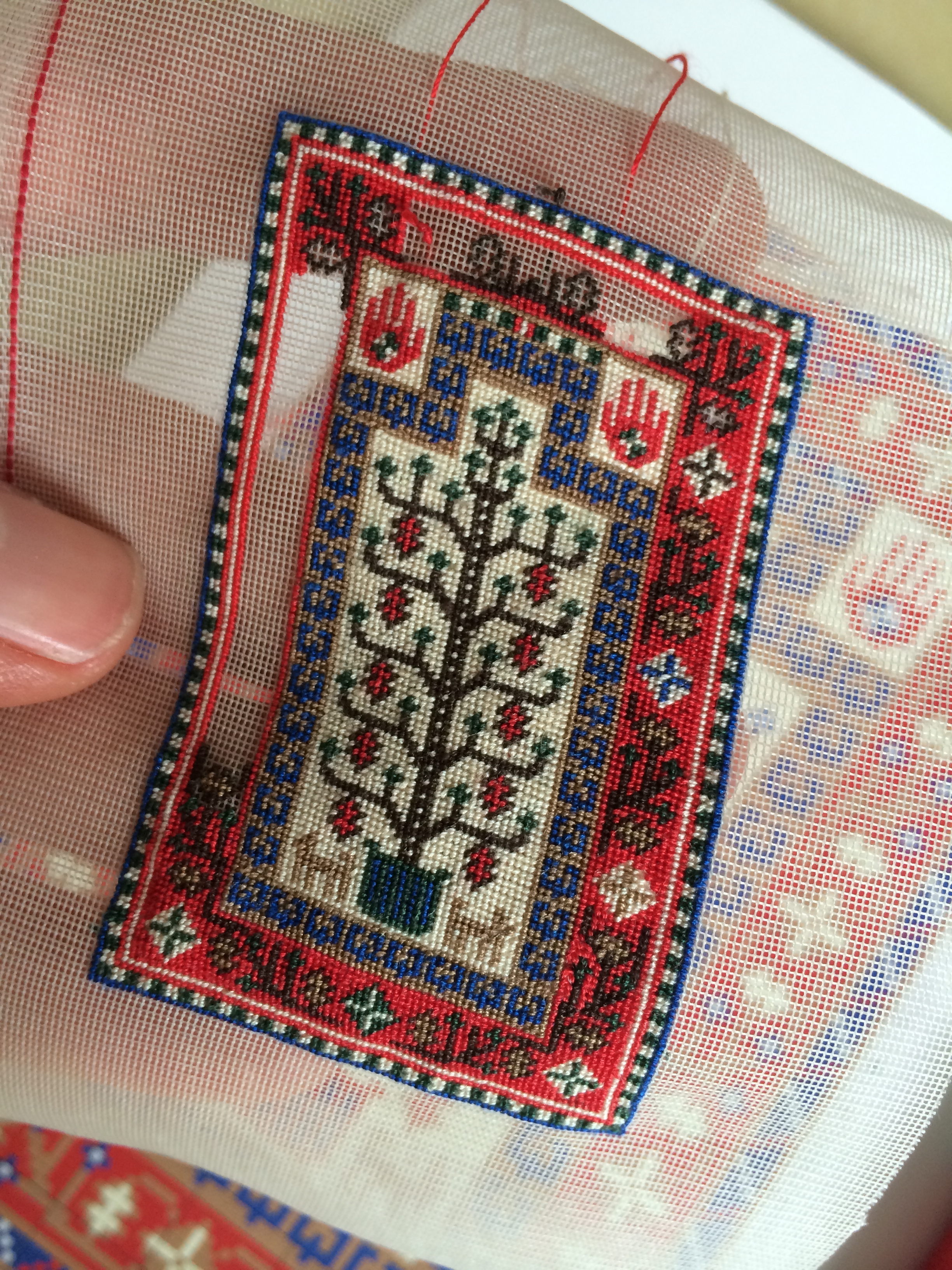
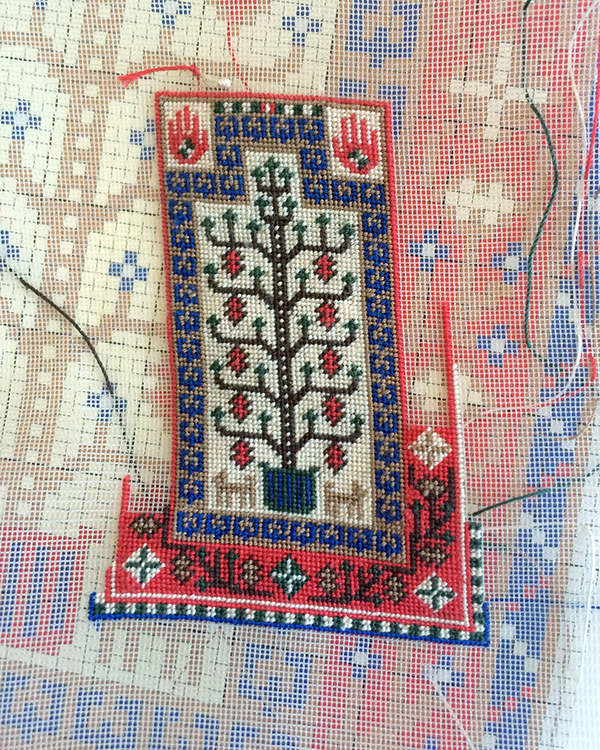
Tiny Baluchi prayer rug: finished

Baluchi miniature rug

Finished stitching the tiny Baluchi prayer rug. Because I worked without a hoop, it was way skewed.

Blocking the tiny Baluchi prayer rug

Beginning blocking the tiny Baluchi prayer rug

I gently washed it with mild soap in warmish water, blotted out excess moisture on a microfiber towel, then pinned it to a piece of foamcore covered in cotton batting and old soft cotton sheeting, gently stretching and re-pinning it into square. Then waited impatiently for it to dry.

I trimmed the excess silk gauze to 3/8 inch and folded to the back, mitering the corners.

Binding the edges, with scary dinosaur fingers

Binding the edges, with scary dinosaur fingers

Using a doubled length of blue Gütermann silk (the outermost color in the border), I stitched through both layers, from back to front, with a few extra stitches in the corners to square them out. I cut a piece of Pellon featherweight fusible interfacing a bit smaller than the rug, and ironed it on the back. This both protects the gauze and stitching, and ensures that the rug lays flat. (And hides a less-than-elegant backside if you’re a novice needlepointilist like me :)

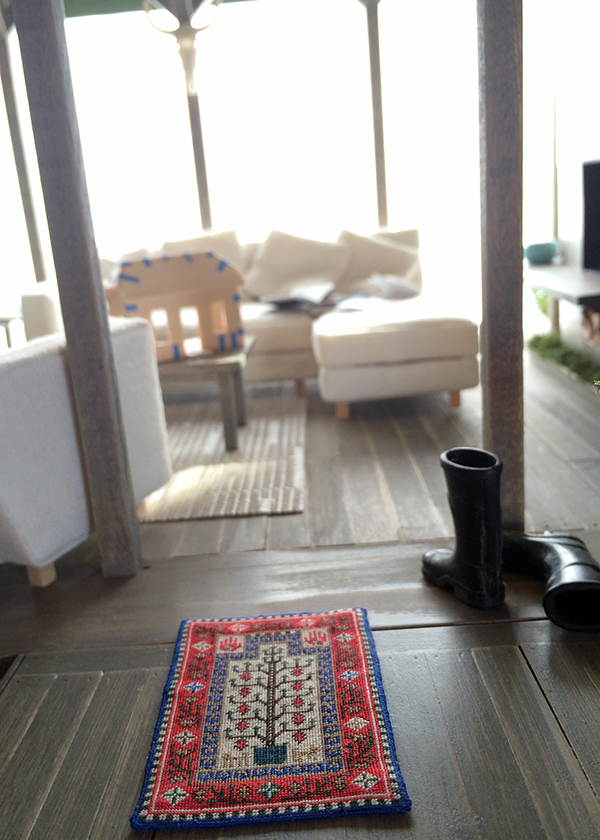
Inviting you into the Sea House Pavilion, in a magic carpet way

Inviting you into the Sea House Pavilion, in a magic carpet way

Not sure where it might ultimately reside, but I really enjoyed making it. As I mentioned in the first post, it’s stitched on 49-count silk gauze with six colors of Gütermann silk, with a stitch count of 81 x 126, adapted from a design by Meik and Ian McNaughton. Finished size is 1.5 x 2.5 inches (38 x 64 mm).

Now I can get back to the Animals rug!

the great green room: a little toyhouse

v2, next morning

v2, next morning

I scored and cut out the revised pattern, reversed this time so the joining seam would be on the far side. Later I realized I could have reconfigured it slightly more so that the joining seam would be on the back of the far side, and not visible at all. Dammit and oh well.

Handheld dry fit

Handheld dry fit

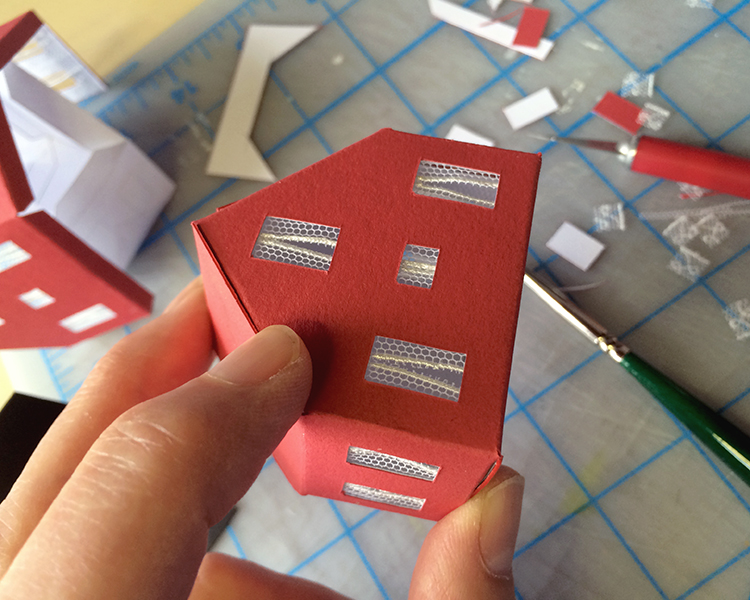
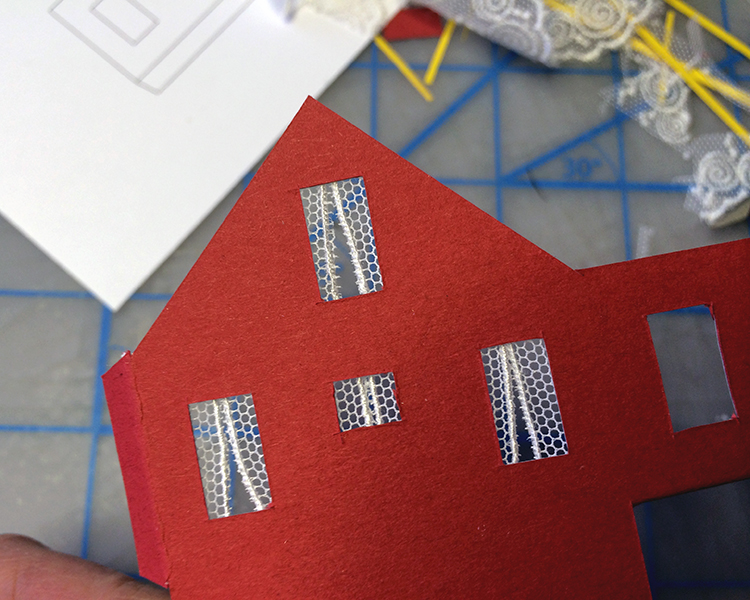
I ran a red marker on the cut edges to cover the white paper, from the white side so that if my hand slipped, I wouldn’t scribble on the red cardstock. (Lesson learned from v1.) The addition of roof flaps made it far more stable. I had exactly enough lace left to make the new curtains. The interior is left white to reduce contrast with the curtains, because after all, it is unfurnished :)

A little toy house

A little toyhouse in the great green room

For the door, I duplexed black and red cardstock so that the black made an outline. The porch is 1/16-inch basswood covered in yellow cardstock and edged with green Sharpie marker. On the back wall of the house, I punched three holes for the lights. The roof is still unglued to allow access; I’ll attach the chimney after that’s done. I’ll drill a hole in the foamcore wall for the wiring, but for now I want to keep the walls movable.

Lights

Lights on!

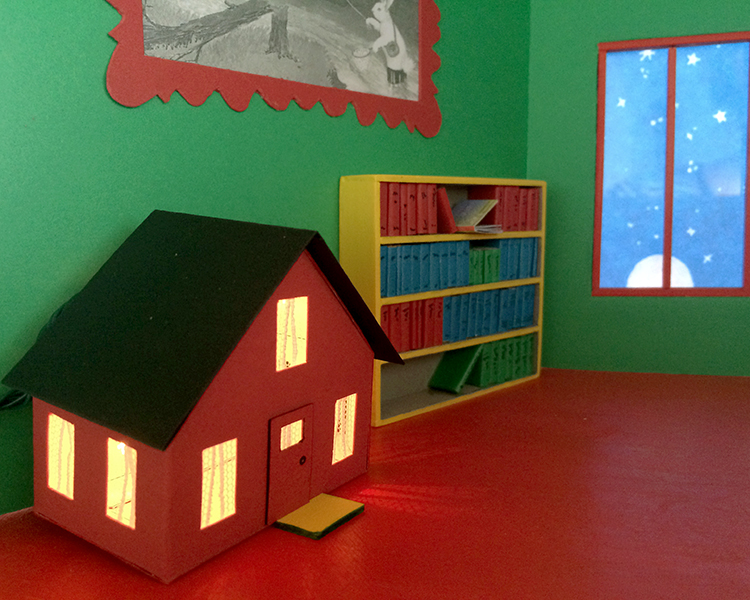
And here it is illuminated. I like the shadows cast by the net curtains. Very cheerful, yes?

the great green room: a little toyhouse

little toyhouse mockup

The little toyhouse mockup

After working out the basic size of the little toyhouse, I started drawing construction plans in Illustrator. I decided to use cardstock because I think I can cut the tiny windows more square and more easily than I can in wood. After spray mounting a print out to the card, I scored and then cut out the pattern.

Mr. Hurd drew the little toyhouse in the great green room like this:

Clement Hurd’s illustration of the little toyhouse

Clement Hurd’s illustration of the little toyhouse

Next step was to mess about with the window treatments.

Curtain decisions

Curtain decisions

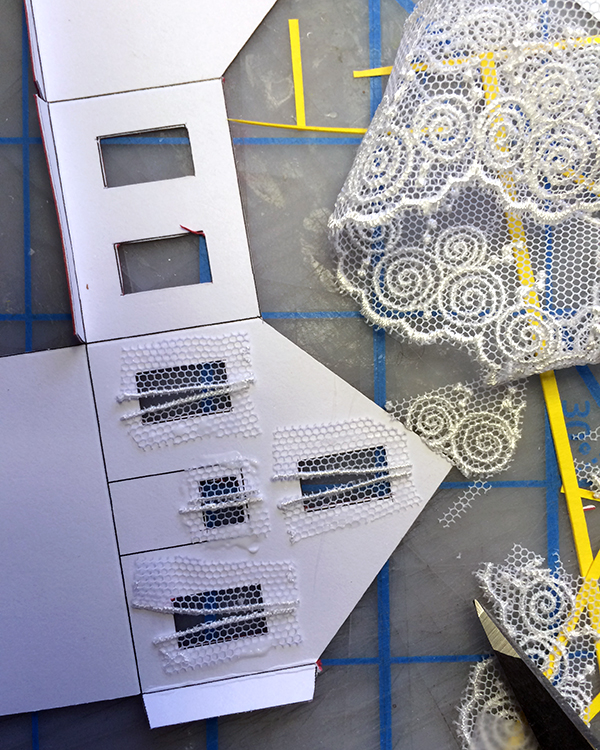
I considered yellow acetate with Sharpie line drawings (most accurate), but since the little toyhouse will be illuminated, I decided that the yellow = light, and moved on to contemplate the mullions, transoms and curtains as literal things. I tried cut yellow cardstock for the woodwork, but to achieve the proper scale was stupid hard. Such a difference between 2 and 3 dimensions. I then moved into the interpretive realm, and worked with a beautiful length of lace to suggest both.

Interpreted curtains

Interpreted curtains

I am happy with my eventual solution, even though I cut away most of the “beauty” of the lace. It suggests mullions and transoms, and light lacy curtains, in an uncomplicated way that works with Mr. Hurd’s style.

Little toyhouse problem solving

Little toyhouse problem solving

I was hoping my first real model would work, but there were a number of structural errors and builder flubs that eventually disavowed me of that notion. I made notes and revised my drawing, then poured a glass of wine :)

I’ll begin again fresh in the morning.

the great green room: curtain fabric

Good Night Moon curtain fabric

I replicated the curtain fabric for the Great Green Room

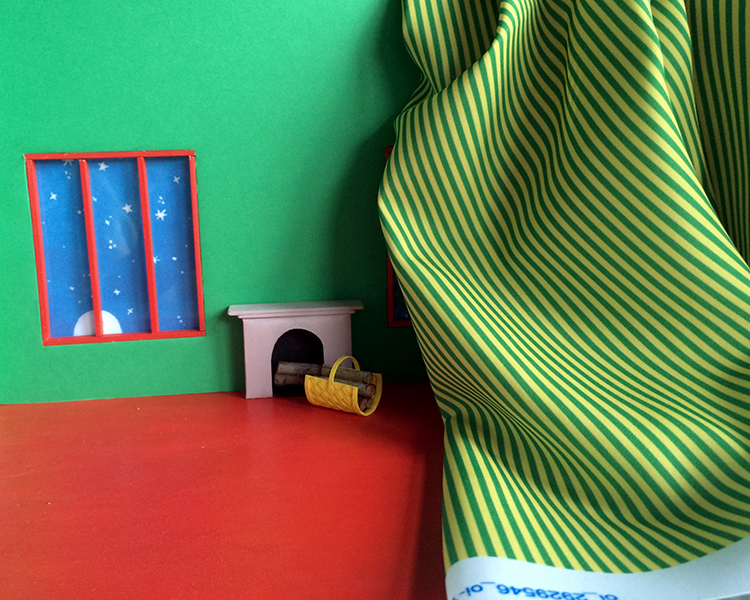
Very pleased with the way the curtain fabric for The Great Green Room turned out. I “designed” it in Illustrator and matched PMS colors, then learned Spoonflower uses RGB hex colors — a simple conversion. They print on a dozen different fabrics; I chose their Silky Faille for weight, drape and brightness. I’ll do a test with the pins-and-hairspray method of curtain construction to see if it discolors the fabric at all.

Being able to custom print fabric (and wallpaper!) is a significant opportunity for miniature builders. Many ideas swirling around my drafty little design brain. Check Spoonflower out!

the bookcase

Goodnight Moon bookcase

An RGB library

Since they’ll never be taken out and opened, I made cheater books to fill the bookcase from 1/8- and 1/16-inch wood, covered in paper. I thought of printing actual titles of my imagined bunny child’s library, but opted to mimic Mr. Hurd’s style. (When in doubt, I ask WWCHD?)

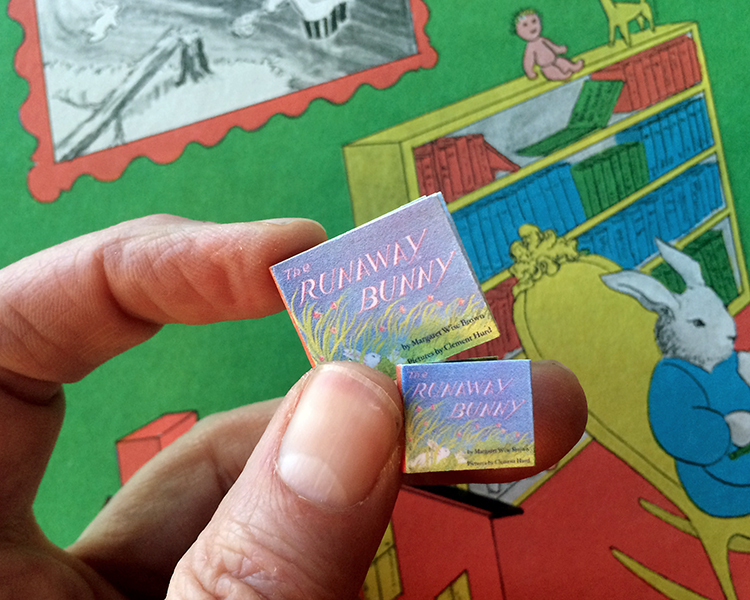
The copy of The Runaway Bunny, however, I decided to do “real”. I had to make an even smaller version from my first attempt to fit the bookcase, just a half-inch tall.

A wee and more wee “Runaway Bunny”

A wee and more wee “Runaway Bunny”.  Also really scary sandworm fingers.

For the painting on the wall, I used the art (converted to grayscale) from The Runaway Bunny, “If you become a fish in a trout stream, said his mother, “I will become a fisherman and I will fish for you.”

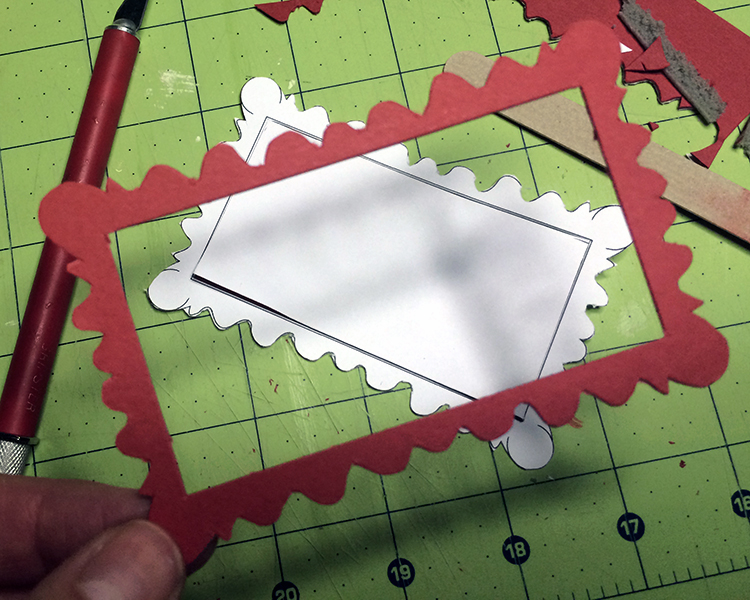
The frame is hand-drawn and cut from a double thickness of cardstock. I tried to trace Mr. Hurd’s picture in both Illustrator and Photoshop, correcting for perspective and whatever, but found my sketching hand was more clever than technology in reproducing a workable likeness. Refreshing!

Great green room picture frame

Pretty sure I want to make a full size frame that looks like this.

Goodnight Moon great green room

Furnishing the great green room

Think I’ll work on the little house next.

a basket of logs

great green room logholder

I have “interpreted” the log basket

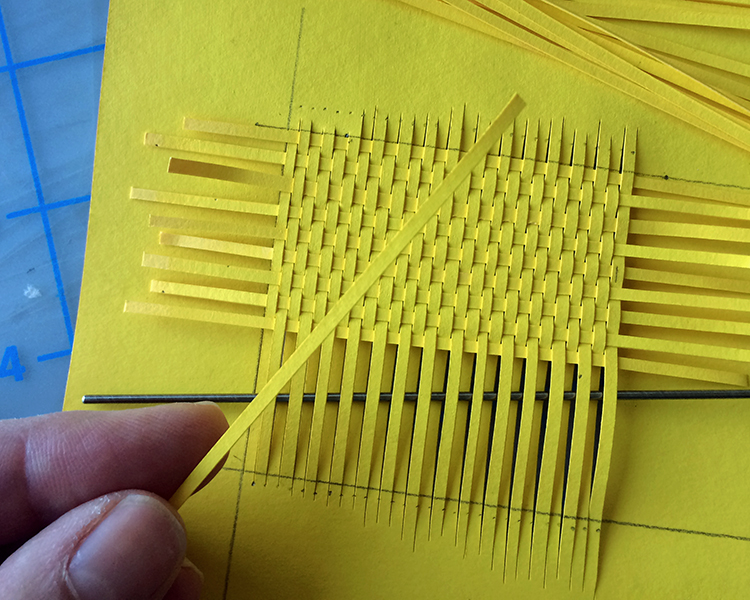
How to make a three-dimensional object from a painting and remain true to its 2D styling? For the basket of logs, I decided to go woven paper and real logs. After painting cardstock with the match yellow acrylic, I wove half-pica wide strips, then cut out the basket shape on the diagonal. (Yes, I switch measurement systems willy-nilly. Wood is almost always in inches, but my long years of graphic designery allows me to think and see in picas. It’s basically base 12, and very handy in 1:12 scale noodling.)

great green roon Goodnight Moon logholder

I wasn’t going to tell you these are half-pica (6 points) wide strips of painted cardstock

There are two other divergences from Mr. Hurd’s illustration: I stabilized the basket with an edging, and currently there are five logs in it.

O_O

I just liked the way it looked better. I toyed with the idea that five logs in the basket makes sense as the prequel to the great green room as famously pictured… I will probably go back to three logs.

Goodnight Moon log holder

Before the fire has been lit, so *of course* there are five logs in the basket

We’ll slide more down the slippery slope of logic and time as the build progresses.

new build: the great green room

Goodnight Moon great green room

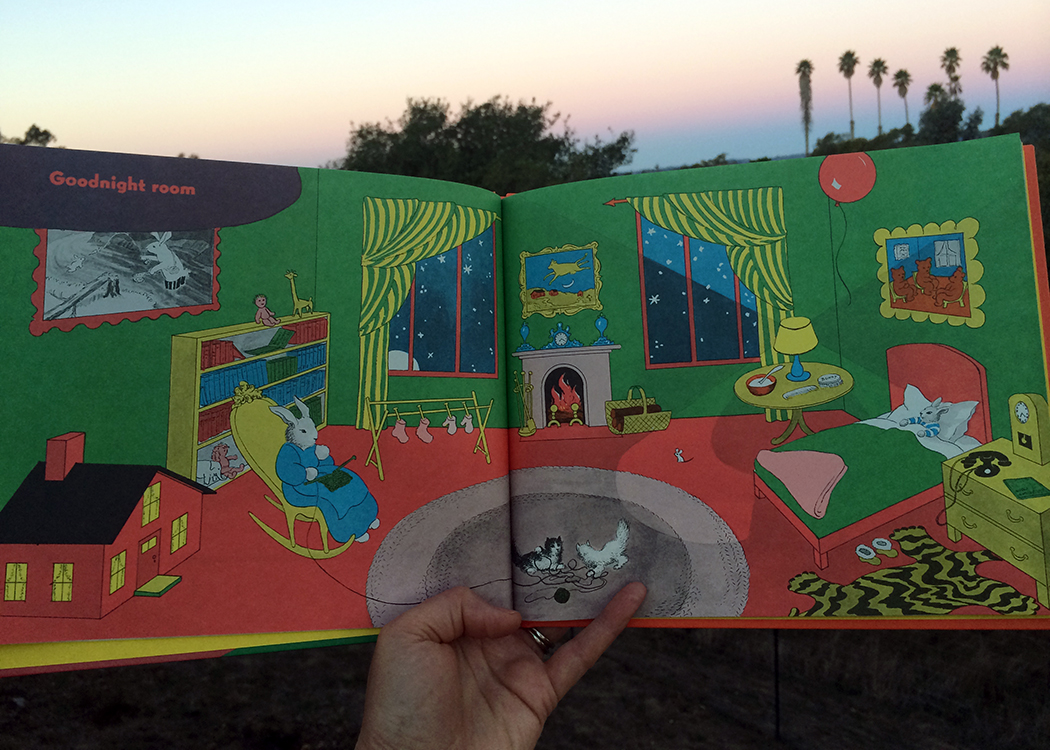
The great green room in “Goodnight Moon” by Margaret Wise Brown, with pictures by Clement Hurd

Goodnight Moon captivates baby Madeline as much as it did her mother, so for Maddie’s first birthday I’m building a roombox of the great green room. Here’s a picture (taken at dawn, actually) to mark when the idea came to me — and to show those of you unfamiliar with great modern literature and art — what the great green room looks like.

One of the notable features of Clement Hurd’s pictures is his use of flat, vibrant color. After several color studies, turns out it’s pretty much kelly green, vermillion and bright yellow. The how of the colors — whether to use paint or paper or polymer clay — is a figure-out-as-I-go-along. Similarly, what will be crafted from cardstock, built of wood and painted or modeled in clay. I am printing custom fabric for the curtains at Spoonflower. I briefly considered trying to 3D print some of the objéts, but there’s not enough time for me to learn the technology before her March birthday. (It has prompted me to enroll in a 3D class at Skillshare, though :)

For the walls, built of foamcore for lightness, I chose cardstock to cover, but I painted the floor.

great green room floor

Vermillion

great green room building

Many color and materials decisions were made.

Windows are trimmed in painted 3/16 x 1/8-inch basswood. I edited the views of starry night sky in Photoshop and taped them behind the plexiglass, temporarily for now.

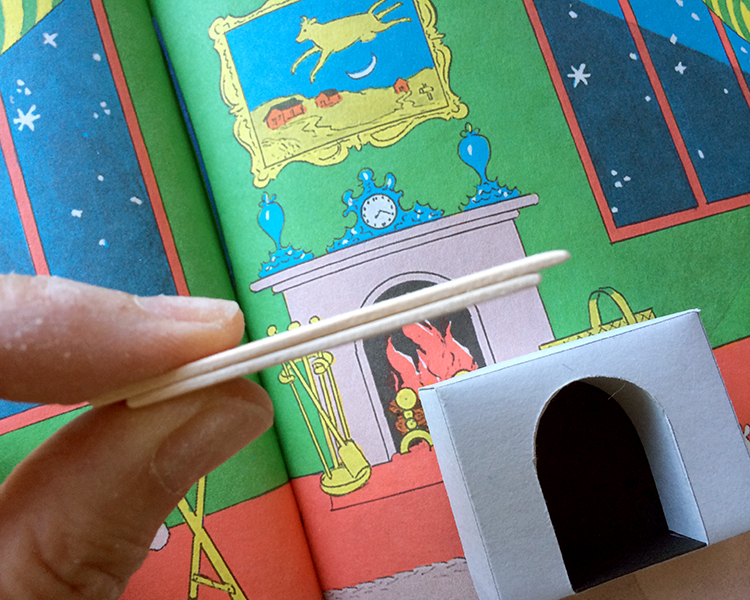
The fireplace is built from cardstock, with a wood mantle. The fire will be illuminated.

ggr_fireplace_02

ggr_fireplace_mantle

Here you can see my sawdusty fingers holding the mantle cut from 1/16 x 1/2-inch basswood. I matched the pinky-gray color and painted the assembly with acrylic paint.

Goodnight moon roombox build

The great green room before the Bunny family moved in

You can see in the window trim gaps how not-90° I cut the foamcore, *cringe* but the curtains will (mostly) hide that imperfection.

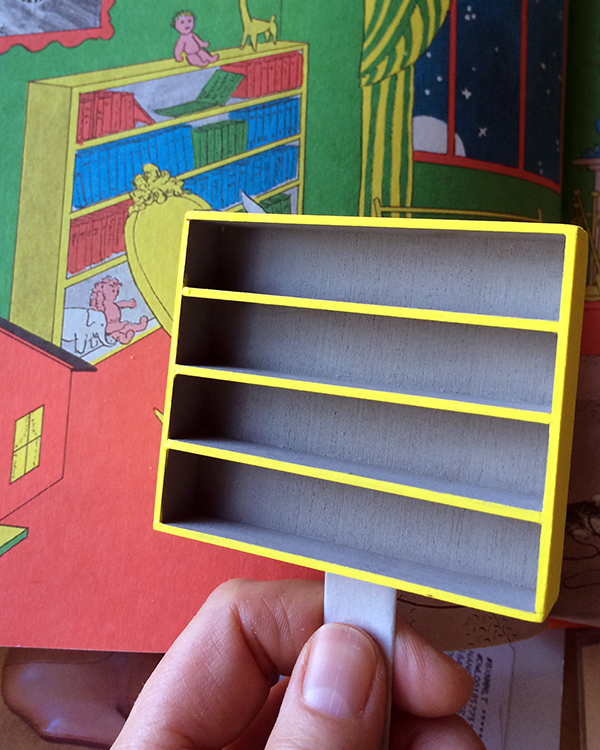
Next is the bookcase, built of 1/16 x 1/2-inch basswood. When I was matching the yellow to paint, I noticed that the inside of the case is gray. What a curious detail. But hey, true to the great green room as painted by Mr. Hurd am I.

First coat of paint(s)

First coat of paint(s)