Sea House Warming Hut: How does your rooftop grow?

www.nancyland.com

The rooftop perimeter is established, and I’m still considering what, if anything, the interior might contain as a “feature”. Miniamalist me thinks more of the same: low-growing poppies, random clumps of wild grass (from Woodland Scenics www.scenearama.com), dried thyme clumps, the odd cut-silk succulent nestled in amongst the preserved moss.

Mosaicist me is visualizing the Sea House logo done in tiny granite tiles, for the pinpointing of passing pilots, while Gratuitous Decorator me thinks a simple checkerboard of square pavers might add some flair.

As for the California poppies, I’ve made 31 so far. Maybe 200 more to go?! I’ve graduated from the lovely, convenient kit to crafting from scratch, using crepe paper for the petals and 30-guage thread-wrapped bead wire for the stems (what I had on hand). At first I painted the paper with watercolor, but finally arrived at *blush* using Sharpie markers as a best solution.

www.nancyland.com

I punch 3/16-inch (5mm) circles from ivory crepe, then dab colors on the four petals that make each poppy. The centers are made from a thin strip of printer paper colored yellow, snipped into a very fine fringe and rolled around the top of the stem wire. These four Sharpies are giving me all the tints I need, as they saturate and bleed on the crepe paper and thread-wrapped wire beautifully. Who knew?

Sea House Warming Hut: The Living Roof grows

www.nancyland.com

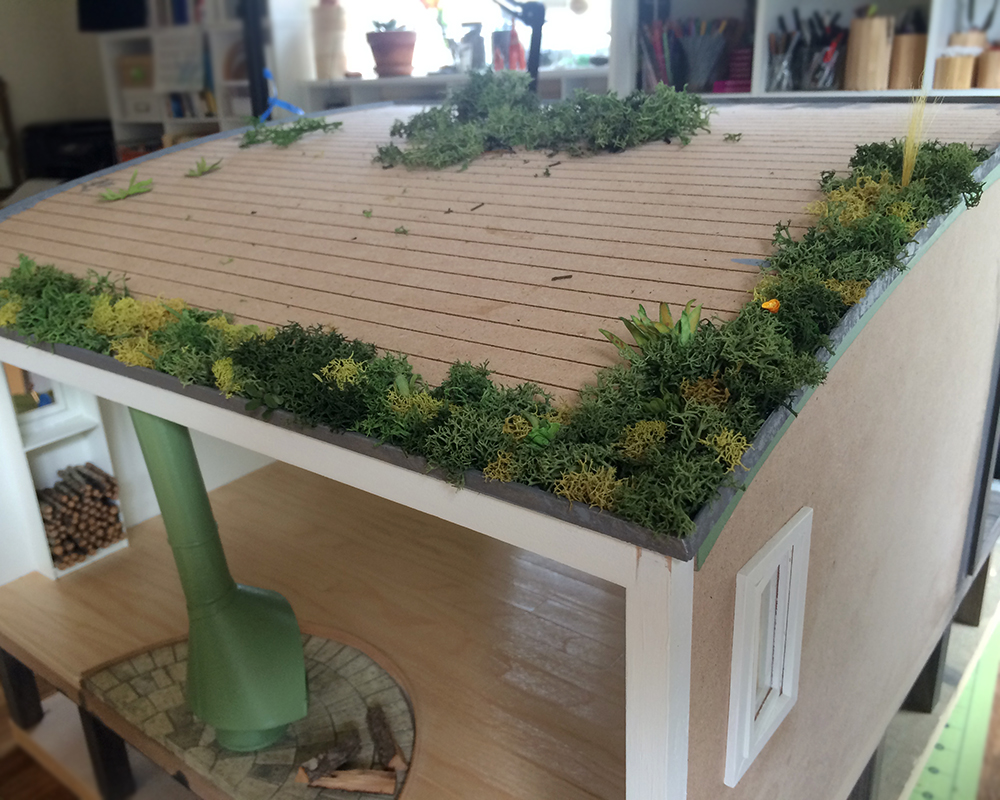
Preserved moss, painted cut silk succulents, a paper poppy, real thyme sprigs. Oh, and maybe a few tufts of dried grass. A lot of glue. Moss is sproingy.

www.nancyland.com

My palette of watercolors.

www.nancyland.com

Wee dotted faux succulent-type plant form. Still fooling around.

I seem to have used up most of my “good” moss clumps foliating the trees and bushes of the Sea House Pavilion, leaving mostly weird stems and sad tendrils. Not ideal for this roof.

Yay for 40% discount coupons at Michael’s.

Sea House Warming Hut: Living Roof

www.nancyland.com Moving on to the living roof top, whilst I mull over the rocks. I built a quarter-inch (6.4mm) tall surround and glued it to the roof edges, so it sticks up about an eighth of an inch (3mm) and forms a perimeter. (At first I made it a half-inch tall, but it looked out of scale somehow.) This I painted with a slate grey acrylic, and while still wet, brushed on a darker neutral grey. I stippled metallic silver with a fine 00 dry brush over all, to give it a galvanized look. It blends well with the weathered grey siding (not shown :)

I’m pulling off little clumps of preserved moss in a few different shades, and pressing them into tacky glue. I want to keep the over all profile fairly low, as befits an exposed, windswept rooftop. I thought about “planting” in a pattern, perhaps even rendering the S and H of the Sea House logo, Sea House Warming Hut nancyland.com but am undecided. I’m not really a fan of formal gardens or parterre. Working around the edges of the roof to start keeps my options open. I do want to build a tiny weather station — or at least one of those cup thingies that spin around — and extend the stove pipe up with some sort of bracing and cap. And poppies, growing low among the other plantings, happy little dots of native color.

Meanwhile I just read how Pat and Noel Thomas used dried thyme plants to landscape some of their wondrous builds, and I’ve been curious if lavender leaves will preserve well, so I ordered some silica gel to experiment with. I’ll keep you apprised :)

Sea House Warming Hut: Ferns and Rocks

www.nancyland.com

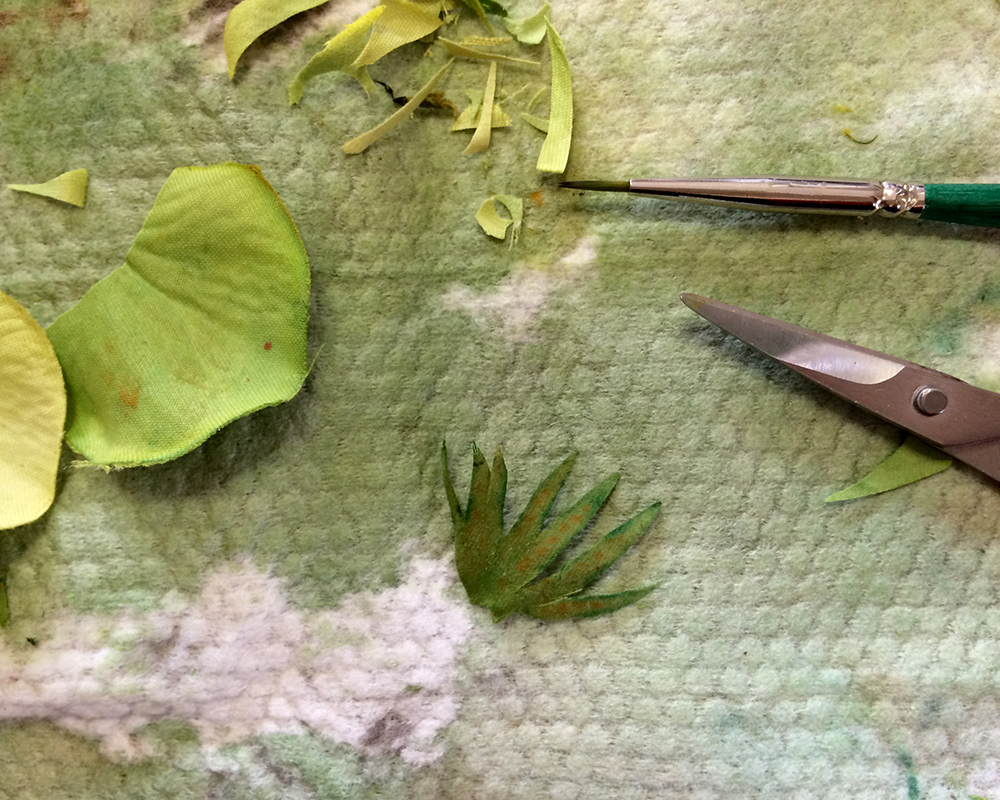
Constructed a pair of wee potted ferns with the laser-cut leaf set from The Miniature Garden (made by Jeannetta Kendall) that I had painted last week. These are in scant half-inch (12 mm) clay pots, topped with a very fine Earl Grey tea :) The root structure is formed with torn pieces of thin rice paper, bundling groups of two or three fronds. The one on the right is still drying before I can shape it.

Then there were the rocks.

www.nancyland.com

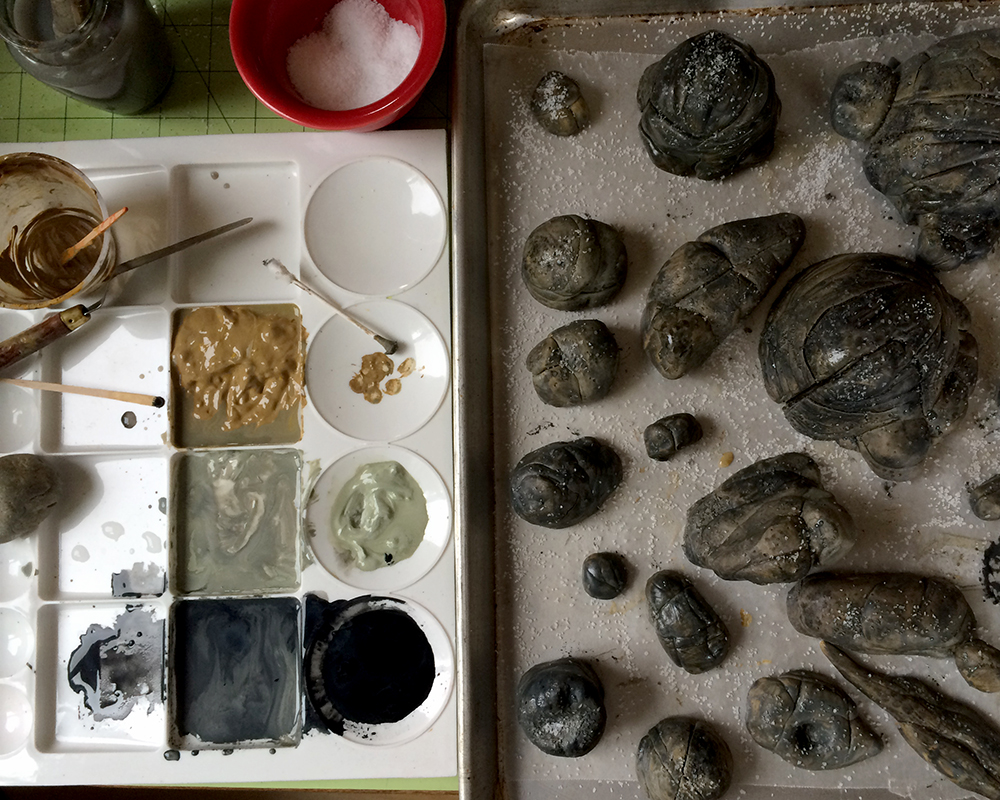
Here you can see my palette of washes. I painted in successive layers, with the darkest last, knowing I would rub most of it off. I had high hopes for the salt-on-wet-paint technique.

www.nancyland.com

Regrettably, it worked less well than I had envisioned. They kind of look like unwell alien sea mammals (that’s a thing around here).

And then it was my husband’s birthday and work deadlines and houseguests and sick baby girls and a cocktail party and a long weekend… and so the rocks languish in limbo fugue until I have the creative problem-solving state of mind to assess what wants to be done with them.

Also, Grimm.

Sea House Warming Hut proceeding

www.nancyland.com

I filled in the rest of the siding. Ran out of quarter-inch stock before reaching the roof trim, so I cut down some wider boards. The top row on the railing curve split along the uneven grain when I was trimming it to height :(
Hoping the railing top and stain will hide the gap.

www.nancyland.com

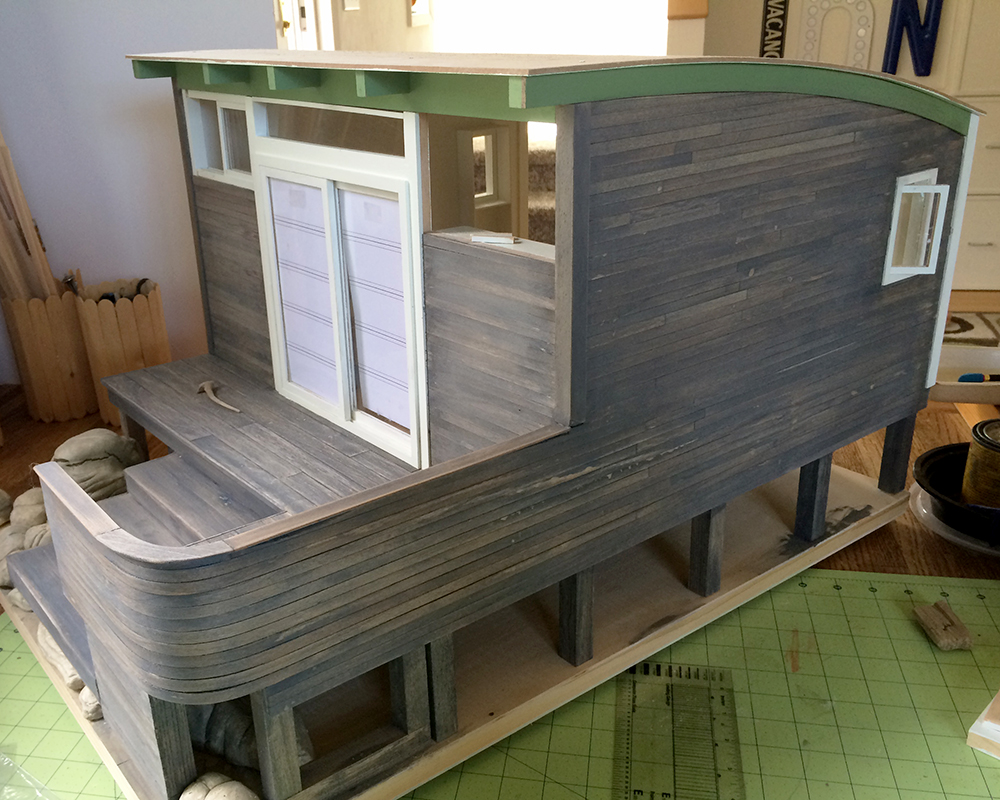
Here is the siding stained, with the half-inch wide top railing glued on. I used two lengths of strip wood for the straight parts, then etched the shape of the curve on paper (like gravestone rubbings) and cut it from 1/16-inch stock. It overhangs the railing a bit on either side.

www.nancyland.com

Railing top joints and edges sanded smooth, and stained. You can also see the paper templates drawn in Illustrator taped to the slider window to guide placement of the cross bars. I’m slacking on painting trim once again.

But, the rocks have been calling to me.

www.nancyland.com

I’m using acrylic paint, matte gel medium and water for a second glaze of medium warms and one cool tone. I got into all the dry crack crevasses with color, so the “granite” veins will (hopefully) look organic.

Switching to water color, I painted the undersides of these laser-cut fern leaves. I think these will be for indoor plants, to help the air quality in the wood-fired warming hut interior. In the language of flowers, ferns bring magic, fascination, shelter and confidence. We could all enjoy more than a bit of those qualities.

www.nancyland.com

deck extension cladding

www.nancyland.com

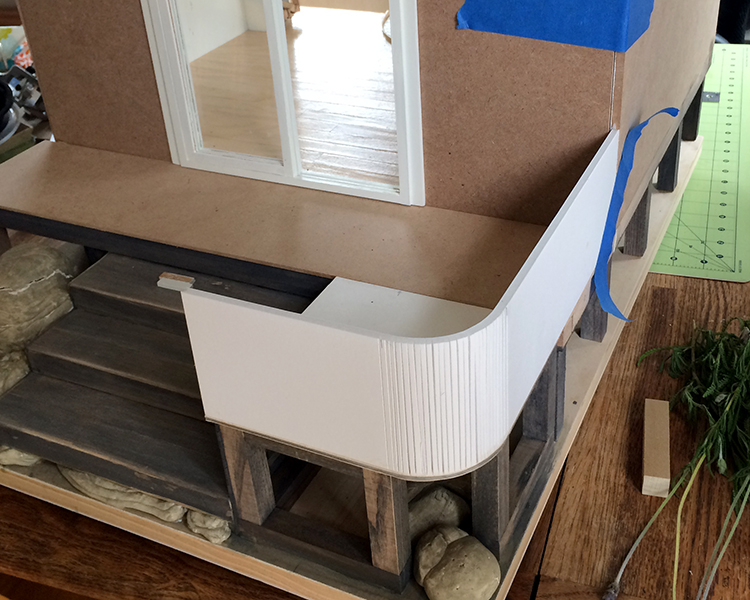
I found a circular form with a similar radius to the deck extension curve. I soaked the quarter-inch stock in a thermos of water, then pressed it around the form, securing it with wide rubber bands and tape.

www.nancyland.com

The wall is three inches tall, so that’s 12 lengths of quarter-inch stock.

www.nancyland.com

Here are the first four courses.

www.nancyland.com

And the subsequent ones. One of the boards cracked at the curve, so I need to soak and form the final course… tomorrow. The rest of the wall is a great opportunity to utilize the many lengths of quarter-inch siding I have piling up on my table.

I wonder if an actual woodworker cringes at the imprecision of my efforts as much as I as do, say, when encountering bad typography.

Sea House Warming Hut Roof

www.nancyland.com

The rafter trim is glued on (although you cannot see it in this photo) and clamped to dry in preparation for the roof. Smartly, I also traced them onto cardboard to use as patterns for the living roof sides :)

With the addition of the back opening trim, an eighth-inch gap is created along the roof support, so I cut a piece of basswood to fit and glued that in place.

www.nancyland.com

I painted it to match the trim and walls. I like how it frames the opening, and since the back is like the fourth wall in theater, a subtle window is created, inviting us to look in. In a non-creepy way.

The roof now aligns with the trim and roof support all the way across the back. I used the temporary brace provided with the kit, and glued and nailed the roof on.

www.nancyland.com

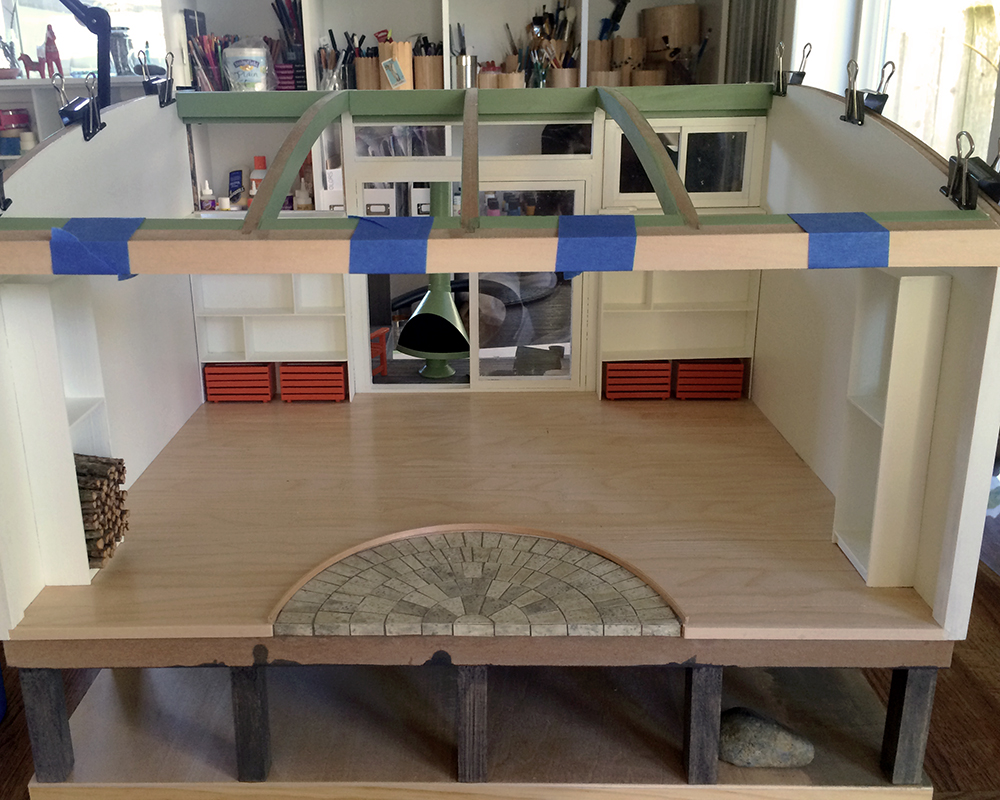
And here’s a look in. Some gaps to fill and paint, and with the addition of the painted bins I notice that the lower shelf on the right is not level?! I’ll have to fix that when I feel like breaking something intentionally.

Bins

www.nancyland.com

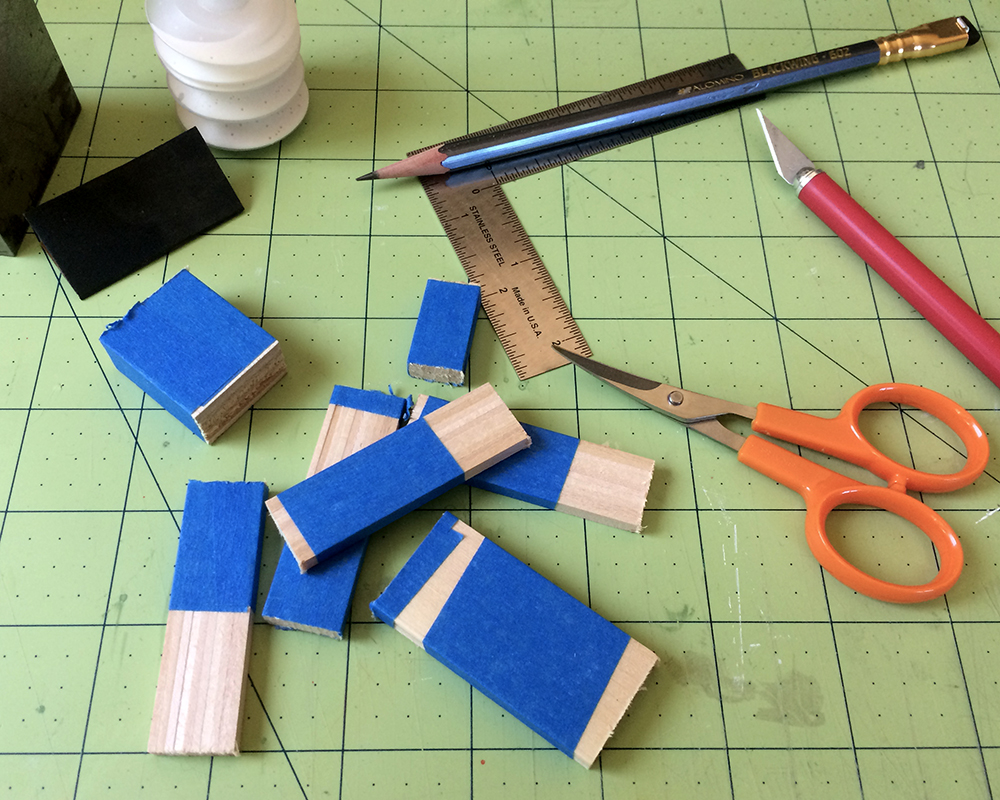
Wanted some bins for under the shelves to hold stuff, and opted for a slatted crate style. I used 1 x 1/16-inch basswood for the ends and base, 3/16-inch for the slats, and 1/8-inch square for the feet. Here you can see my paper- and wood-dedicated pair of curved embroidery scissors. Very handy for trimming any whiskers from the cut ends before sanding.

www.nancyland.com

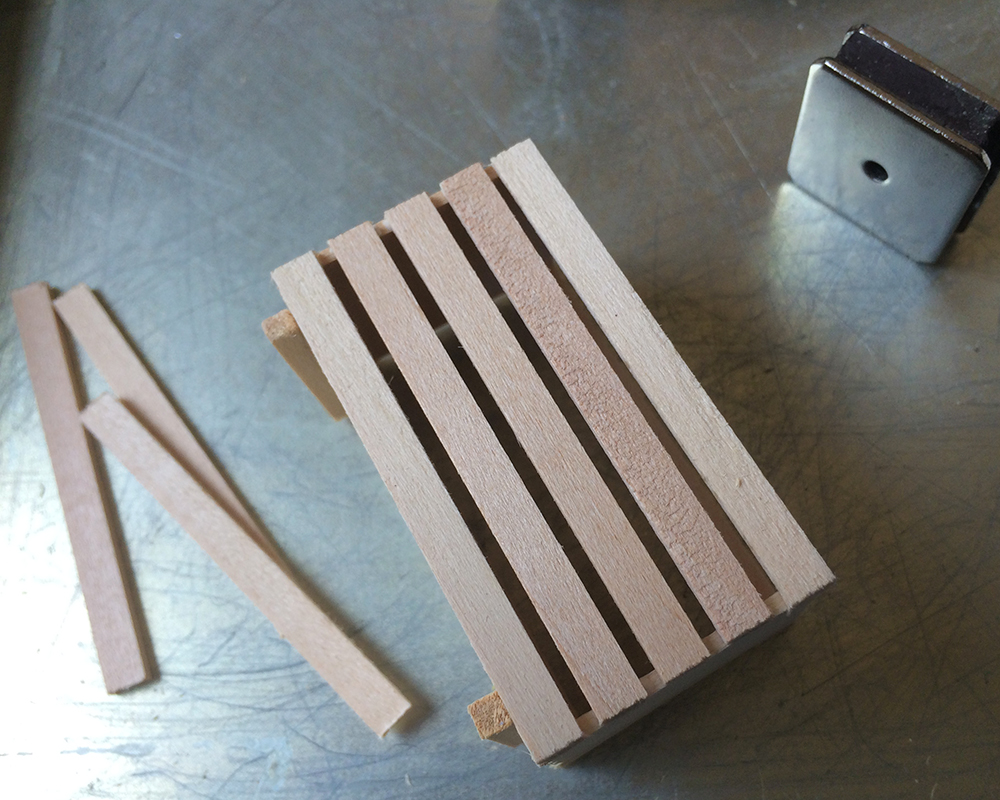
I glue the ends to the base, and then use the upper and lower slats to square it up.

www.nancyland.com

The rest of the slats are spaced in between.

www.nancyland.com

I check to make sure they fit the space, with room to pull them out easily. Tiny casters would be preferable, but hey, budget. On the upper shelves are some metal canisters with lids I got from HBS/miniatures.com. It’s nice to find simple, well-proportioned things not all gobbed up with flowers and out-of-scale bad lettering.

www.nancyland.com

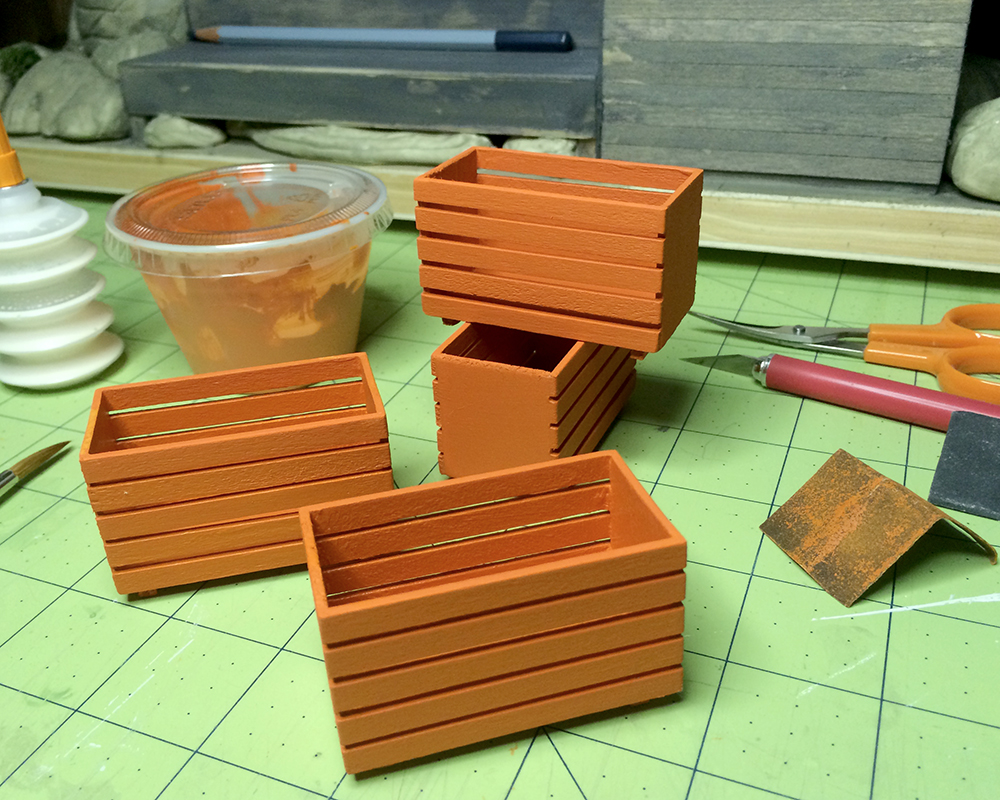
And here they are with two coats of paint — the same California poppy color as the outdoor furniture — and waiting to dry before finish sanding, a light coat of satin varnish and soft buffing.

Cladding, Painting, Sanding, Waiting

www.nancyland.com

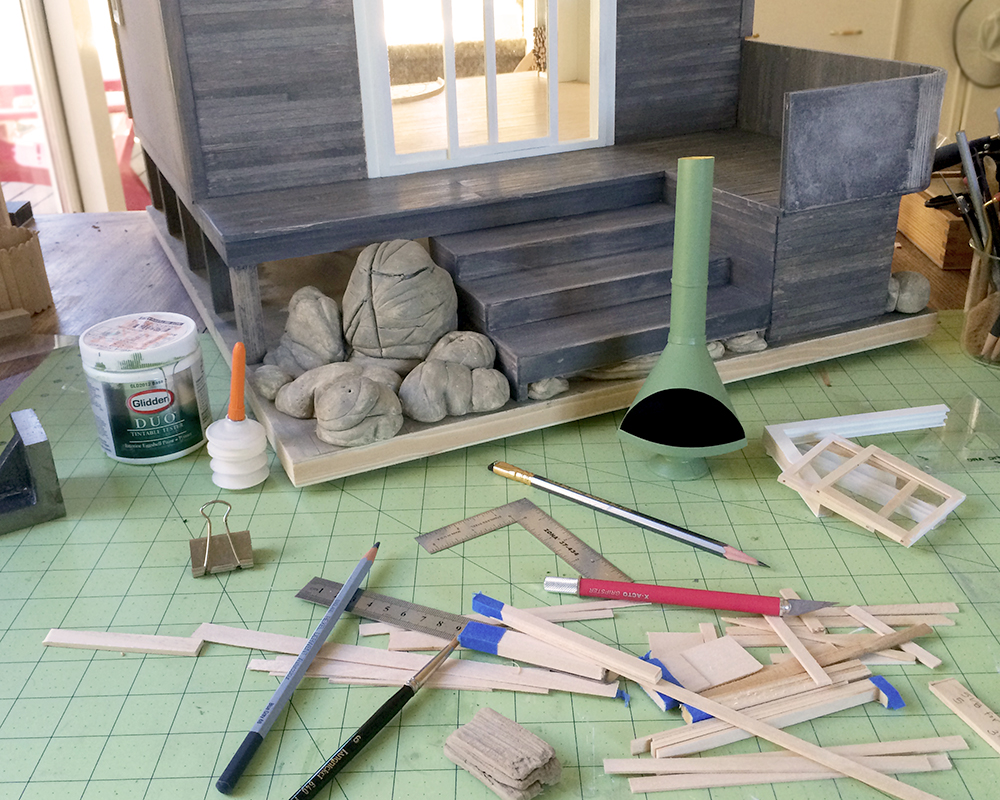
Here’s a mess of things in progress at once:

First coat of paint on version 4 of Kris Compas’s cone fireplace, from her wonderful tutorial this month. My initial color thought was classic minimalist matte black, but then I noticed it looks like a giant tiny Darth Vader’s helmet, and once you see that, there’s no unseeing it. Current thought is the same green as the rafters, but based on my experience with the Chrysnbon stove, who knows what the final outcome will be?

Also installed the front wall cladding. I bundle up the quarter-inch stock with tape, measure and cut with a chop saw. Lots of not-quite-long-enough offcuts for the scraps box. I’m using the blue-gray Derwent watercolor pencil after the stain dries to add variation and depth to the warm gray color. Subtle, but effective. I’ll show some examples when there’s better light. Plus it’s fun to intentionally scribble all over your project :)

in_progress_042615

Biggest decision was the color for the outdoor furniture. Last night I was thinking a deep, rich yellow, but then arrived at this orange, somewhere between California poppies and the Golden Gate Bridge. This is just the first coat, and I might temper it a bit more towards poppies, but I have to wait until light of day. I also want to finish painting the rocks and adding some of the greenery. The living roof with growing poppies will tie it all together.

I want the deck furniture to really stand out from the weathered gray wood and rocks of the cliffs, to welcome walkers to sit and enjoy the vista.

The inside seating will be upholstered arm chairs circling the stove, for those days when inside is best. I found an engaging peacock blue linen that I plan on using for those. With the sweeping views of the ocean and the sky, they’ll be less of a contrast in the otherwise light room.

Warming Hut Decking

www.nancyland.com

For the low wall around the deck extension, I used 3/16-inch foam board and cut kerfs to enable a smooth curve.

www.nancyland.com

Very bendy!

www.nancyland.com

I attached it to the edge of the base, flush with the side wall. The exterior siding will extend along and around the deck wall.

www.nancyland.com

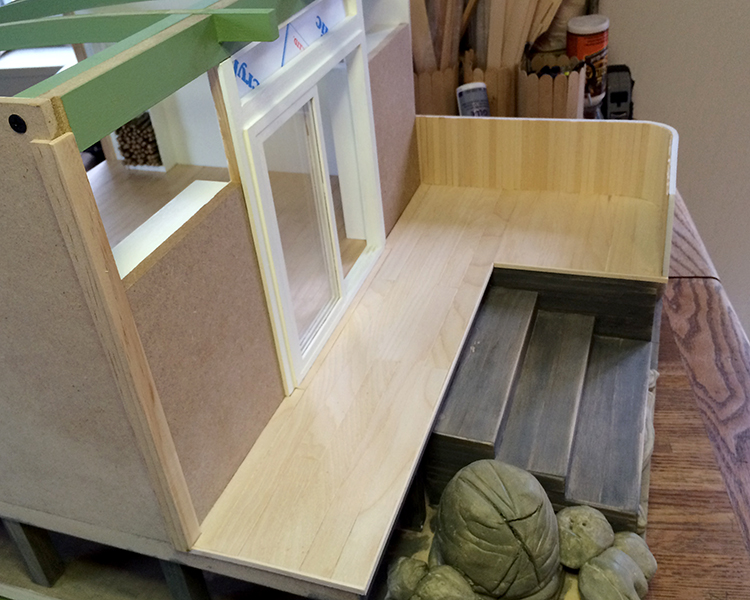
For the deck proper I used the same 3/4-inch rustic planking as the interior floor, though the deck is to be stained gray. (The glass of wine — a nice 2013 Husch Mendocino Sauvignon Blanc — is to show scale :)

www.nancyland.com

The inside of the deck extension is clad in vertical 1/4-inch basswood, which is narrow enough to go ‘round the inside curve nicely.

www.nancyland.com

Decking done! Almost. I’ll stain it tomorrow.

www.nancyland.com

Lastly, I brushed wood glue into the kerfs to fortify the curve and make the foam board more sturdy. When that’s dry, the deck will be able to withstand the gusty winds of the coast.