
For the Argo Wool Works showroom ceiling, I glued the two roof sections from the Backyard Bungalow base kit together, and edged with half- by quarter-inch (13 x 6 mm) basswood to extend the overhang. I measured the placement of the beams and walls in dry fit like three or four times, encountering anomalies each time.
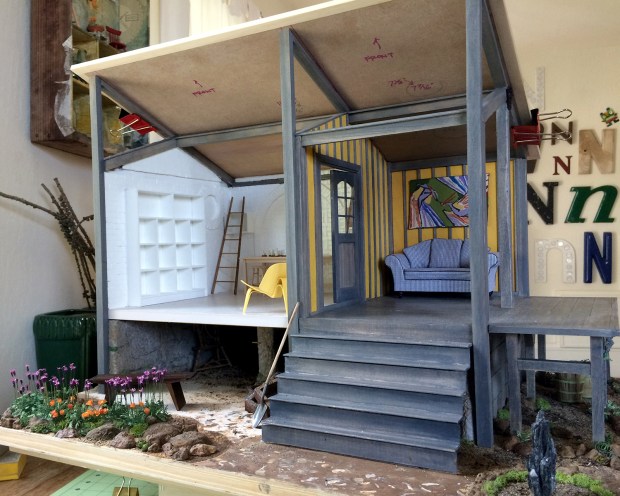
Yet another dry fit, this time with the upper window frames in place, and one section of ceiling planks. I’ve decided a 1/16-inch wiggle room is acceptable, especially since the whole ceiling and under eaves will be semigloss white, and any gaps will blend into the painted bricks… or something. I’m using the ever versatile 3/4-inch rustic clapboard siding from miniatures.com to cover the ceiling.
In the lower right of the photo you can see this standing stone feature I’m working on:

It’s two gorgeous crystalline mineral shards that I promptly forgot the name of, found at a very eccentric bead and rock shop here in Pacifica.

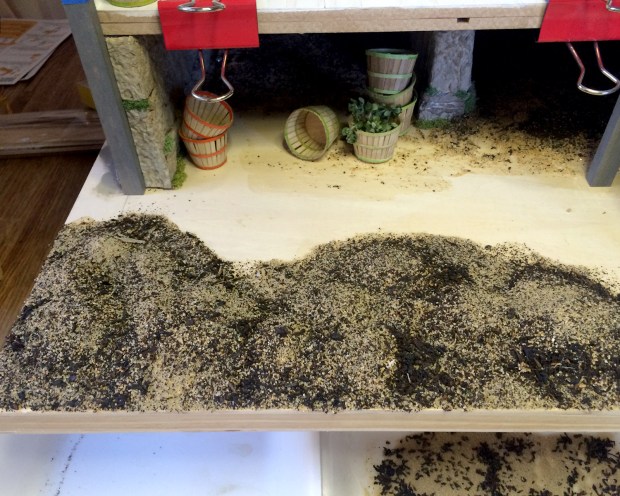
The back of the build was to be clad with the yellow and gray siding, but I decided today to have the bricked-in arch from the interior carry through to the outside wall for interest. I might mess with the foundation to suggest remnants of more of the building, too. There’s only just over an inch of space on the base, but I think it’ll be enough :)
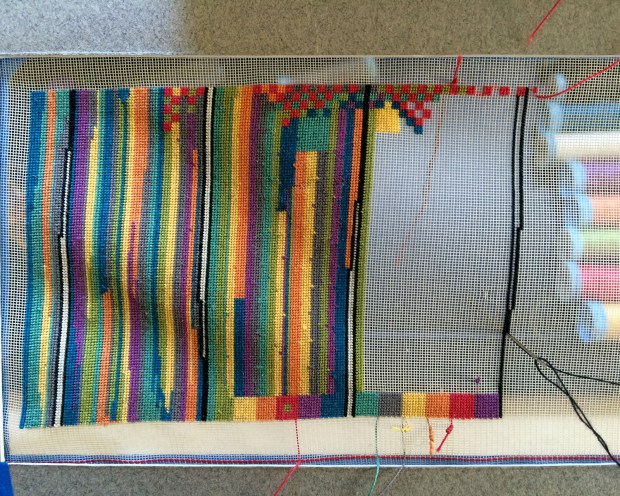
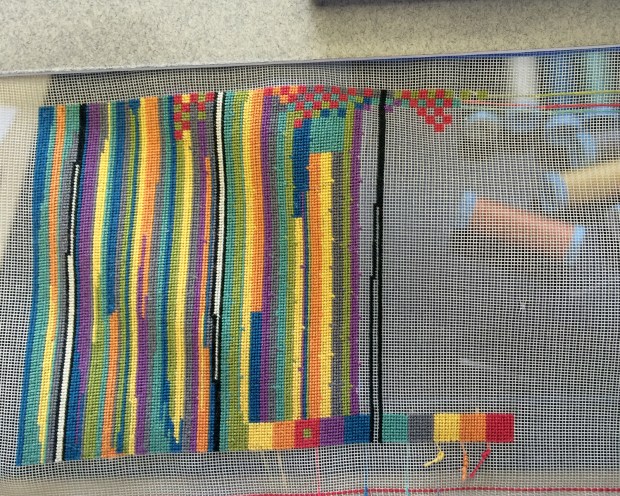
Small progress on the Yipes, Stripes rug, at 2.5 x +2.5 inches, it’s a bit more than half finished. It’ll fit well in the showroom. (Stitched on 48-count silk gauze with ten colors of Gütermann silk; making up the design as I stitch :)

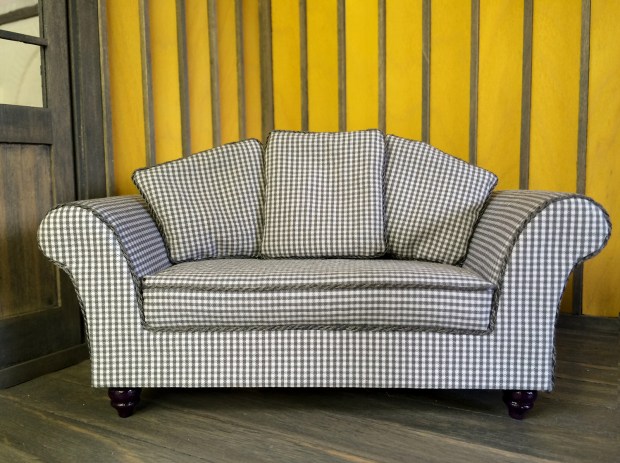
And here, lit by the westering sun, is my first bit of tie silk upholstery — nothing too challenging. Our dear BW sent a vintage Daisy House bench kit (so sad they’re no longer in business), and the fabric is a lustrous gray, black and ivory woven dot pattern. Thanks again, BW and Suz and Dave!

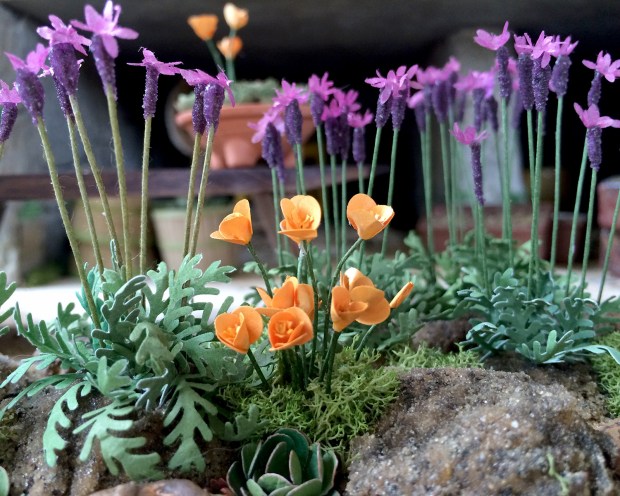



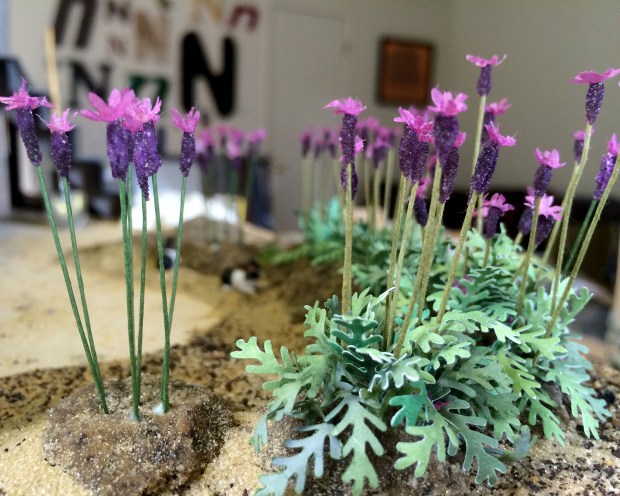



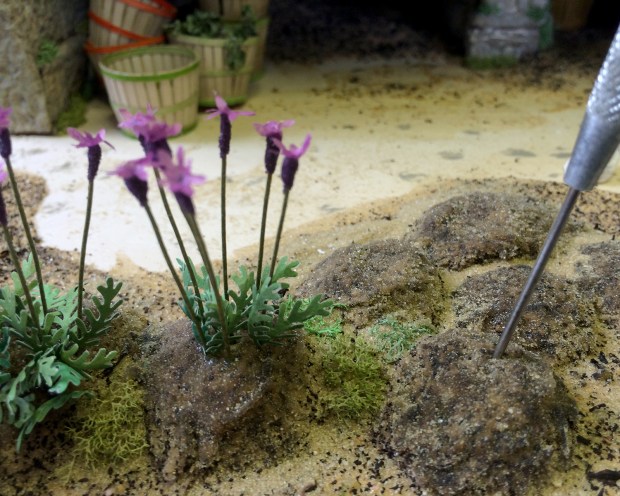
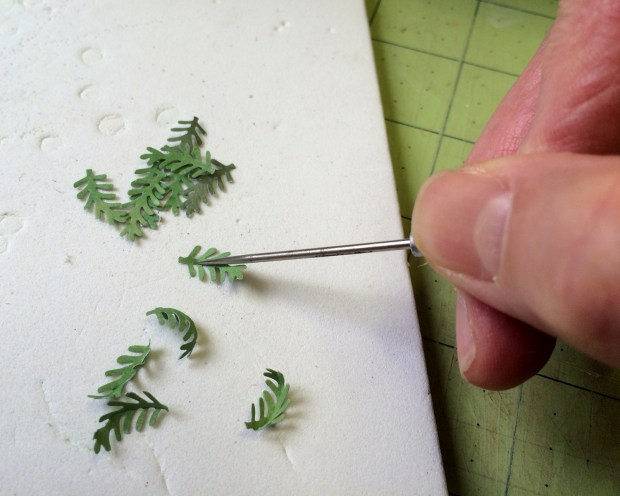

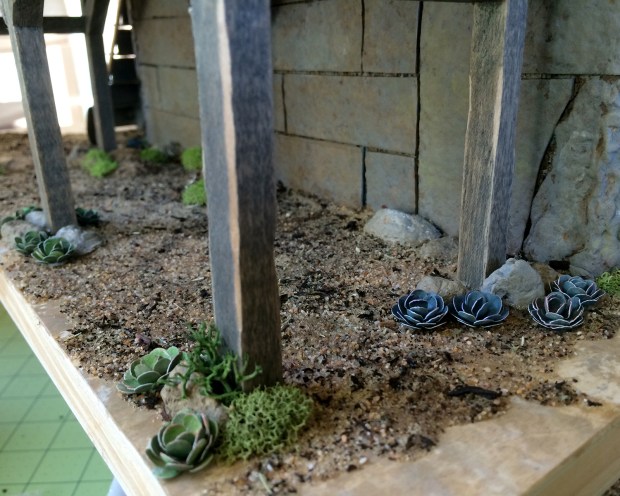
 There’s an entire molds-worth of paperclay rocks dried and awaiting mineralization. These will be nestled and half-buried around the lavender, poppy and succulents bed as an unobtrusive border.
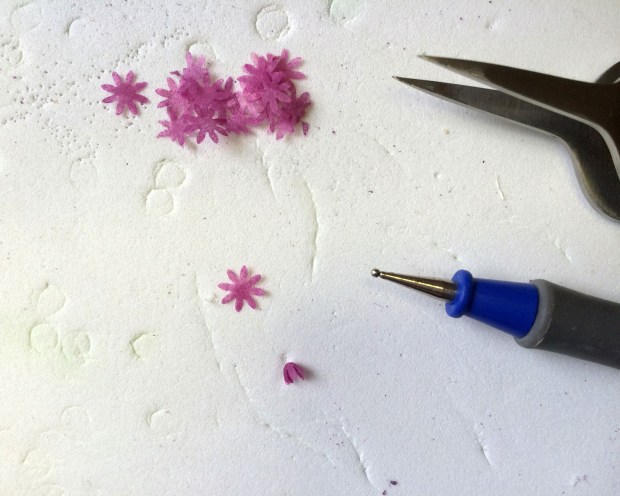
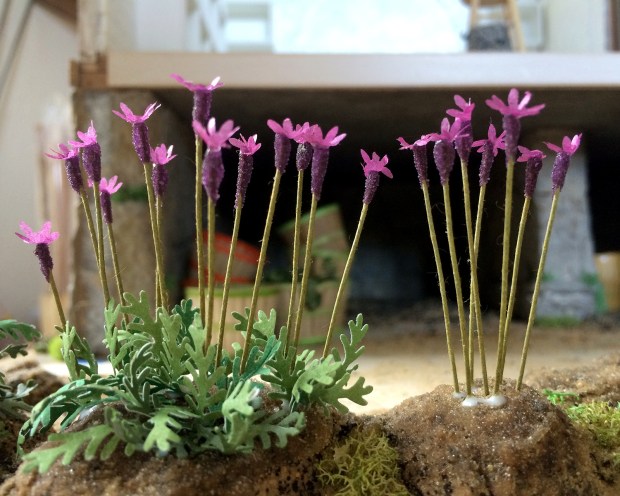
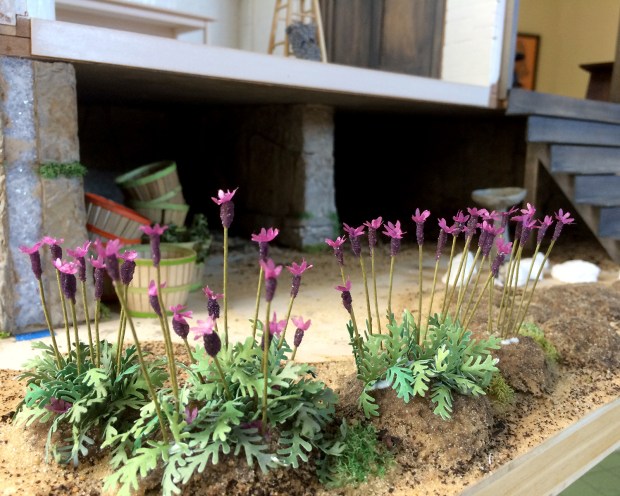 I mentioned that Argo Wool Works also grows lavender. There are a few good approaches to making miniature lavender, and after a thoughtful review, I’ve adopted a hybrid technique. This is always the question in miniatures: how best to convey a feeling, an illusion of the real thing? Absolute adherence to reality, or a simpatico synthesis of appearance? Answers often surprise me, as did this lavender.
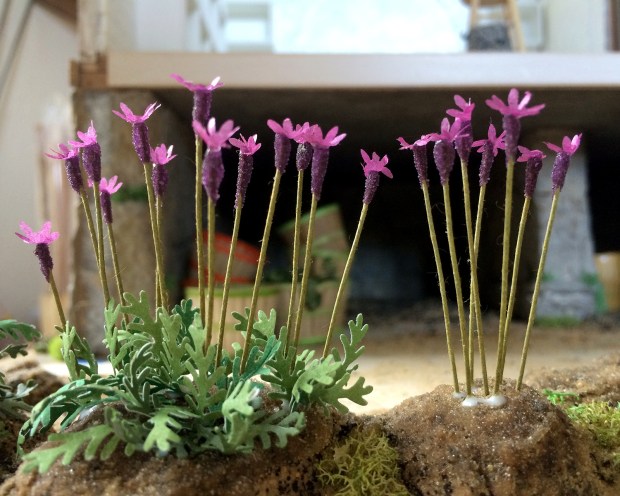 These are the start of the demonstration lavender beds outside the AWW showroom, as planted in the egg styrofoam and sand-covered mounds established earlier. I’ll post a more step-by-step later, when I’ve more available time. I think the method is worthwhile :)
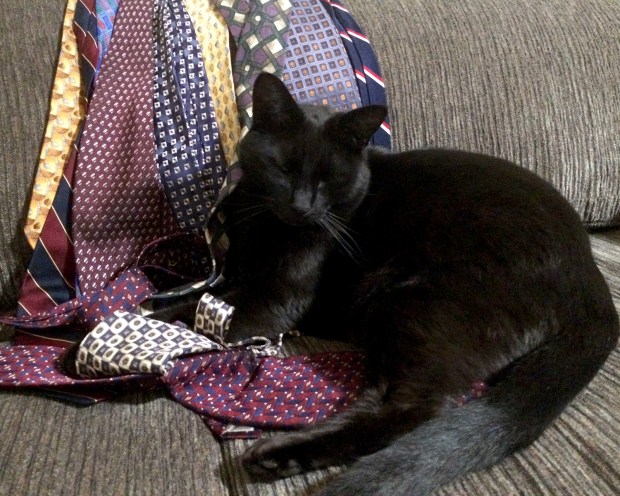
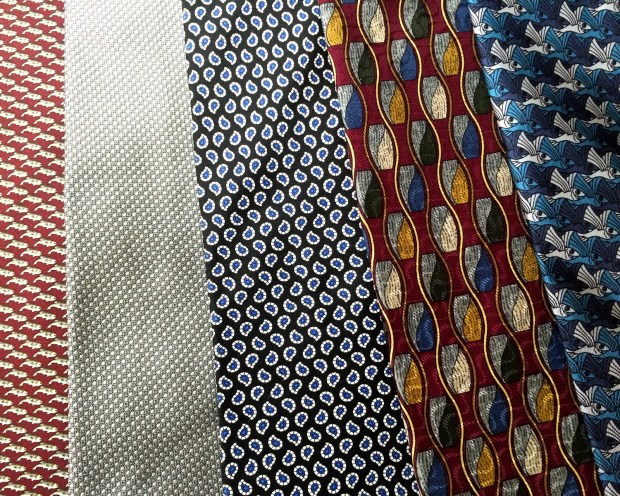 These are the top five I pulled out for the squiggly vintage Chippendale sofa, and/or throw pillows. The far left is out of focus, but is a delightful fish pattern. The next is an exquisite gray/black circular motif… on through a classic understated Paisley, a retro-looking I don’t even know what, and a brilliant Escher tribute.
 So, so beautiful, and interesting! May your cups runneth over with unexpected gifts and bounty to share.


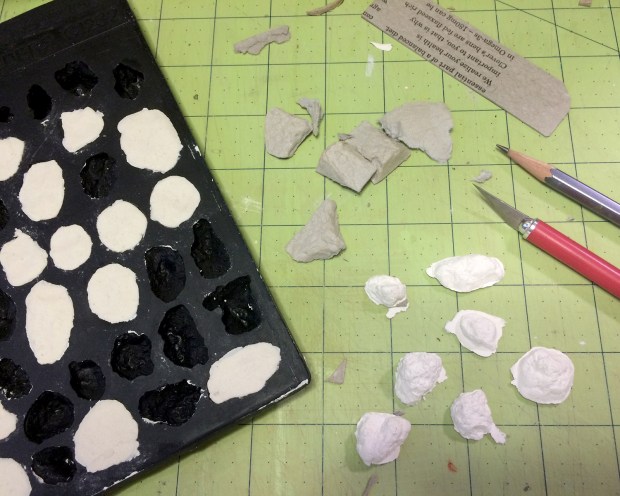
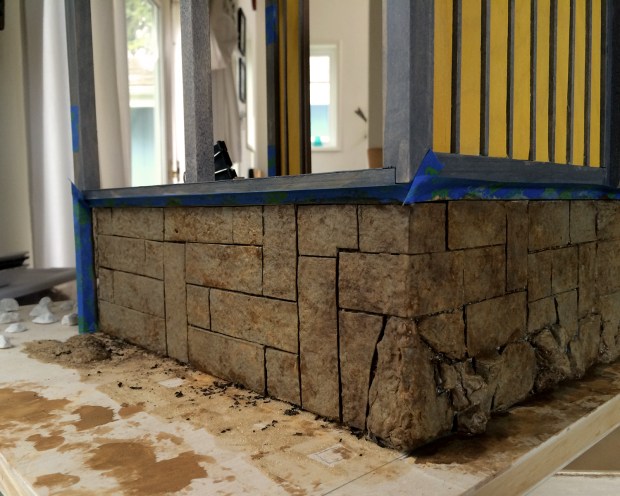
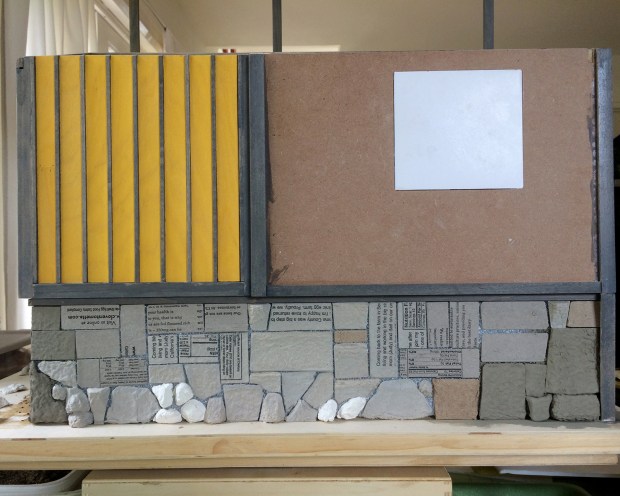 I reloaded the mold with the full set of rocks in paperclay to use around the rest of the foundation, and finished out the back wall with the few that had already dried (those in white), along with egg carton and packaging forms. It seems to take two or three days for the paperclay to dry thoroughly.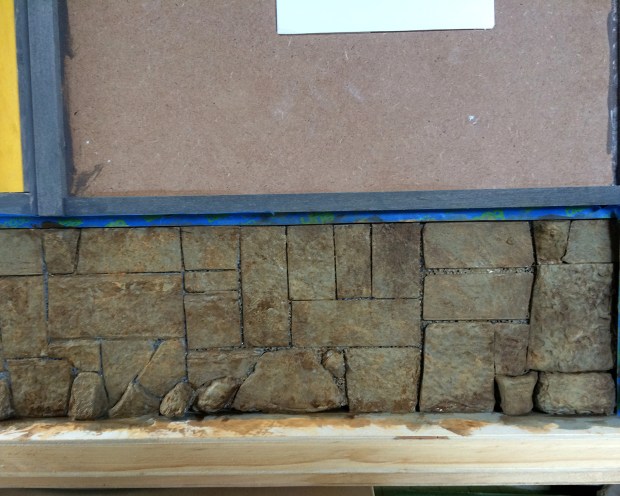


 So happy with the results from the first of



 nancyland.com