animals rug: turning the third corner

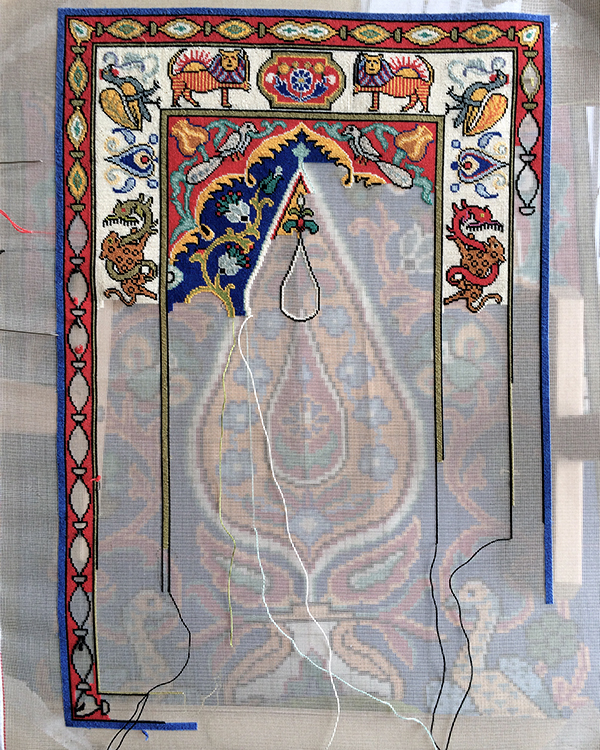
We have turned the third corner!

We have turned the third corner!

Been spending quality time with the Animals rug again. And with progress comes change. I had been in a quandary over the outer border, and finally solved it by adding an entire additional motif to the length. I had also not been satisfied with the design of the bottom center panel, so adding just a bit to the overall length will allow me to flip the whole yellow flamey curlique border with the spotted doves and poppy pods around and put that in on the bottom, replacing the various sun and flower motifs of the original design. It will fit behind and under the larger birds’ tails. And on the outer border, I’ll flip the horse, elephant and the two stripey lions around, so in effect we have birds and animals coming and going. Or something. Makes sense to me.

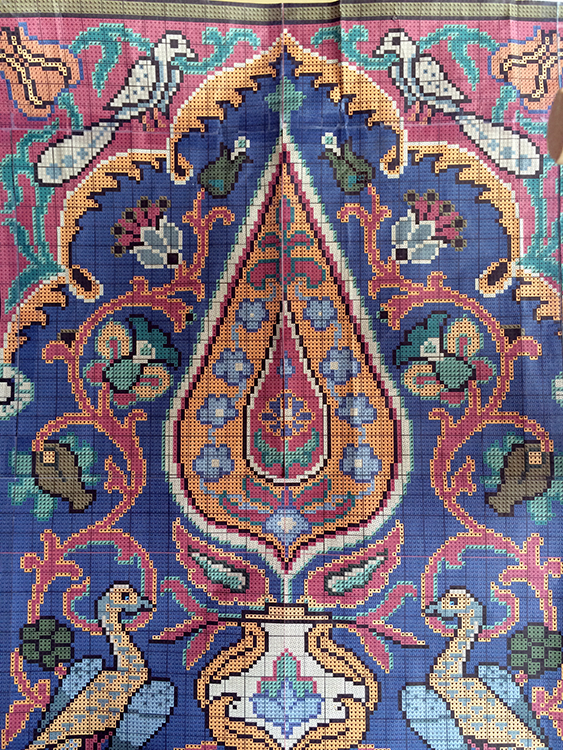
This is the portion of the center panel I’m working on now:
The upper part of the Animals rug center panel

The upper part of the Animals rug center panel

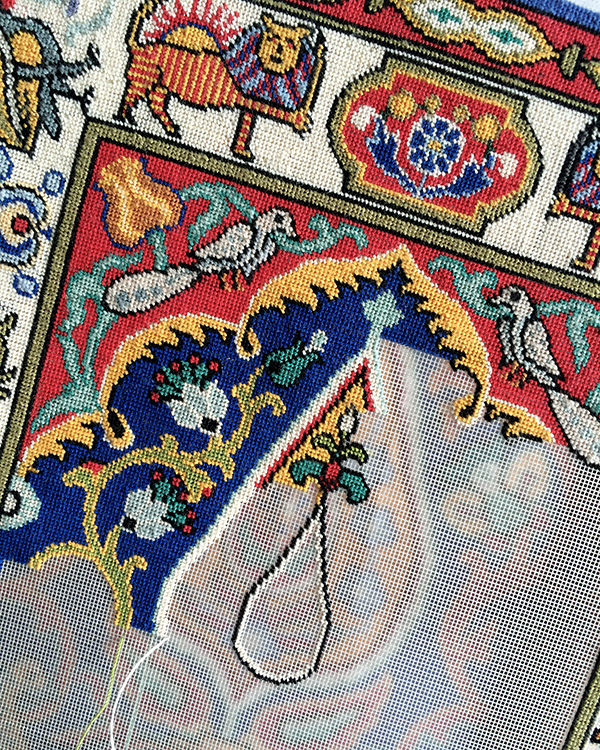
And you can see I’ve made some other changes to the colorways and pattern as well.
Center panel detail with a few pattern and color changes

Center panel detail with a few pattern and color changes

Spec’s: 49-count silk gauze, 281 x 398 stitches — well now a bit more (5.75 x 8.125+ inches, 14.57 x 20.63+ cm); DMC cotton and Gütermann silk. Original design by the fabulous Natalia Frank.
Loft No. 1961

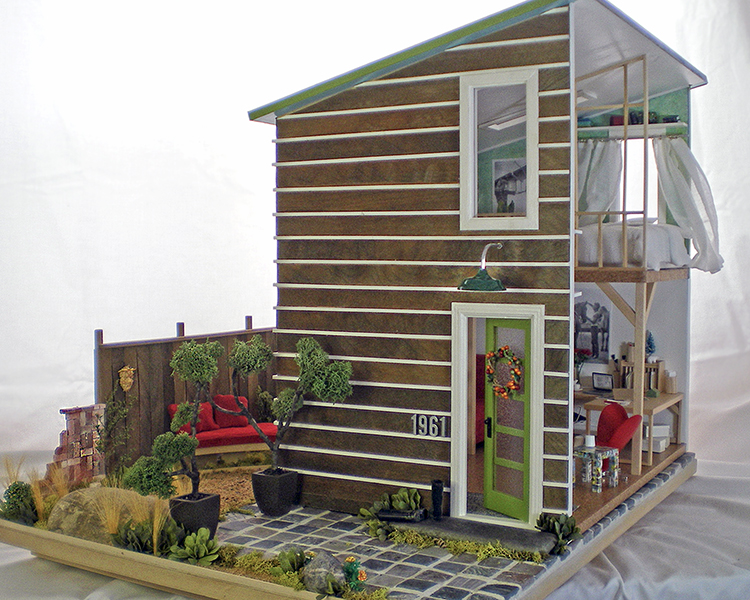
Loft 1961, my entry in the 2012 HBS Creatin’ Contest

Loft No. 1961, my entry in the 2012 HBS Creatin’ Contest

Way back in early 2012, I happened across a photo of a Brinca Dada dollhouse, and everything changed. Over the next few weeks I obsessively researched this awe-inspiring world and rapidly determined that building modern miniatures was the one thing missing from my life. And so it began.

My entrance into the realm was via HBS’s MiniTown Loft kit. I had no idea how to build a dollhouse, and totally learned by doing (and undoing, and re-doing). I read everything I could find, and followed the tutorials faithfully. Over the months of the build, I acquired more tools and supplies and ideas. Soon I started hearing whispered stories and catching glimpses of tiny rooms with perfect furniture. I started staying up late.

And I found a community of other people devoted to scale modeling and the pursuit of wee perfect things, eager to share what they are doing and how they are doing it.

The door is open, come on in

The door is open, come on in

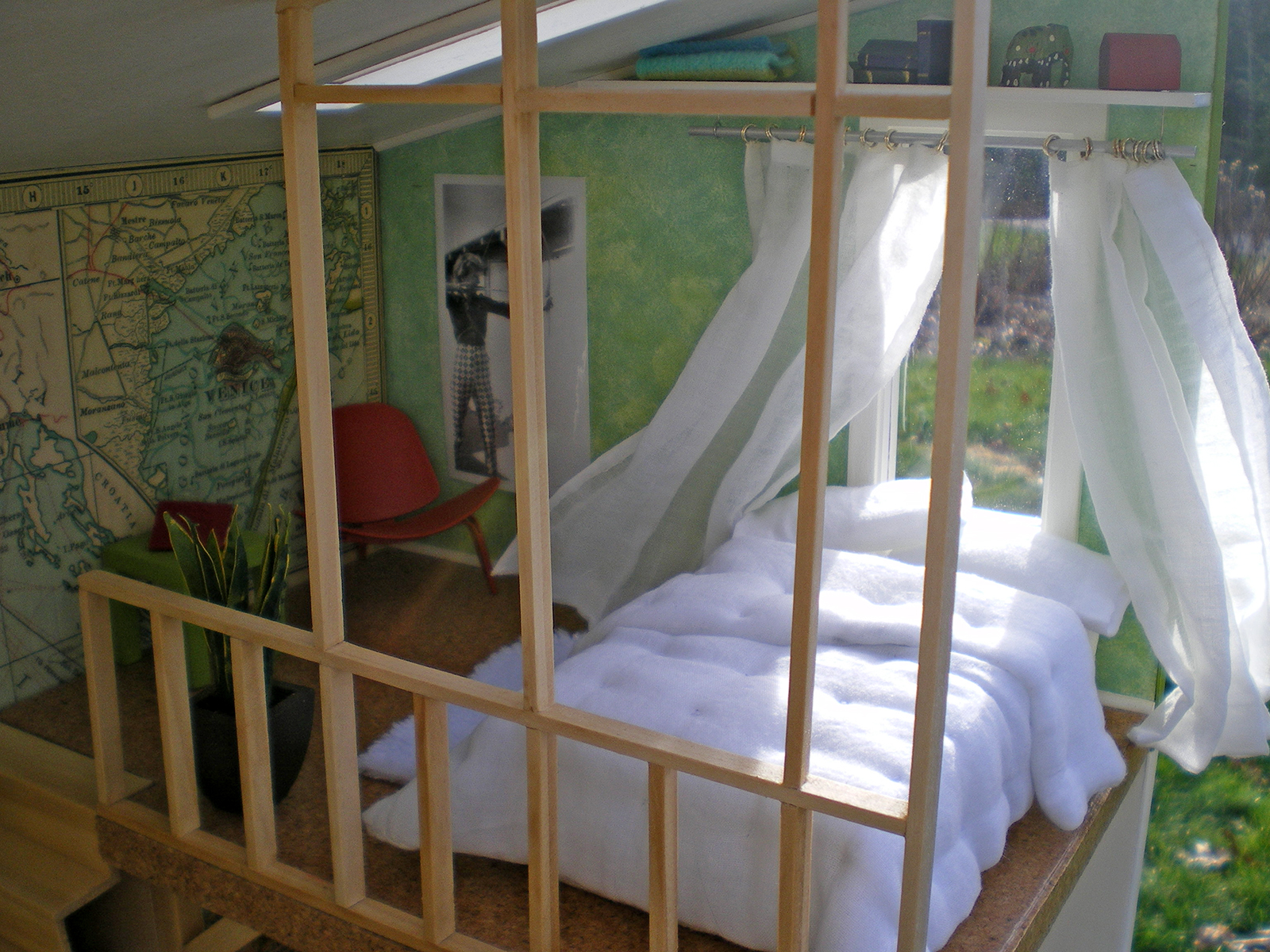
Loft No. 1961 went through a few incarnations, until I realized it was the studio of a woman writing a book about her father’s death. Lots of storage was required for reference and research materials, as well as artifacts and mementos. Big desk. An uncluttered bed to sleep in if the work went late, with an open window. A couch to think on.

A good place to work

A good place to work

A garden to sit in, to smell the salt air and watch the fog blow through, and warm your face in the sun.

Build a little secret garden in your soul

Build a little secret garden in your soul

I built and rebuilt intuitively. I remember clearly the moment I grasped the concept of scale. Not that I always achieved it, but that it was the goal, as well as the quest.

I was so happy to win a first-time entrant’s award and recognition (as well as the sweet cash that could only be spent on more miniatures :) Someone else saw what I saw in my build! And they liked it!

Finally, who among us miniaturists do not have versions of this photo?

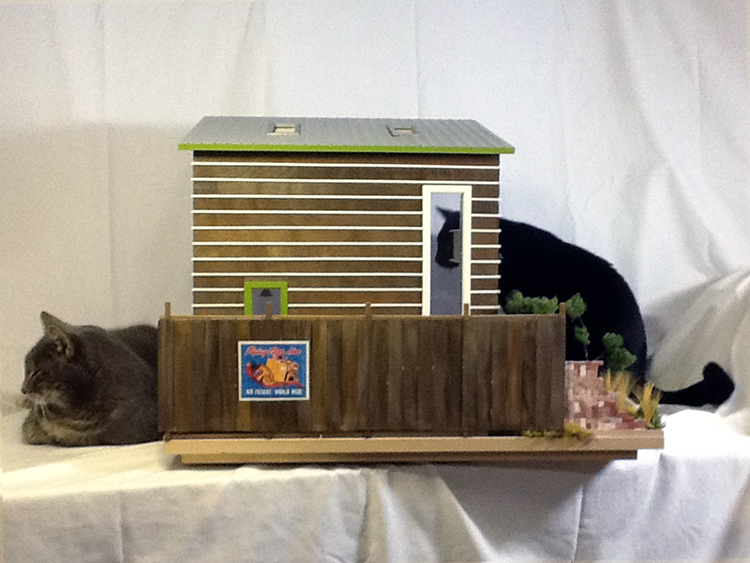
Napoleon and Albie approve!

Napoleon and Albie approve!

2013 grand prize winner

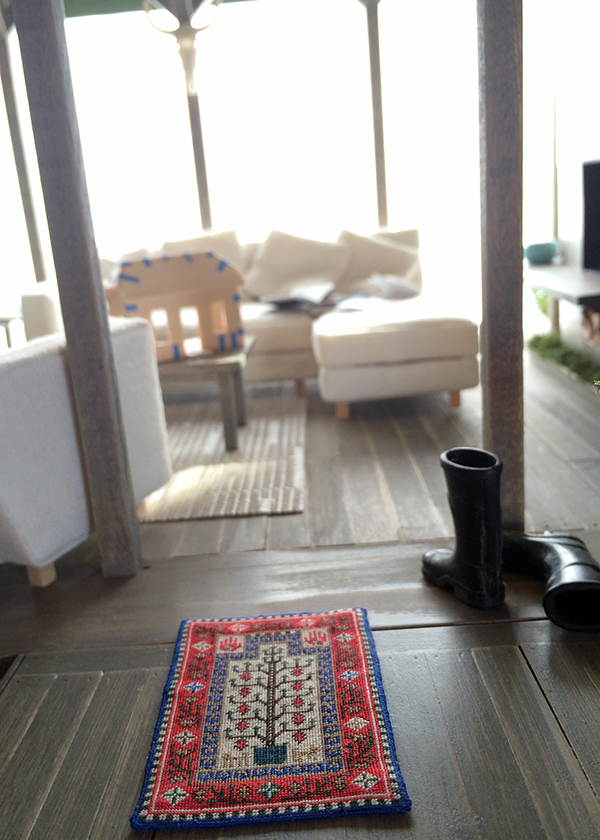
Inviting you into the Sea House Pavilion, in a magic carpet way

Inviting you for tea or cocktails at the Sea House Pavilion, via magic carpet

Having the Sea House Pavilion win the Grand Prize award in HBS’s 2013 Creatin’ Contest feels like this pic: dreamy, delightful, unbelievable. Completely unexpected. Truly an honor.

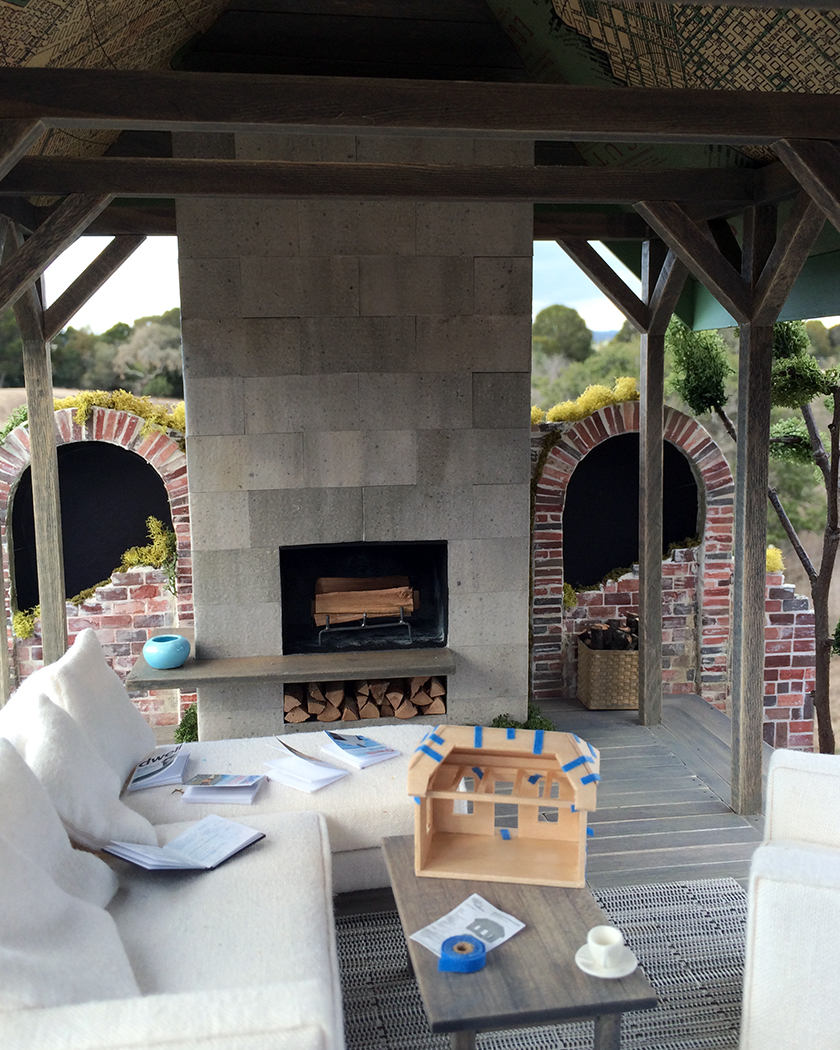
Come sit down

Come sit down and hang out

And it has afforded me the opportunity to learn to spell pavilion correctly (I still keep wanting it to have two Ls).

I mentioned in an earlier post that I made a tiny version of my notebook, open to some of my first sketches done in April 2013 (seen above, on the couch).

Computer, enhance.

Some of my sketches and notes for the Charming Cottage

Some of my sketches and notes for the Charming Cottage

I spent most of last year getting our house in Rhode Island ready to sell, then packing it up and driving across the United States in a 31-foot motor home with my husband, our very large dog and two disgruntled cats, to return to Northern California, where I am from. (We shipped all our stuff, except the guitars.) The starting kit Charming Cottage in blue tape dry fit was as far as I had gotten before the move until Mid-September, when I was able to unpack my studio, try to decipher my notes and begin to build in earnest.

I worked on it nights, weekends, holidays and vacations right up to the deadline. I was so happy when I learned we could make a digital contest submission this year.

SH_Pavilion_side

The sun is starting to set. Might we get some rain?

The Sea House Pavilion is part of a compound in coastal Northern California, in the same town where Loft No. 1961 is, my first-ever build and a First-time Entrants’ Award winner in the 2012 HBS contest. More about that later :)

Enge_Loft_003

Loft No. 1961, the studio of a woman writing a book about her father’s death

The loft bed where she can sleep when she’s worked late

The loft bed where the writer can sleep to dream

You might notice some themes that seem to carry through my builds :)

the great green room: a little toyhouse

little toyhouse mockup

The little toyhouse mockup

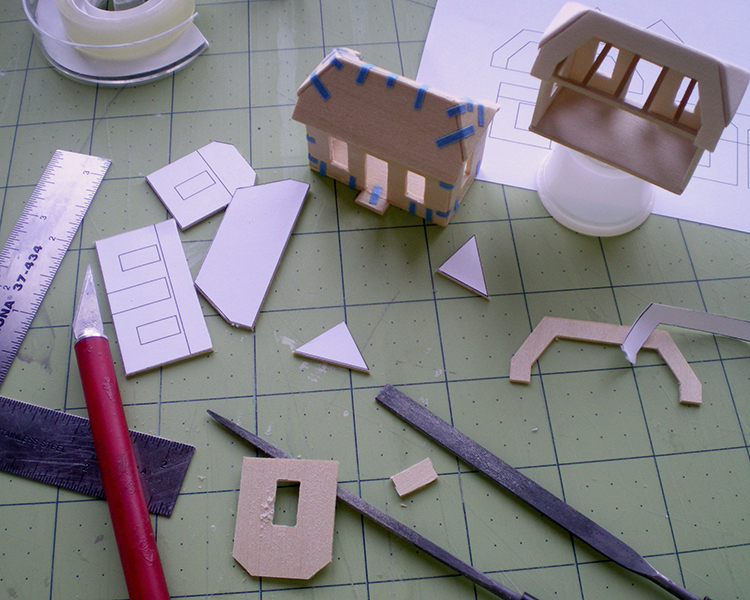
After working out the basic size of the little toyhouse, I started drawing construction plans in Illustrator. I decided to use cardstock because I think I can cut the tiny windows more square and more easily than I can in wood. After spray mounting a print out to the card, I scored and then cut out the pattern.

Mr. Hurd drew the little toyhouse in the great green room like this:

Clement Hurd’s illustration of the little toyhouse

Clement Hurd’s illustration of the little toyhouse

Next step was to mess about with the window treatments.

Curtain decisions

Curtain decisions

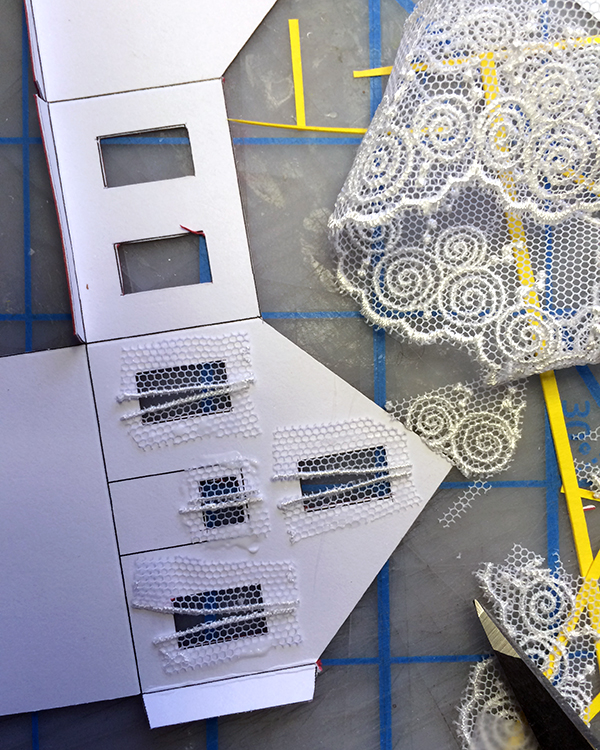
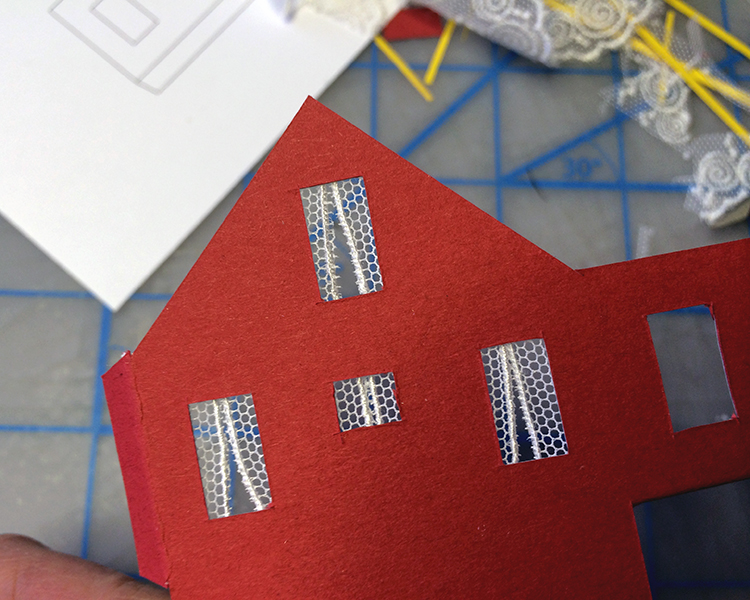
I considered yellow acetate with Sharpie line drawings (most accurate), but since the little toyhouse will be illuminated, I decided that the yellow = light, and moved on to contemplate the mullions, transoms and curtains as literal things. I tried cut yellow cardstock for the woodwork, but to achieve the proper scale was stupid hard. Such a difference between 2 and 3 dimensions. I then moved into the interpretive realm, and worked with a beautiful length of lace to suggest both.

Interpreted curtains

Interpreted curtains

I am happy with my eventual solution, even though I cut away most of the “beauty” of the lace. It suggests mullions and transoms, and light lacy curtains, in an uncomplicated way that works with Mr. Hurd’s style.

Little toyhouse problem solving

Little toyhouse problem solving

I was hoping my first real model would work, but there were a number of structural errors and builder flubs that eventually disavowed me of that notion. I made notes and revised my drawing, then poured a glass of wine :)

I’ll begin again fresh in the morning.

tiny baluchi prayer rug

miniature baluchi prayer rug

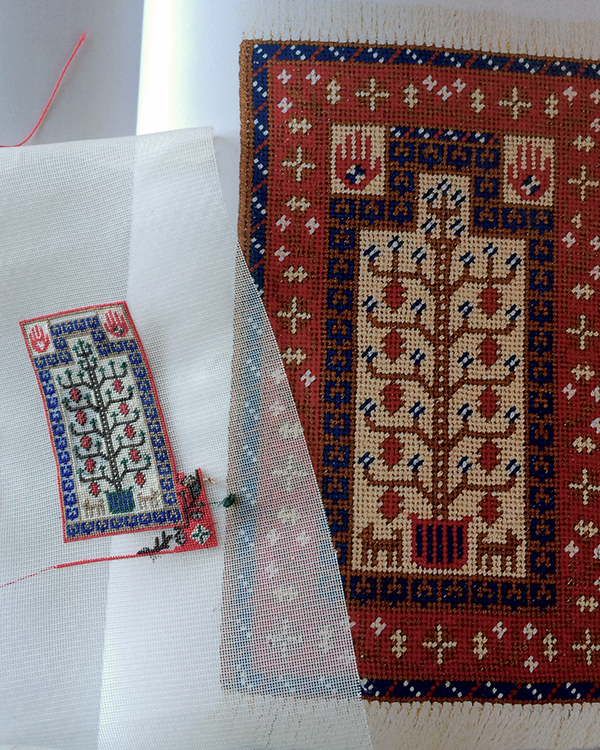
My little guy next to a photo of the original rug pattern (5.25 x 3.5 in, 137 x 88 mm)

I wanted to do a “quick” small rug and started this 20th century Anatolian prayer rug design from Meik and Ian McNaughton’s Making Miniature Oriental Rugs & Carpets. Their patterns are charted for 24-count canvas and crewel wool or cotton floss, so mine, stitched on 49-count silk gauze with Gütermann silk, will be about half their projected size of 5.25 x 3.5 in, 137 x 88 mm. But no fringe. I hate fringe.

Of course I had to change up some of the colors. Wanting to emphasize the vitality of the tree of life motif, I added a deep green for the five-stitch leaves, and to carry the “live” through to the red border. My version kind of has a Scandinavian pinecones and twigs-with-leaves thing mixed in with the pomegranates on the tree, but in my worldview, these go together.

miniature baluchi prayer rug

The compromised area is just to the right of the lower right creature, past the Greek-looking motif in the red border :(

Started the first of the year, I got sick soon after, and managed to snip a bit of the silk gauze trimming a waste knot :( (I blame the psychotics sold as OTC cold meds.) I carefully stitched the threads in where the tiny cut is, and hope the fusible backing I’ll use to finish it will stabilize it sufficiently. If not, I might need to add a dot of fabric glue or something. It’s not horribly visible, and I’ll just remind the tiny people to take off their shoes and not scuff their feet. Or position an ottoman over the spot. (Haha, see what I almost did there? Ottoman over an Anatolian? Get it? Sorry.) Or maybe just let the hole be, and age the whole rug to historic vintage.

sea house pavilion: tiny charming cottage

tiny charming cottage dry fit

tiny charming cottage dry fit

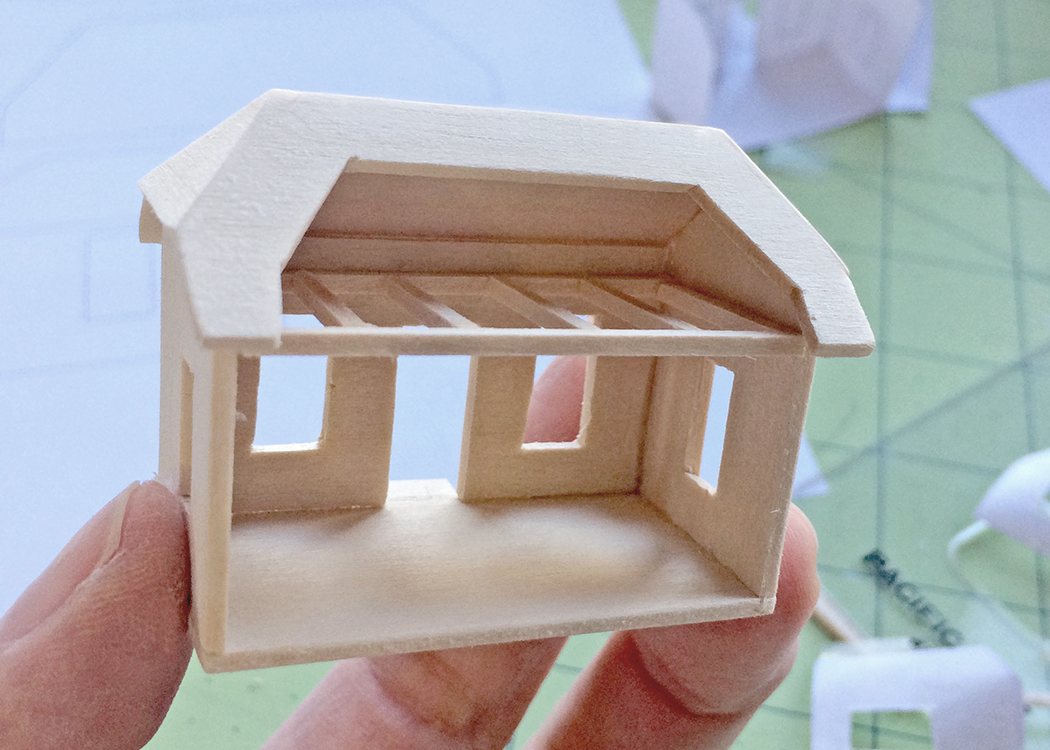
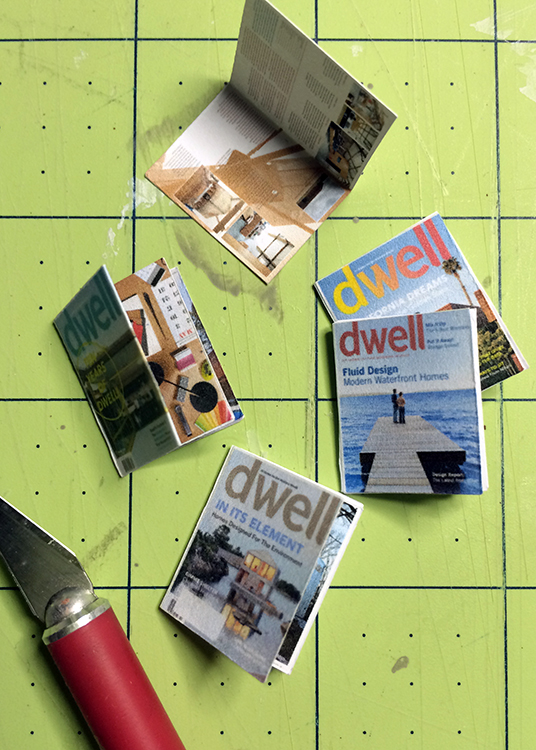
To illustrate how the pavilion adds outdoor living space, I made a 1:144 scale model of the Charming Cottage in an early dry fit, with a tiny roll of masking tape, the instruction sheet, and my notebook (with rounded corners :) open to some of my initial sketches. And plenty of back issues of dwell, for inspiration and research.

tiny tiny Charming Cottages

tiny tiny Charming Cottages

Since then, I’ve built a few more to refine the pattern and improve my skill. The first were cut from 1/16-inch basswood; this one is from 1/32-inch. I doubt I have the patience to paint or to make 1:144 furniture, but I guess I should make a model of the pavilion itself, just for that recursive view thing.

If you’d like to make one, let me know and I’ll send you my pattern.

new build: old brick walls and rock painting

brickwall_111813

tiny old brick wall building

My original concept has been steadily downsized as I build. Seems like it could easily fill four of my self-imposed-sized bases to maintain the scale, so there’s been quite a bit of re-thinking and simplifying.

rock_painting_01

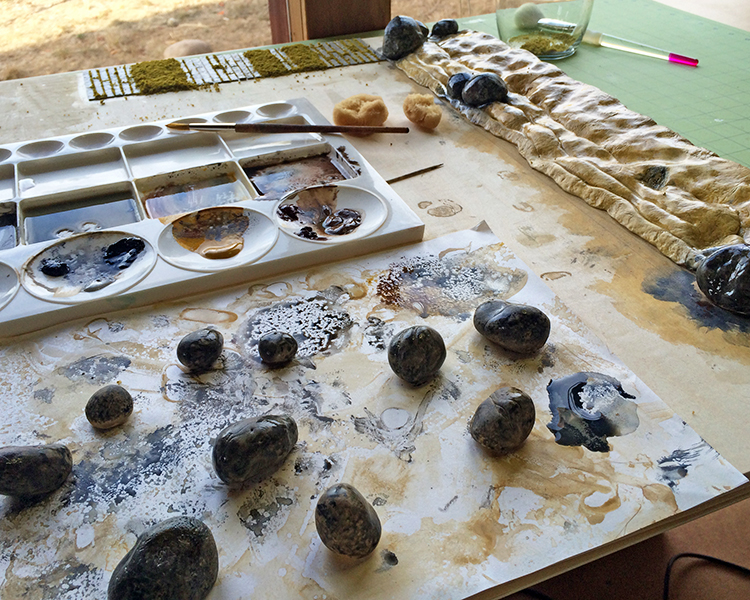
tiny painted boulders

Air dry clay takes days to dry, but I started painting the boulders on day 2 with thin acrylic washes. So much fun! I think I’ll add one or two more stipplings once they’re in place in the landscape, and I see how much more they change with drying.