Chop wood

www.nancyland.com

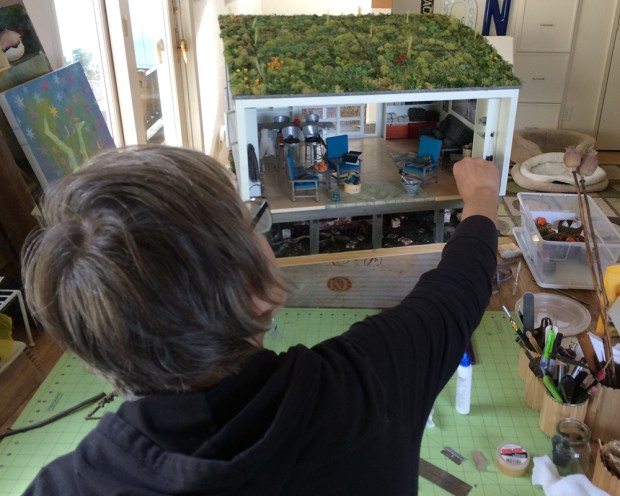
What is the sound of a digital clock ticking away the minutes to a deadline? Like the buzz of tinnitus? Or water drops in a still, clear pool? Here’s what it looks like: total bedhead me chopping tiny firewood and kindling and stacking it in place. I’m not freaking out. Well maybe just a little, for how weird the back of my hair looks. Onward!

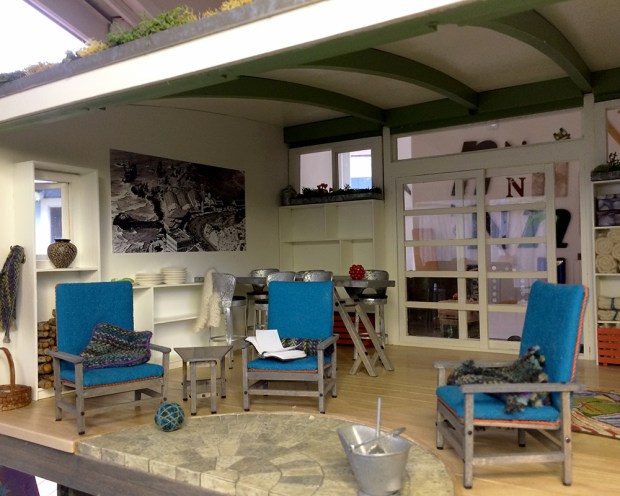
Sea House Warming Hut: Interior This & That

gotland_sheep_120915

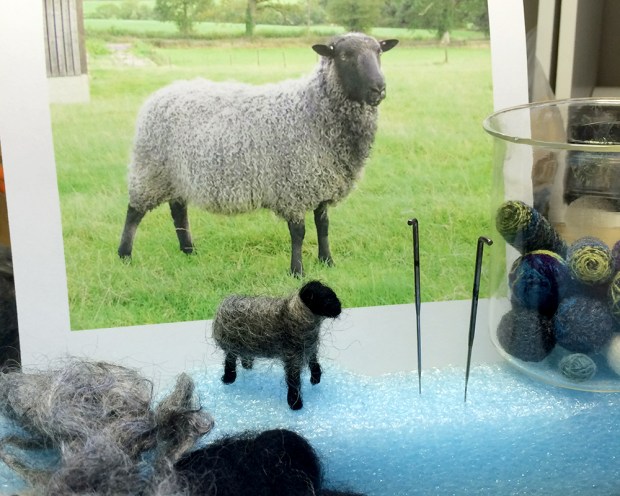
Working on a wee Gotland sheep using, you guessed it: Gotland fleece and dyed black wool roving. The fleece is from Big Sky Fiber Arts in Montana; check out their wonderful selection of fibers, silk and prefelts. The wee (1.5 inches/38 mm) sheep will be an ambassador for Argo Wool Works :)

interior_120915

It’s overcast, foggy and damp here in Nancyland today and the light is low. I wanted to used vintage photography as wall art in the hut, and have found some good imagery that sets the historical background of the area (real and imagined).

sutro

This undated shot from before 1950 shows some of the headlands and other parts of the Sea House Pleasure Pier empire (now demolished).

I found this postcard of an old view south of the Warming Hut

mori_hotel_gs

and decided to tint it

mori_hotel_tint

but didn’t like how it looked on the wall. I’m showing it here anyway because I like the handwritten greeting from George to Tom.

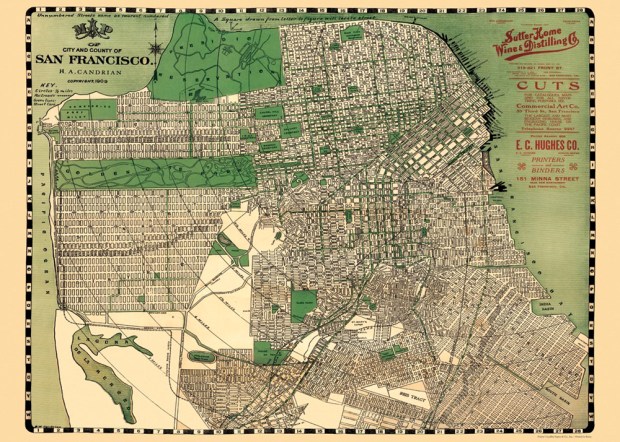
And of course there will be this map from Cavallini & Company.

sf_map_scaled

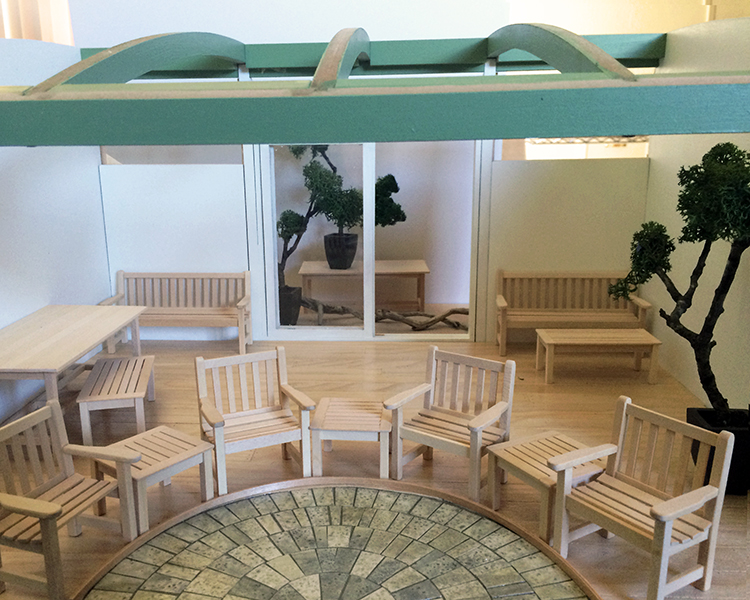
It’s the same one that is on the ceiling of the Sea House Pavilion (2013), and the source of the color palette. The green, anyway.

SHP_map_ceiling

Merrily, merrily, merrily…
and with love to all.


a wealth of opportunity

modern miniatures

The limited edition 2015 HBS/miniatures.com Creatin’ Contest starting kit

Like some of the other miniaturists who were enticed to participate in HBS/miniatures.com build blog-along, I had already purchased and begun to build this year’s starting kit. And I’ll enter the Sea House Warming Hut in the contest come December 16, even though I have no aspiration of winning, having been honored with the Grand Prize in 2013 for my Sea House Pavilion. (Note to all those who don’t enter their projects because you think you have no chance: no one was more astonished to win than I was. Truly. So show your work and enter! It’s way fun.)

So what to do with this second kit provided by HBS?

Much as I’d like to, I haven’t the time (or space) to do another project. I’d like to offer the kit as encouragement to anyone who might be hesitant to enter the contest, or undertake miniature world building. Leave a comment, and I’ll randomly draw a name on Tuesday, March 31, 2015 from those who respond. I ask only that you consider using the kit to enter the contest, and that you pay shipping costs (I’m in Northern California, and the kit weighs about 11 pounds). What say you?

modern miniatures

Perfect furniture by Bruce Dawson, who has shuttered his studio and is closing out inventory :(

Not a lot of progress on the Warming Hut, what with all the March birthday celebrations.

I did see that one of my favorite miniature furniture builders, Bruce Dawson, is retiring (again) and closing out all his inventory through his Etsy shop bedMiniatures. Shown above are the unpainted 1:12 basswood items I picked up. (He has some half-inch scale pieces as well.) Do check out his shop. His prices are more than reasonable. There are still a few cherry Mission style tables and bookcases that are especially wonderful. Don’t miss this opportunity! You’ll be very, very glad.

in no particular order

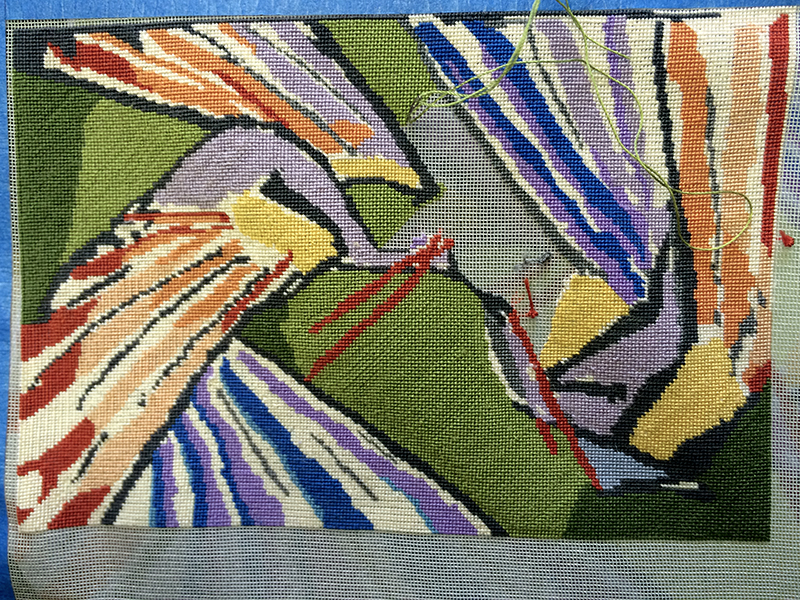
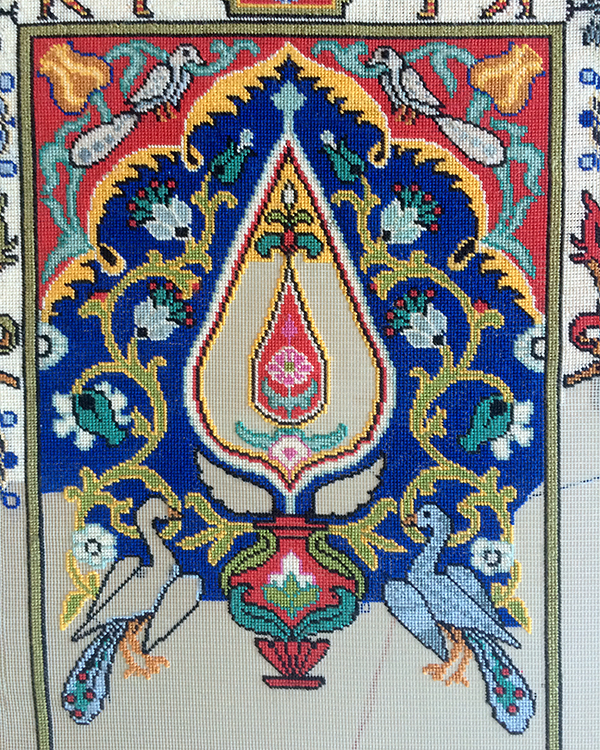
peacocks_120214Peacock rug getting there! Just the remaining green background left to stitch. Then blocking and binding.

(Finished size will be 4.625 x 3.125 inches (11.75 x 7.9 cm), 227 x 153 stitches, Gütermann silk on 49-count silk gauze, from a design by Roger Fry, as charted by Melinda Coss in Bloomsbury Needlepoint From the Tapestries at Charleston Farmhouse.)

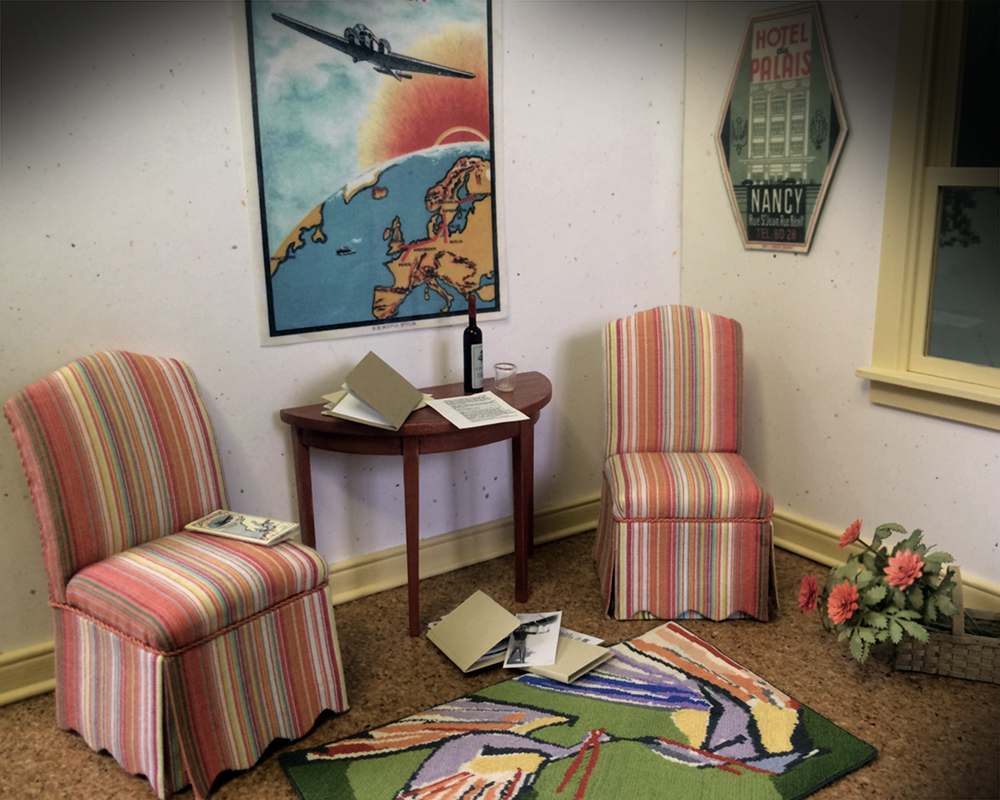
Then I’ve been playing around with Kris Compas’s current tutorial for an upholstered parsons chair, using this great cotton stripe from a thrift store shirt. Other than (endless) work on the Peacock rug, I think this is the first miniature building I’ve done since I packed everything up to move in the summer. (The cording is made from three strands of DMC floss, and is more true to scale than using all six strands. In case you noticed.)

parsons_chair_120214

Penultimately, here is my first repeating pattern!

fish_seaweed_00

The color palette is a combination of hues drawn from photos of the ocean and from the persimmon tree in Soquel. The simplicity is perhaps underwhelming, but this represents hours and hours of work. Onward!

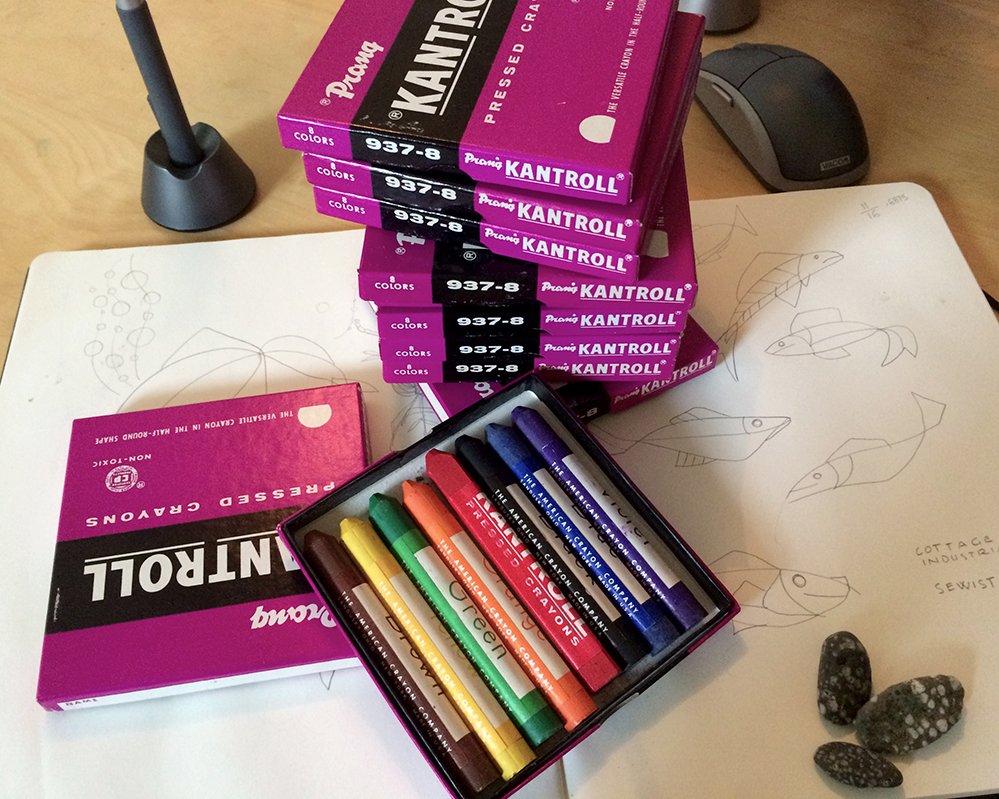
And finally, I did go back to the indie dollar store and buy up all the boxes of Prang KantRolls.

allthecrayons

Mostly because this:

crayons_120114

it’s that time (again)

Yes. We are moving. Well, actually, packing in preparation for moving.

Yes. We are moving. Well, actually, packing in preparation for moving.

About an hour and a half up the coast, to Pacifica. Very excited for new beginnings, very sad to depart the Soquel hills and the superior Santa Cruz County climate.

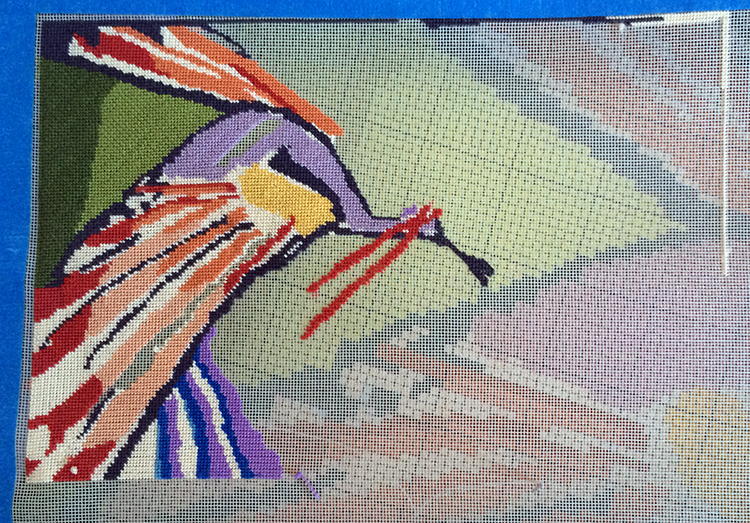
Finding a new house (oh, and working) is why I’ve not been doing any building the last few months. But I have been stitching — sometimes late or in the middle of the night — on the Animals rug, and a new, smaller rug project: Peacock.

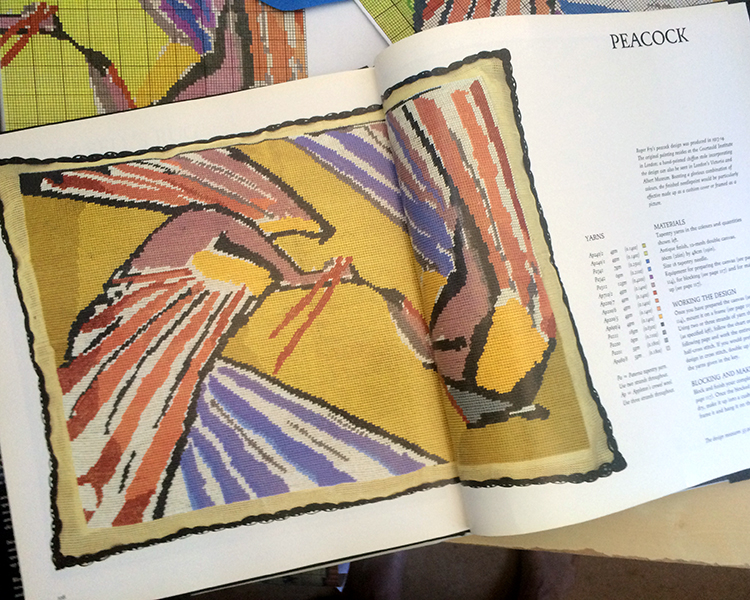
Peacock, designed by Roger Bell in 1913–14.

Peacock, designed by Roger Bell in 1913–14.

I came across this remarkable book, Bloomsbury Needlepoint From the Tapestries at Charleston Farmhouse by Melinda Coss. It is both great art history and charts of designs by Duncan Grant, Roger Fry and Vanessa Bell.

You want this book.

You want this book.

Roger Fry’s original 1914 design was worked on 10-count double mesh canvas, and measured 22 xx 15 inches (55.9 x 38.1 cm).

Roger Fry’s original 1914 design was worked on 10-count double mesh canvas, and measured 22 x 15 inches (55.9 x 38.1 cm).

My version is on 49-count silk gauze with Gütermann silk, 227 x 153 stitches, 4.625 x 3.125 inches (11.75 x 7.9 cm). And although I wish Gütermann had more and better shades of greens and blues (especially), this piece gives me the comfort and focus I need right now. Thank you, tiny needlepoint!


Animals rug: carrying on

animals_061414-2

Things being what they are, the Animals rug is pretty much the only thing I’ve been working on, and I love it (still). It’s been made somewhat easier with my acquisition of a Needlework System 4 stand, which I also love. I had a personal best breakthrough when I managed to stitch an entire flying saucer-paisley motif correctly (main border, left middle). Compare to the other two, and you’ll see the, um, variations. There are three more to stitch, so we’ll see how that goes.

The area below the blue birds is about to get very interesting, as I work the swirly-jagged yellow border reversed at the bottom. I think the terminal flowers might appear behind the blue birds’ tails. After I get that border in, I’ll be able to determine what else will go in the background.

Here’s a closer view of the center panel:

animals_061414-1

I felt very clever using the flower colors on the big blue birds’ tails. There is a garland of small flowers in the center shape with a yellow background, and I’m undecided what colors to work them in, likewise with the wing-shaped leaves.

Details: 49-count silk gauze, 281 x 398 stitches — well now a bit more (5.75 x 8.125+ inches, 14.57 x 20.63+ cm); DMC cotton and Gütermann silk. Original design by Natalia Frank.


new build: the great green room

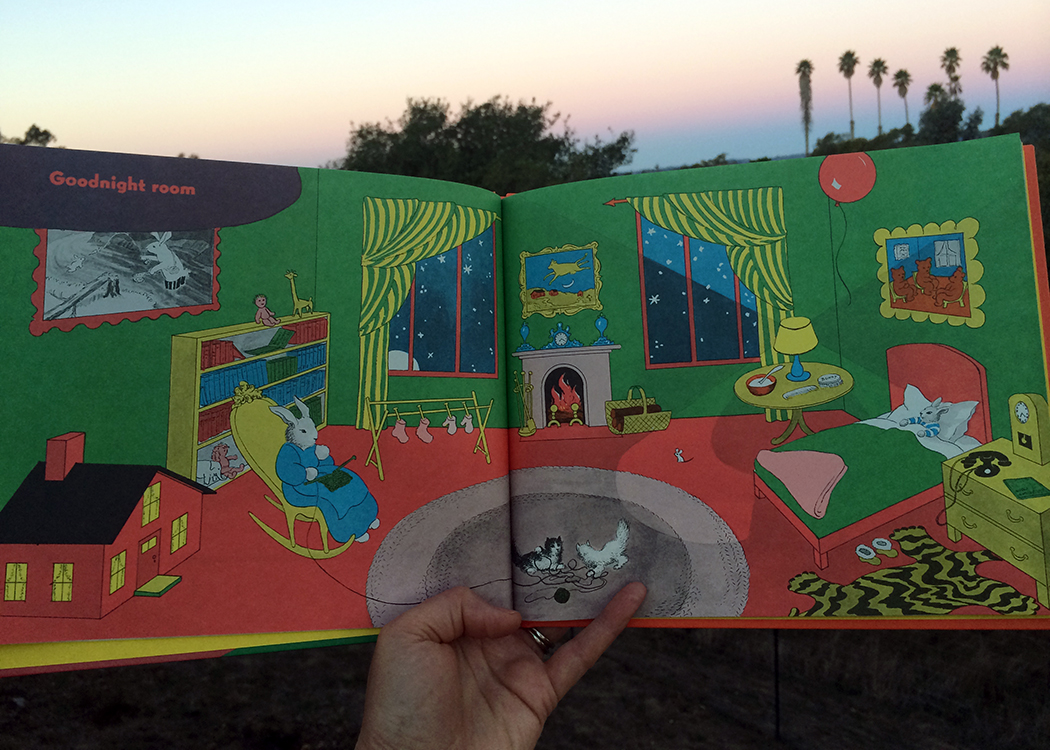
Goodnight Moon great green room

The great green room in “Goodnight Moon” by Margaret Wise Brown, with pictures by Clement Hurd

Goodnight Moon captivates baby Madeline as much as it did her mother, so for Maddie’s first birthday I’m building a roombox of the great green room. Here’s a picture (taken at dawn, actually) to mark when the idea came to me — and to show those of you unfamiliar with great modern literature and art — what the great green room looks like.

One of the notable features of Clement Hurd’s pictures is his use of flat, vibrant color. After several color studies, turns out it’s pretty much kelly green, vermillion and bright yellow. The how of the colors — whether to use paint or paper or polymer clay — is a figure-out-as-I-go-along. Similarly, what will be crafted from cardstock, built of wood and painted or modeled in clay. I am printing custom fabric for the curtains at Spoonflower. I briefly considered trying to 3D print some of the objéts, but there’s not enough time for me to learn the technology before her March birthday. (It has prompted me to enroll in a 3D class at Skillshare, though :)

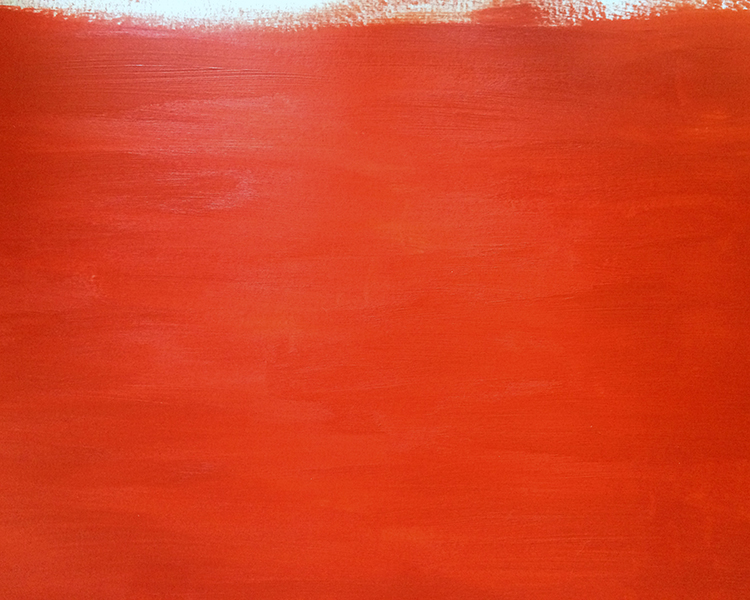
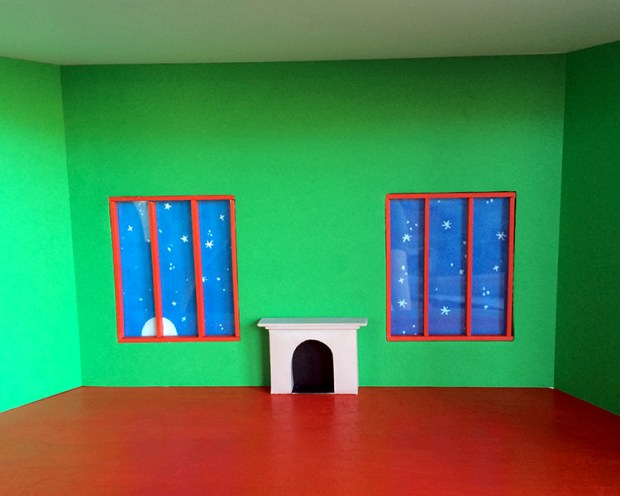
For the walls, built of foamcore for lightness, I chose cardstock to cover, but I painted the floor.

great green room floor

Vermillion

great green room building

Many color and materials decisions were made.

Windows are trimmed in painted 3/16 x 1/8-inch basswood. I edited the views of starry night sky in Photoshop and taped them behind the plexiglass, temporarily for now.

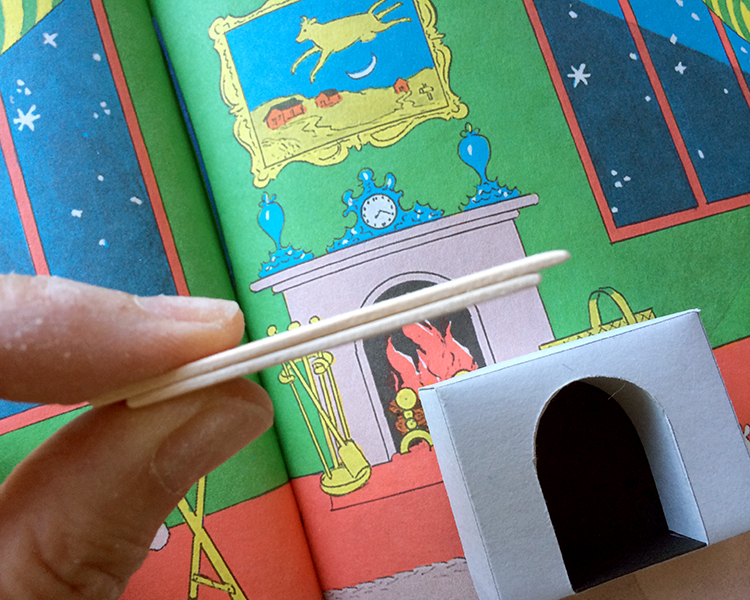
The fireplace is built from cardstock, with a wood mantle. The fire will be illuminated.

ggr_fireplace_02

ggr_fireplace_mantle

Here you can see my sawdusty fingers holding the mantle cut from 1/16 x 1/2-inch basswood. I matched the pinky-gray color and painted the assembly with acrylic paint.
Goodnight moon roombox build

The great green room before the Bunny family moved in

You can see in the window trim gaps how not-90° I cut the foamcore, *cringe* but the curtains will (mostly) hide that imperfection.

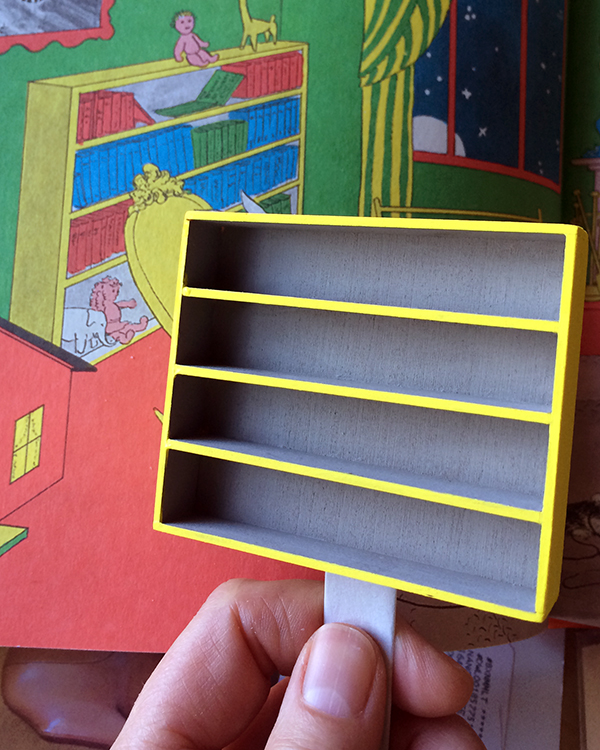
Next is the bookcase, built of 1/16 x 1/2-inch basswood. When I was matching the yellow to paint, I noticed that the inside of the case is gray. What a curious detail. But hey, true to the great green room as painted by Mr. Hurd am I.
First coat of paint(s)
First coat of paint(s)

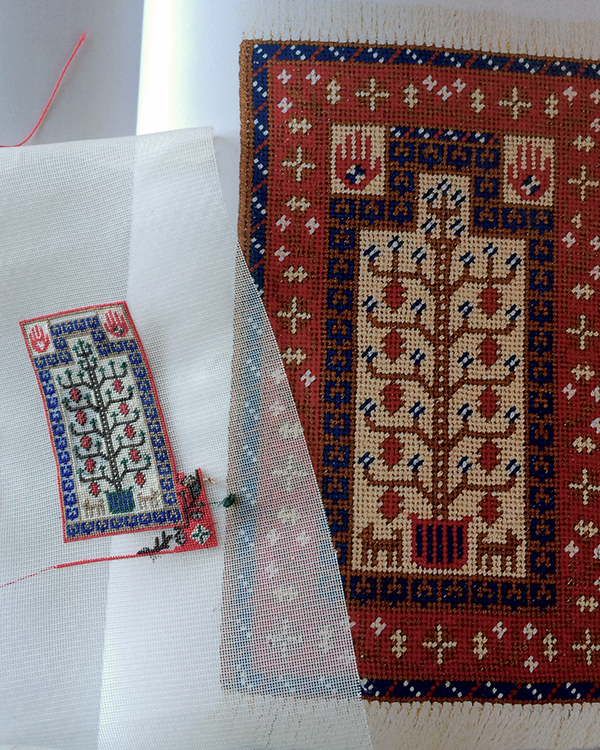
tiny baluchi prayer rug

miniature baluchi prayer rug

My little guy next to a photo of the original rug pattern (5.25 x 3.5 in, 137 x 88 mm)

I wanted to do a “quick” small rug and started this 20th century Anatolian prayer rug design from Meik and Ian McNaughton’s Making Miniature Oriental Rugs & Carpets. Their patterns are charted for 24-count canvas and crewel wool or cotton floss, so mine, stitched on 49-count silk gauze with Gütermann silk, will be about half their projected size of 5.25 x 3.5 in, 137 x 88 mm. But no fringe. I hate fringe.

Of course I had to change up some of the colors. Wanting to emphasize the vitality of the tree of life motif, I added a deep green for the five-stitch leaves, and to carry the “live” through to the red border. My version kind of has a Scandinavian pinecones and twigs-with-leaves thing mixed in with the pomegranates on the tree, but in my worldview, these go together.

miniature baluchi prayer rug

The compromised area is just to the right of the lower right creature, past the Greek-looking motif in the red border :(

Started the first of the year, I got sick soon after, and managed to snip a bit of the silk gauze trimming a waste knot :( (I blame the psychotics sold as OTC cold meds.) I carefully stitched the threads in where the tiny cut is, and hope the fusible backing I’ll use to finish it will stabilize it sufficiently. If not, I might need to add a dot of fabric glue or something. It’s not horribly visible, and I’ll just remind the tiny people to take off their shoes and not scuff their feet. Or position an ottoman over the spot. (Haha, see what I almost did there? Ottoman over an Anatolian? Get it? Sorry.) Or maybe just let the hole be, and age the whole rug to historic vintage.