Ceiling, Standing Stone, Brick Arch, Yipes Stripes, Bench

ceiling_050316

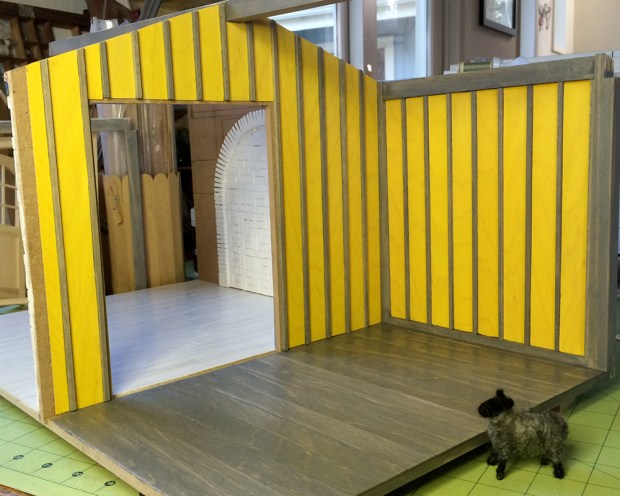
For the Argo Wool Works showroom ceiling, I glued the two roof sections from the Backyard Bungalow base kit together, and edged with half- by quarter-inch (13 x 6 mm) basswood to extend the overhang. I measured the placement of the beams and walls in dry fit like three or four times, encountering anomalies each time.
roof_dryfit_050516.jpg

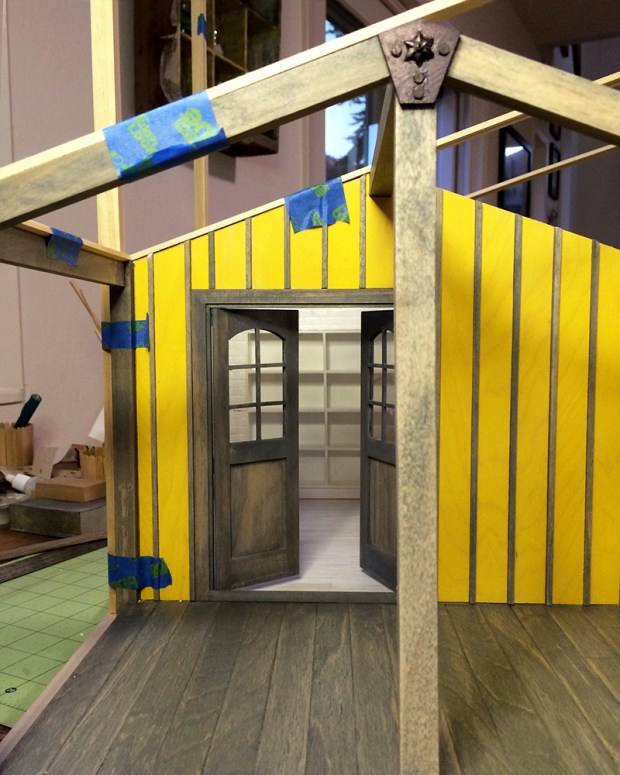
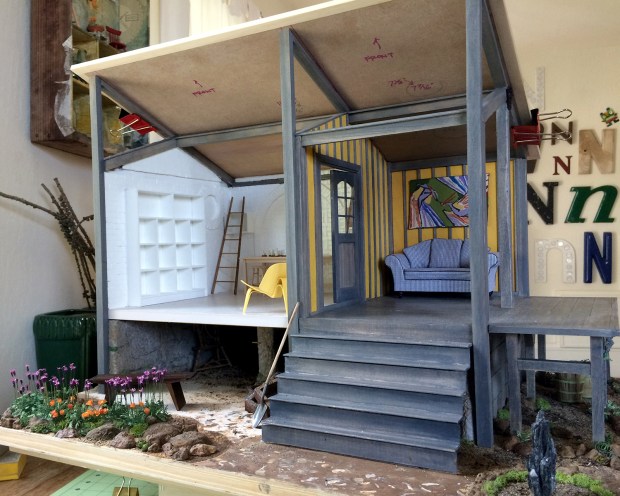
Yet another dry fit, this time with the upper window frames in place, and one section of ceiling planks. I’ve decided a 1/16-inch wiggle room is acceptable, especially since the whole ceiling and under eaves will be semigloss white, and any gaps will blend into the painted bricks… or something. I’m using the ever versatile 3/4-inch rustic clapboard siding from miniatures.com to cover the ceiling.

In the lower right of the photo you can see this standing stone feature I’m working on:

upright_rock_050516

It’s two gorgeous crystalline mineral shards that I promptly forgot the name of, found at a very eccentric bead and rock shop here in Pacifica.

back_brick_arch_050516

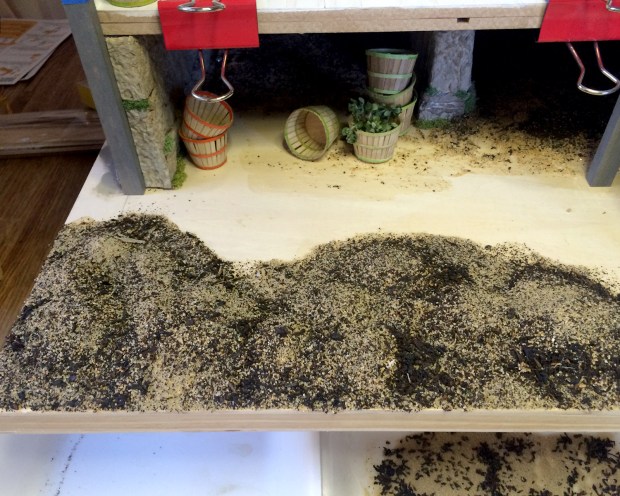
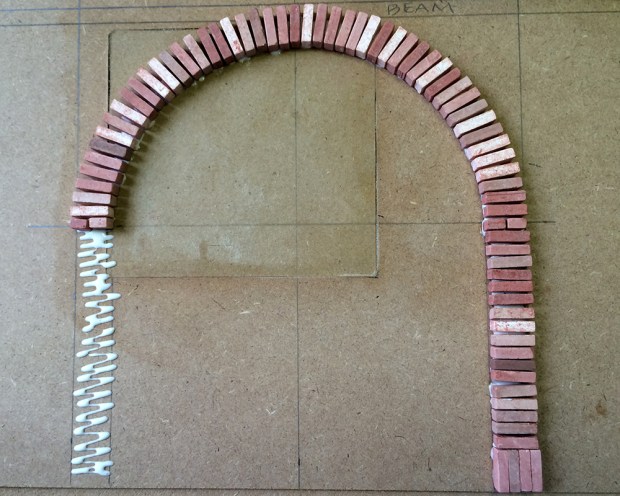
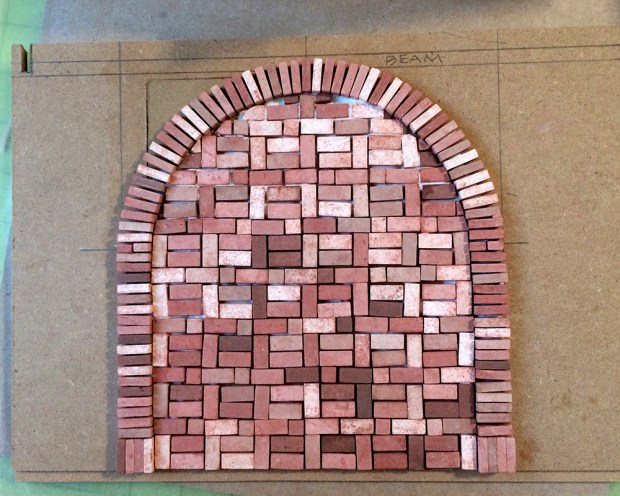
The back of the build was to be clad with the yellow and gray siding, but I decided today to have the bricked-in arch from the interior carry through to the outside wall for interest. I might mess with the foundation to suggest remnants of more of the building, too. There’s only just over an inch of space on the base, but I think it’ll be enough :)
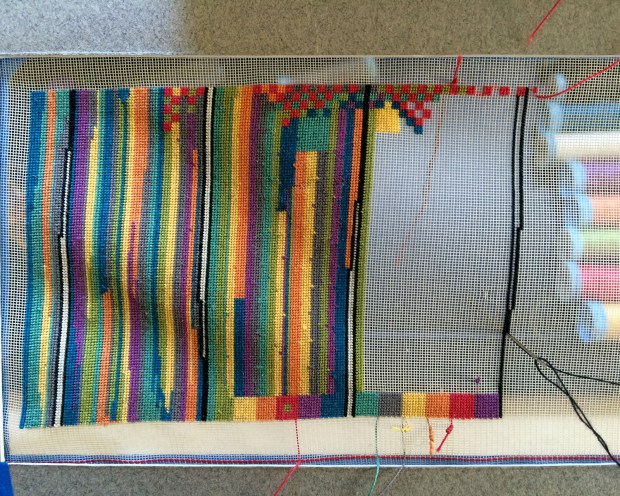
yipes_stripes_050516

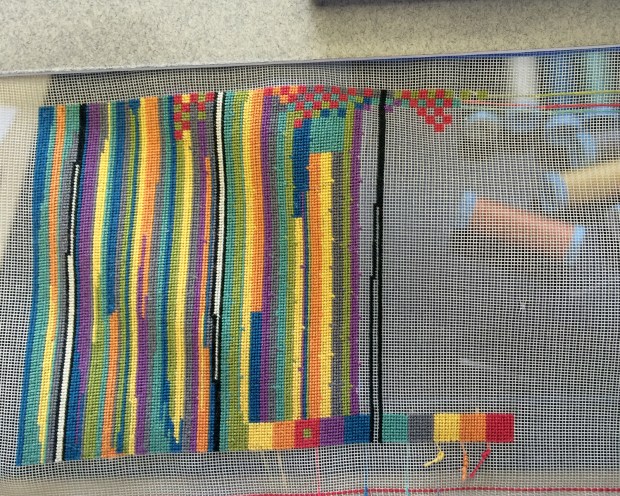
Small progress on the Yipes, Stripes rug, at 2.5 x +2.5 inches, it’s a bit more than half finished. It’ll fit well in the showroom. (Stitched on 48-count silk gauze with ten colors of Gütermann silk; making up the design as I stitch :)

bench_silk_050516

And here, lit by the westering sun, is my first bit of tie silk upholstery — nothing too challenging. Our dear BW sent a vintage Daisy House bench kit (so sad they’re no longer in business), and the fabric is a lustrous gray, black and ivory woven dot pattern. Thanks again, BW and Suz and Dave!
Fairy Influx

FG_09_040216

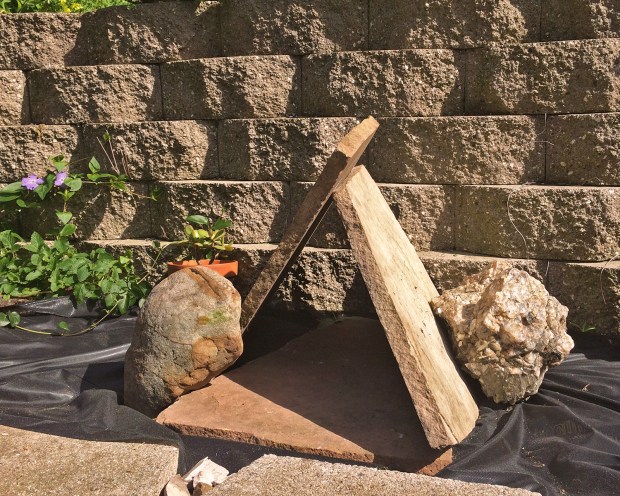
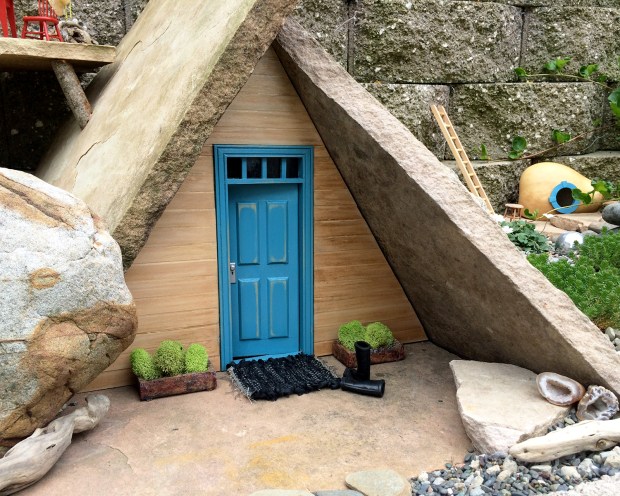
We have some new neighbors. I’ve not actually met them yet, but they’ve been busy, and seem a bit reclusive and perhaps, eccentric.

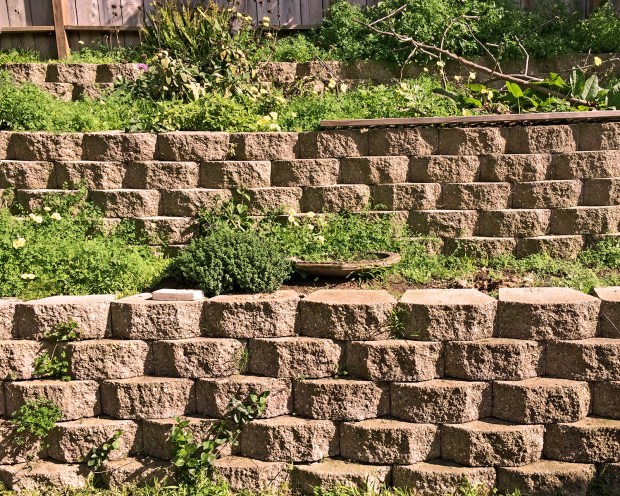
In early February, I noticed some changes in my urban back yard retaining terrace, which I like to call the castle wall.

site_020916

A raised planting bed disappeared, and a rudimentary structure appeared.

flagstone_022116

Rocks and flagstone were relocated, and weed cloth laid down.

front_fitting_022216

A pieced foamcore front appeared and disappeared several times, and then a front door!

front_fitting_door_022216.jpg

The foamcore was replaced by MDF, and a gourd with a circular window.

front_fitting_022316

What could possibly happen next?

Ties, Lavender, Echeveria, Rocks

Albie_ties_031916

Albie immediately curled up on the rest of the ties, and I set up to make more lavender.

I’m still experimenting with technique, but I try to make a shrubbery’s worth of stems each time, so if they change I can call them varieties or cultivars :) #miniaturejustifications

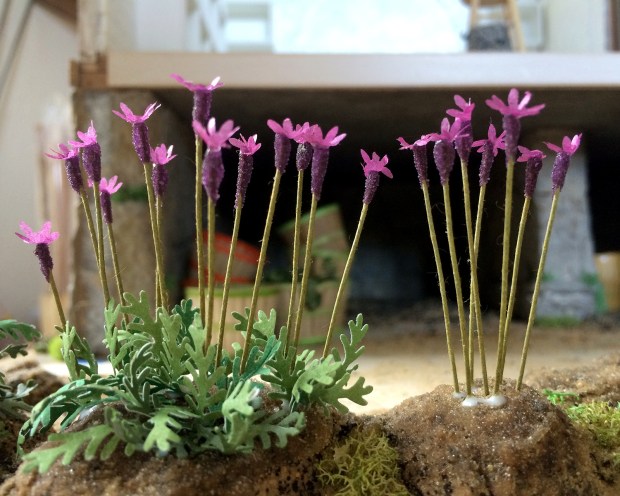
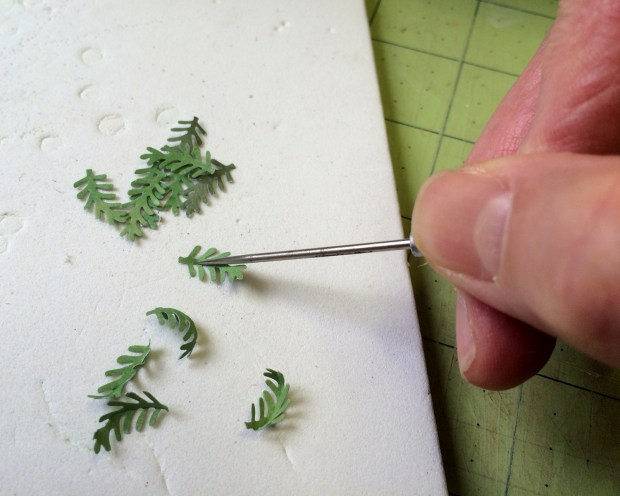
I’m using paper-wrapped stem wire, purple superfine sand (Activa Scenic brand) for the flowers, tissue paper for the petals, tacky glue, and cardstock painted  grayish-green for the foliage. Most tutorials call for lycopodium as foliage, but I’ve decided on this well-designed and versatile punch from Punch Bunch.

fern_punch02_032016

I got my birthday order from The Miniature Garden, which included some 28-gauge paper covered stem wire, yay! Turns out what I’ve been using is 26-gauge, so voilà, the first (subtle) variety. (The #28 is on the left.)

26_28_032016

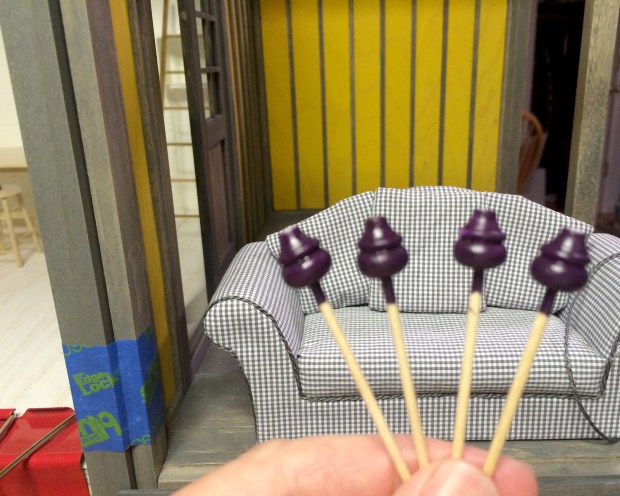
I cut 1.5-inch (3.8 cm) lengths of stem wire and rolled one end a scant quarter-inch (6mm) in tacky glue.

glue_stems_sand_032016

Rather than dip the glued end, I pour the sand repeatedly over the stem wire. This builds up and preserves the shape of the flower.

drying stems_032016

The sanded stems are placed upright to dry. (The fluffy ones you see on the left are made with Flowersoft, a poofy kind of scatter that I’m considering using.)

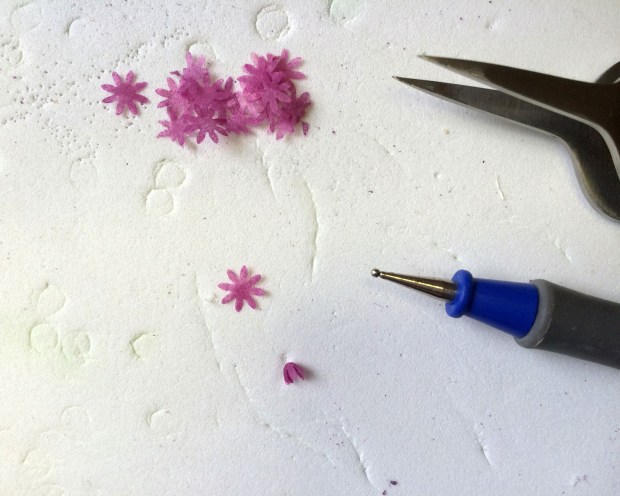
The petals on top are made from tissue paper punched with a small flower shape, cupped with a ball stylus, and glued to the flower.

cupping_flowers_032016.jpg

In the foreground you can see the Flowersoft flowers with petals cut from waxed paper tinted with a marker. Behind those are the sanded flowers with tissue petals.

flowersoft_stems_032016

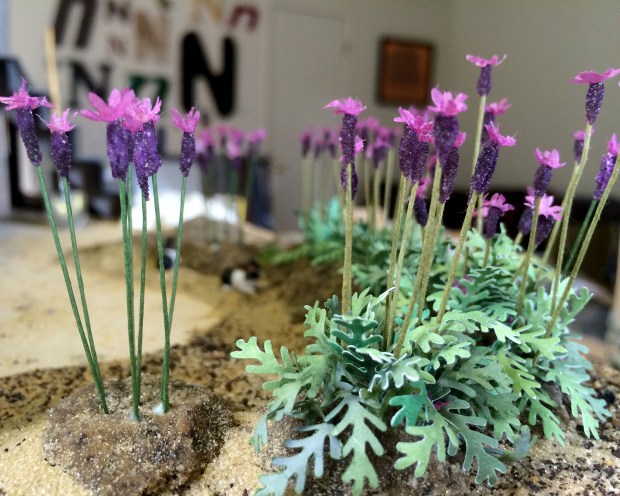
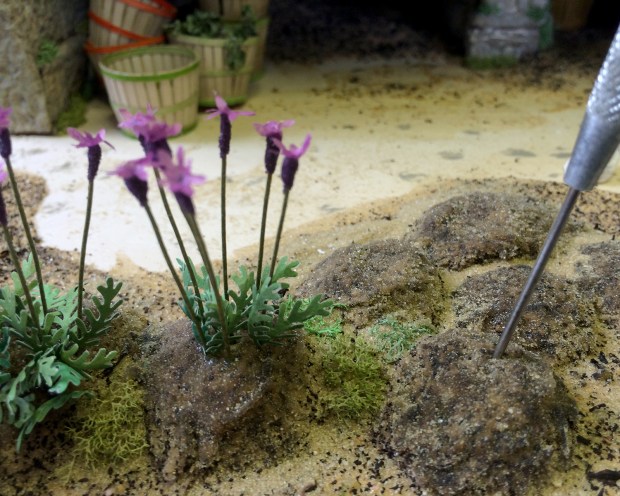
The lavender spikes are planted in the mounds with an awl and glue.

making_holes_032016

These ones were built on #26 wire stems.

26_gauge_planted_032016

The foliage is shaped with a stylus and glued in around the stems to create a pleasantly convincing, if stylized, base.

shaping_ferns_032016

eche_lav_032016

Making more echeveria hen and chicks to cluster in around the lavender mounds. If you look closely above, you can see once again the difference between #26 and #28 (on the right) stem wire.

paperclay_rocks_unThere’s an entire molds-worth of paperclay rocks dried and awaiting mineralization. These will be nestled and half-buried around the lavender, poppy and succulents bed as an unobtrusive border.
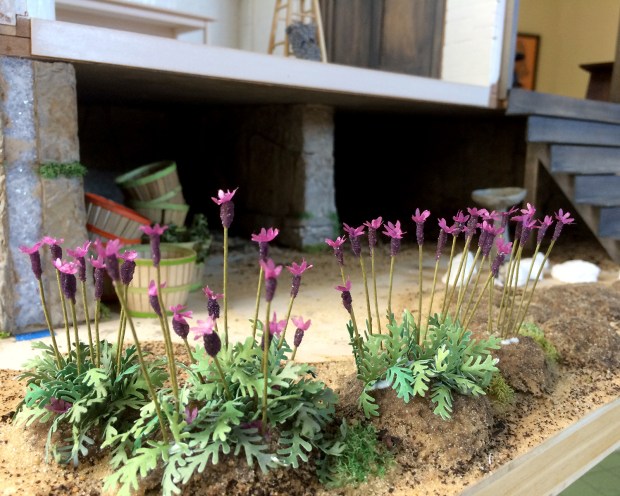
Happy vernal equinox (for those of us in the Northern Hemisphere)!


Lavender, Ties

lavender_031916-1I mentioned that Argo Wool Works also grows lavender. There are a few good approaches to making miniature lavender, and after a thoughtful review, I’ve adopted a hybrid technique. This is always the question in miniatures: how best to convey a feeling, an illusion of the real thing? Absolute adherence to reality, or a simpatico synthesis of appearance? Answers often surprise me, as did this lavender.
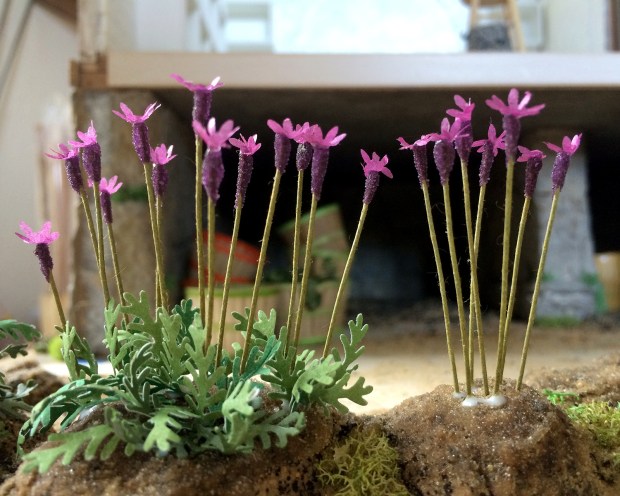
lavender_031916-2These are the start of the demonstration lavender beds outside the AWW showroom, as planted in the egg styrofoam and sand-covered mounds established earlier. I’ll post a more step-by-step later, when I’ve more available time. I think the method is worthwhile :)
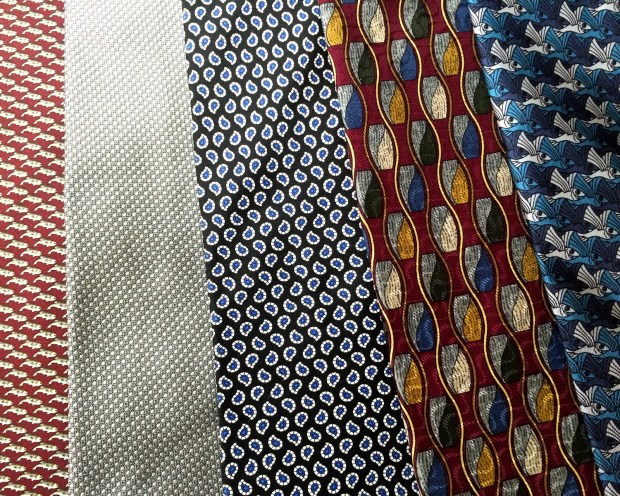
The final observances of my family’s multiple March birthdays have been celebrated. I was delighted to receive an unexpected gift from one of my oldest, dearest friends, who noted my quest for fabulous silk ties with a large bag of said items. Her husband — another oldest, dearest friend — is a professional wearer of ties.ties_031916.jpgThese are the top five I pulled out for the squiggly vintage Chippendale sofa, and/or throw pillows. The far left is out of focus, but is a delightful fish pattern. The next is an exquisite gray/black circular motif… on through a classic understated Paisley, a retro-looking I don’t even know what, and a brilliant Escher tribute.

Adding to the Spring bounty is another bestowal of wood veneer and samples that would have otherwise gone into landfill, from family member Tony. This is a large roll of oak veneer, and samples of bamboo, cut both horizontally and vertically.more_veneer_031916So, so beautiful, and interesting! May your cups runneth over with unexpected gifts and bounty to share.
The Thing Missing From My Life

Short answer? Paperclay. Long answer follows.

back_wall_030516

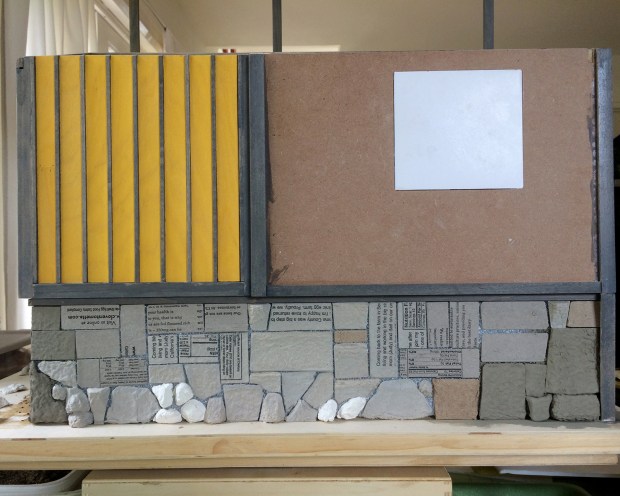
I settled in to finish the long back foundation wall, literally before the storm and power went out. Above you see the carton materials wrapped from the left side wall and primed in Ceramcoat “Mudstone”, then the beginnings of the long traverse using various parts of egg carton. Then I noticed something.

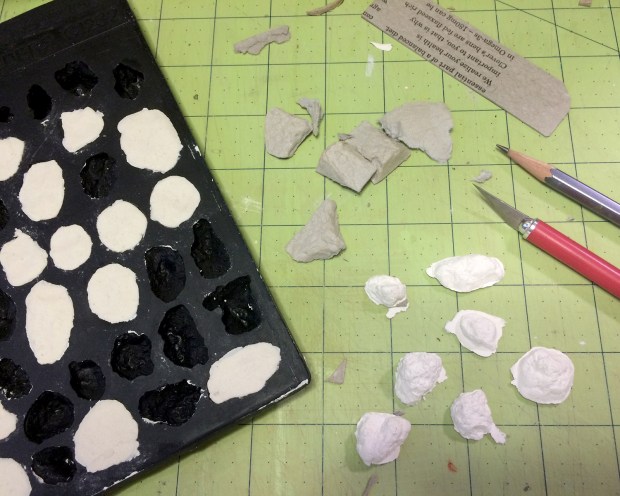
A while ago, our thoughtful reader and observer Barbara W. had sent me a mold from Woodland Scenics. Although sized as “boulders” it occurred to me that at 1:12 scale they would make excellent rubble, the kind I was using in the foundation.

paperclay_rocks_030516.jpg

I reviewed my on-hand options and chose a pouch of Creative Paperclay. I had never worked with this material before, though it was on my list. I chose some of the larger boulder forms and filled the mold. I forgot about it until I started the back wall foundation masonry. Then I noticed that the molded boulders had a similar texture to the carton materials I was using. Like, really similar.

The dried paperclay is a remarkable material. It is extremely stable and lightweight, easy to trim, and as I was soon to find out, paints very well.

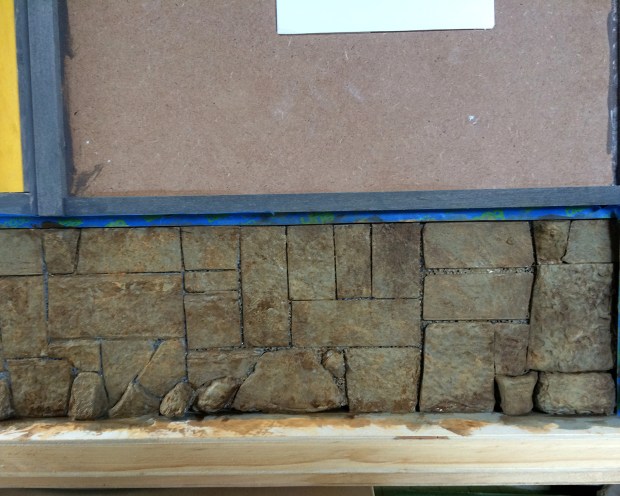
back_wall_rocked_030616.jpgI reloaded the mold with the full set of rocks in paperclay to use around the rest of the foundation, and finished out the back wall with the few that had already dried (those in white), along with egg carton and packaging forms. It seems to take two or three days for the paperclay to dry thoroughly.
back_wall_washes_030616

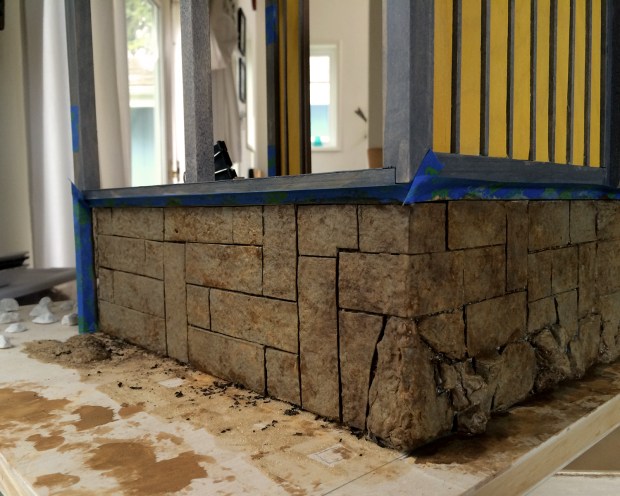
I applied the same set of acrylic layers and washes as the interior foundation.

corner_030616.jpg

Here’s a dramatic corner shot.

back_wall_030616

And the entire finished back foundation wall.

back_moss_030616

Although there is additional touch up and detailing to add, this needs to dry thoroughly. I could not resist gluing in some moss, though, to make it come alive. Thanks, BW, for the gift of the mold and allowing me to discover paperclay. The fun has just commenced.

Couch, Mounds, Stripes, Sea Wall Fail

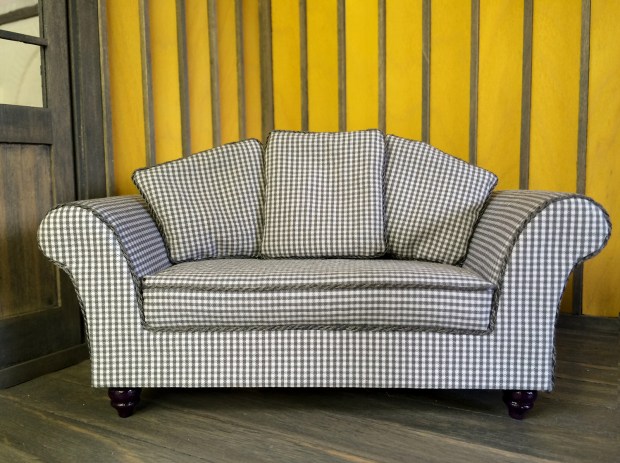
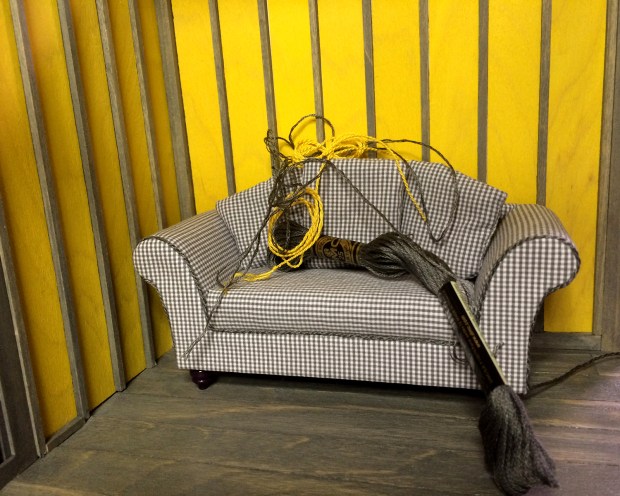
couch_022816So happy with the results from the first of Kris Compas’s new line of kits, the Lisa Sofa. The micro-check fabric is cut from a thrift store-sourced man’s shirt. I used three strands of DMC floss to make the piping.
couch_022716

This was the couch last night. I thought I was going to use yellow piping — having also considered tomato red, plum, pumpkin and bright olive green — then opted for the charcoal gray. Keeps more options open for pillows and stuff.

couch_feet_022816

The kit comes with unpainted cute fat feet. I used the aubergine acrylic the first set of doors was stained. The feet are not blurry in real life.

I am a bit surprised how well this curvy couch works on the covered porch. I had intended to use a sleek modern couch, upholstered in wool. Alternately, I have an old Houseworks Chippendale sofa kit, the one with the squiggly back. If I can find the right scale silk brocade, or maybe a fantastic Paisley man’s tie… then the wood base and legs could be yellow… The deadline for this build-along project is September 26. I don’t have to decide now :)

mounds_022716

I cut slices of styrofoam eggs to build up areas of the ground and glued them to the project board.

mounds_02_022716

I mixed thick glue and Ceramcoat “Trail Tan” and coated the mounds and surrounding area, then sprinkled on a fine sand/tea mixture. Still drying. In addition to farming wool, Argo Wool Works also grows lavender. There will be lots of it, as well as California poppies and succulents. I found this awesome echeveria tutorial from Annie Christensen of We Love Miniatures. Very excited to begin propagating.

yipes_stripes_022716

Small progress on the Yipes, Stripes Meets Checks rug.

seawall_022716

End of day Friday, B left work early and we went down to Sharp Park to watch the waves. We walked out onto the pier, and then along the esplanade. This is where a sink hole opened up in the sea wall a few storms ago. There used to be about eight more feet of walkway there. The sun was setting and there was a blowing mist in the air from the waves. A somber view of the ocean’s power.

Also, viewed together, the Yipes, Stripes rug and this photo have a certain commonality.
O_O

Hide one’s light under a bushel

bushels_022216

I wound up making six bushel baskets from Kris Compas’s tutorial. I used one-inch wood circles that I had on hand for the base, and after the second basket, redrew the pattern so all the uprights were like fringe, instead of individual slats. (The pattern is up on 1inchminis. There’s also a version to print multiples. Yay no measuring.) By the fifth or sixth basket I was getting a nice bulbous curve by shaping it over the top of a two-ounce acrylic paint bottle. Coopering the top rim was also much easier on the paint bottle form.

I’m working mostly on the new project now, but the in-progress Argo Wool Works Showroom is a nice bright place to sit and think and plan, with a cup of tea. (The ladders are by Sir Thomas Thumb, to be used to display hanging goods. I also splurged with the 2015 contest award and bought a scythe o_O)

Now I have to go make a 12:1 cup of tea :)


Yipes, Stripes; Keystone, Geometry

www.nancyland.com

Work continues on the Yipes, Stripes rug. A new working title has evolved: Stripes Invaded by Checks. It’s a very enjoyable and intuitive process watching it develop. Thus far we have the chaos of irregular stripes organizing themselves into more regular expression, as influenced by the surprise appearance of an upstart checkerboard pattern. I expect I’ll know how it’ll turn out at the end — when the length reaches six inches.

Making steady progress (and regress) on the new build. I finished the interior brickwork, and after a few color assays, decided on a soft white semigloss. There’s like four layers of gesso, some DecoArt Snow-Tex for mortar texture, floor and wall gaps filled with DAP CrackShot, and three layers of acrylic latex enamel paint. That’s authentic, right?

www.nancyland.com

I’ve one more sanding and finish coat to do on the wall cabinet.

I glued in place the three interior walls, back porch wall and supports, and beams.

www.nancyland.com

This is by far the most fiddling I’ve done with a base kit and am encountering many delicious measuring opportunities. The keystone pieces provided with the kit make excellent hide-one’s-crap-joinery structural reinforcing plates. I mentioned earlier how delighted I am with the hardware I ordered from Olde Mountain Miniatures. Here you see her star-shaped anchor plates and some punched paper bolts applied to the keystone.

I also stepped away from the aubergine-stained doors, opting instead to carry through with the gray stain. This leaves me far more options for adding color, and as I intend to use this build as a prop for photographing products, the more neutral the better.

www.nancyland.com

The entire rest of the day was spent figuring out how to build the additional support posts, beams and window casings. I felt like Leonardo da Vinci contemplating Vitruvian Man or something, but I finally worked out the various dimensions (if not the angles; that’s what sandpaper is for). Then it was time to watch the sun set on this warm and mild day with a glass of wine. I’ll sketch out and record my findings tomorrow — many dimensions of strip wood are involved! — and work out how to correct the warp in the kit base board :(

No wait, I mean :) That’s tomorrow.

Gratitude, Framing

Thank you all for your hearty congratulations and encouragement along the way. I really was surprised to win again, and a bit overwhelmed. When I got this comment from Bennie:

comment_020216

Something clicked with “I watched it evolve from beginning to end!” Sharing our work as we did has created a genuinely supportive community for both sharers and viewers, something I value. For me, there are elements of vulnerability and trust in posting imperfect works-in-progress, in letting you see unedited glimpses of my messy studio, my naked un-manicured fingers. One of my motivations is to spark your creativity, as a maker or a viewer. Inspiring appreciation, fostering delight, is another. So thank you for dropping by. Really truly.

The light today is crazy, brilliantly sunny then dark and gray. But I was glad to arrive at this point in the new build:

framing01_020216

I got enough pieces from a second kit to be able to get a basic (and square) frame up, and determine with only minor maths the additional posts and casings that need to be built. Starting with the porch support post (finally).

framing02_020216

Next, I’ll knock it all flat again to finish the interiors and exterior cladding, then reassemble with omg glue.

A peek at the side wall progress:

interior_020216

Now back to bricking.


Floors, Brickwork, Walls, Circus!

www.nancyland.com

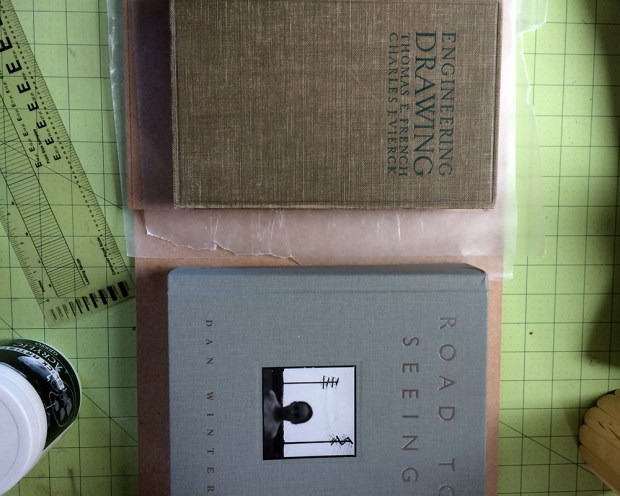
I use great books to weight the flooring as it dries flat. I like to think some of the principles and observations seep into the wood and inform the structure.

www.nancyland.com

I filled the voids in the walls with foam core (smooshes into the corners nicely), thin kraft cardboard (looks like MDF, sandable) and wood glue (dries hard). One of the side walls has a large arch that used to open into another room; it’s since been bricked over.

www.nancyland.com

The century-old oak beams are still visible on the interior walls. I whittle-aged them without stabbing myself. Oak is way denser than basswood :)

www.nancyland.com

Oopsie! I mis-measured the height of the arch :/ The century-old oak beam supporting this wall is/was/will be, um, custom fitted.

Then I spent a lot of time staining and sanding. The weather today was mild enough —and not raining! —that I could do it outside. That was nice.

The exterior walls are clad in vertical board-and-batten, stained daffodil Keli yellow and classic gray.

www.nancyland.com

Looks like the circus came to town!

“The circus arrives without warning. No announcements precede it. It is simply there, when yesterday it was not.”
—Erin Morgenstern, The Night Circus