Warming Hut Paint Prep

Warming Hut nancyland.com

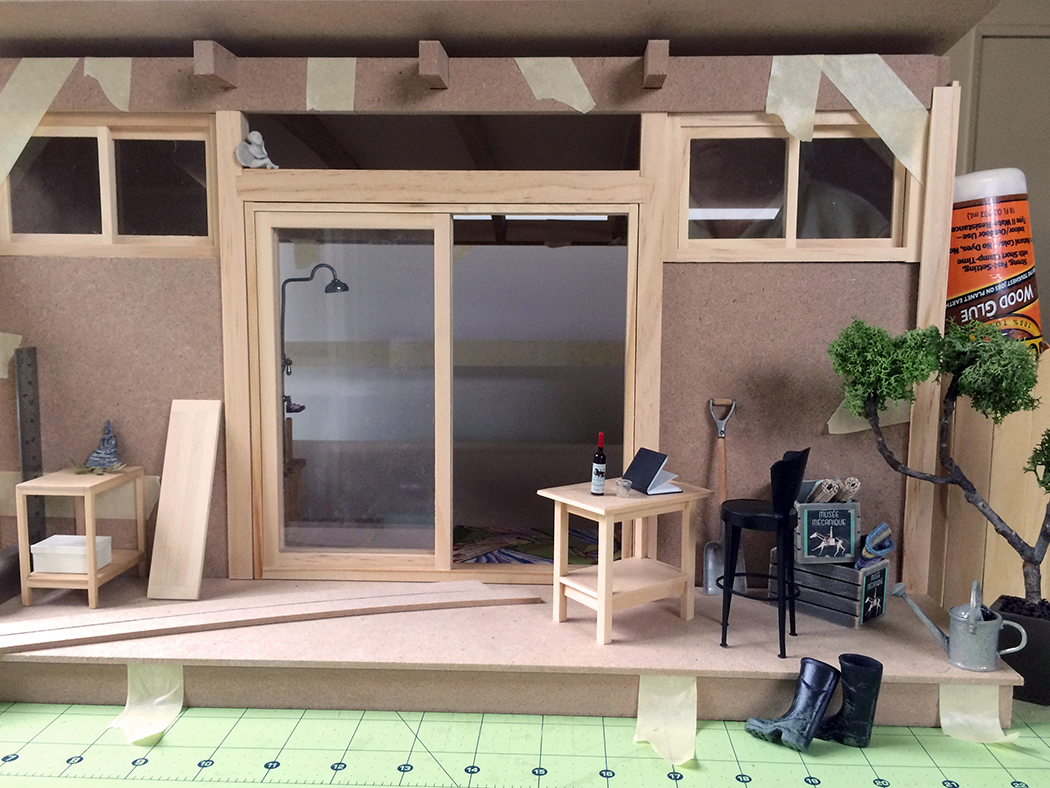
There are many, many sides of many windows that must be masked, with many small strips of masking tape. But still, the paint will leak.

With 90 percent honesty, prepping and painting miniature woodwork is as tedious as prepping and painting their full-size counterparts. For the Sea House Warming Hut, I considered staining all the trim — a mildly less tedious process — using the same Minwax Classic Gray that the exterior cladding will be. Instead, I opted to paint a semigloss “Simply White” for contrast. My impatient paint application suggests the multiple paint layers slapped on over the years in an effort to preserve coastal buildings from salty corrosion.

And so I carry on, striving for both mindfulness in the process and the satisfaction that only sanding with tiny squares of 600-grit paper can bring.

Through the unpainted window above you can see the Chrysnbon kit stove I assembled and painted like 300 different colors before returning to matte black, that will heat the hut. Still unsure if I’ll use it. I’m rather taken with this modern “Shaker” stove, designed by Antonio Citterio with Toan Nguyen in 2006. I think it would translate to 1:12 scale beautifully, and be fun to build.
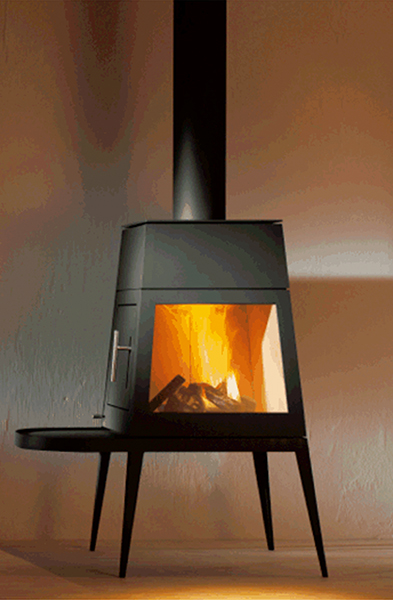
Shaker wood burning stove/fireplace, designed by Antonio Citterio with Toan Nguyen. Beauty.

Shaker wood burning stove/fireplace, designed by Antonio Citterio with Toan Nguyen. Beauty.

Finally, this is the unobscured featured image for March on this site’s landing page. It’s a birch tree in Soquel, California that wants to see you.
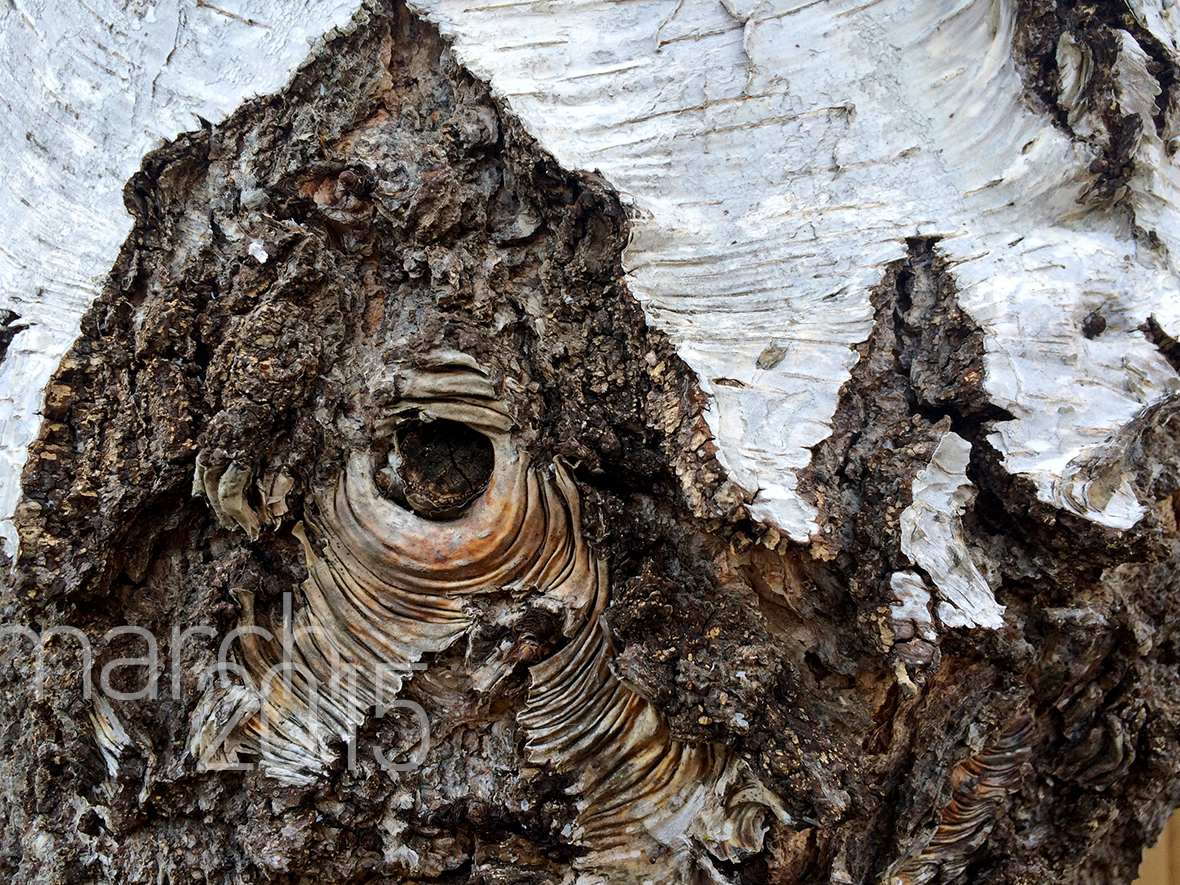
nancyland.com march 2015 header

Until next time, when the paint is dry, and ready to be sanded, then painted. And sanded.

Floor and Build

modern miniature floorThe Sea House Warming Hut floor is bleached, salvaged wood planks milled from the old mythical Sea House Pleasure Pier. Even though the scale of the woodgrain is off, I favor HBS’s  3/4-inch “rustic clapboard siding strips”. And a lot of sanding and pencil point nail heads.

modern miniature building

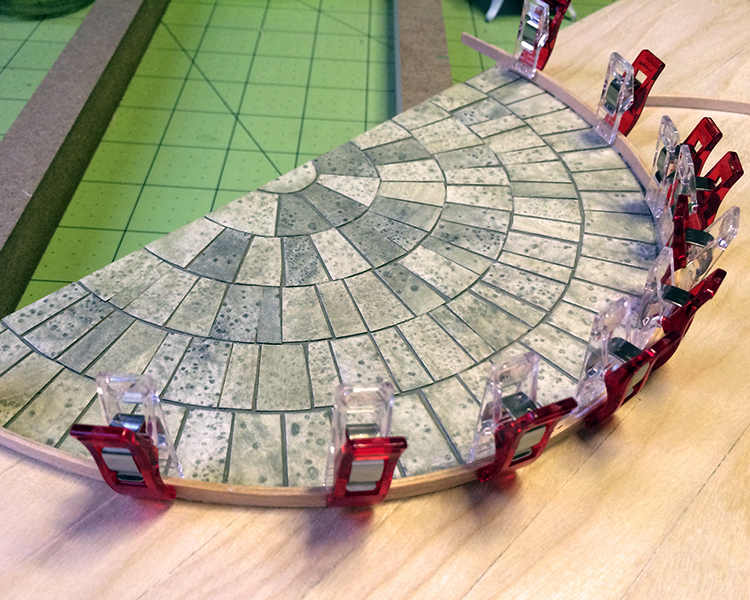
I soaked a few strips of  1/32 x 5/32-inch basswood in water, and bent them round the rim of the same bowl used to draw the half-circle for the stonework. Then I let them dry in the sun (which made me feel better about the freakishly warm weather we’ve been having).

modern miniature woodworking

This part was fiddly. I glued the curved pieces, one at a time, to cover the uneven gap between wood floor and stonework. I held them in place by hand until the glue set up, then clamped to dry fully. This surround will also help keep the debris from the wood stove contained.

modern miniature woodworking

A few coats of satin varnish, and I’m ready to start building.

modern miniatures, Sea House Warming Hut

Also fiddly, especially if one first fits the sidewalls overhanging the back foundation rather than the front, as it says nowhere in the instructions, other than “Sidewalls will slightly overhang the foundation”, and have to pop everything off and start again. Even though one did a complete dry fit.

Next up is painting the trim and the sliding door.

Rafters and Stonework

modern miniatures, Sea House Warming Hut

Sand. Paint. Wait. Sand. Paint. Wait. Sand. Paint. Wait.

Got the first and second coats of paint on the rafters. I’m going to glue it up, then put a third coat on the whole assembly. And yes, it’s the same green (MSL 106 Rhododendron Leaf) used on the Sea House Pavilion :)

The floor is going to be wide-plank salvaged wood from the original Pleasure Pier, inset with a circle of native-quarried stone for the vintage wood-burning stove.

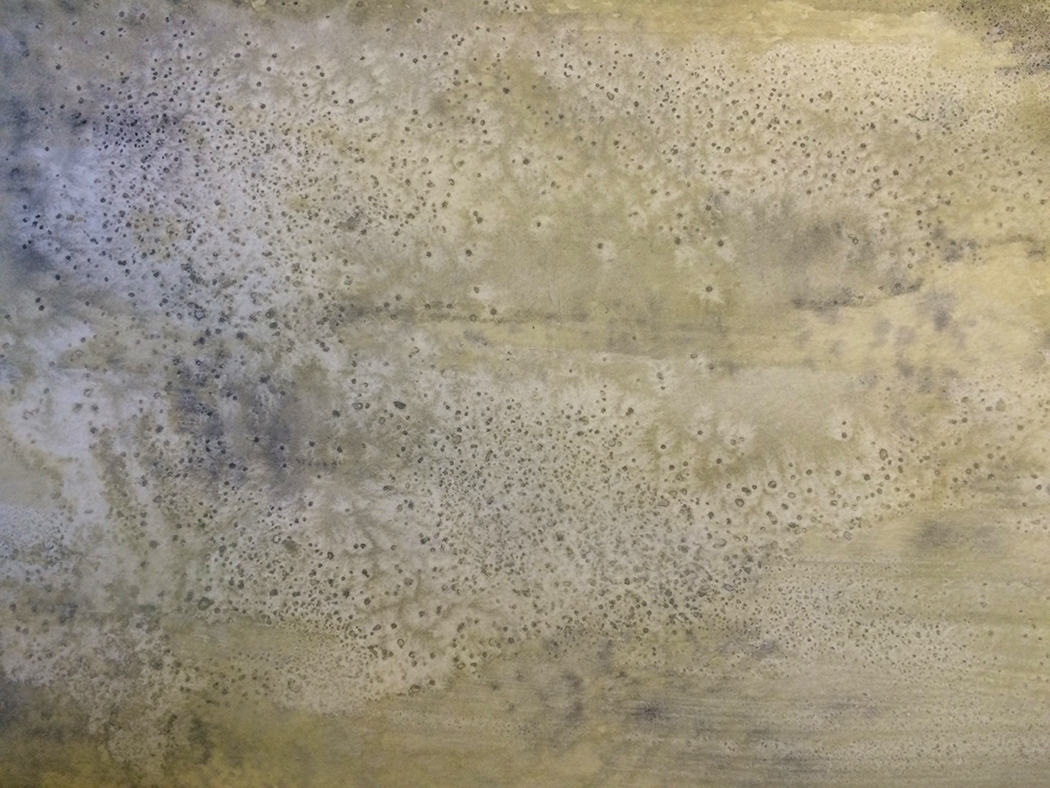
I painted several acrylic washes ( warm and green-gray, black, and “sand”) on 140 lb. watercolor paper and while still wet, sprinkled it with sea salt. Science magic!

modern miniatures, Sea House warming Hut, stone

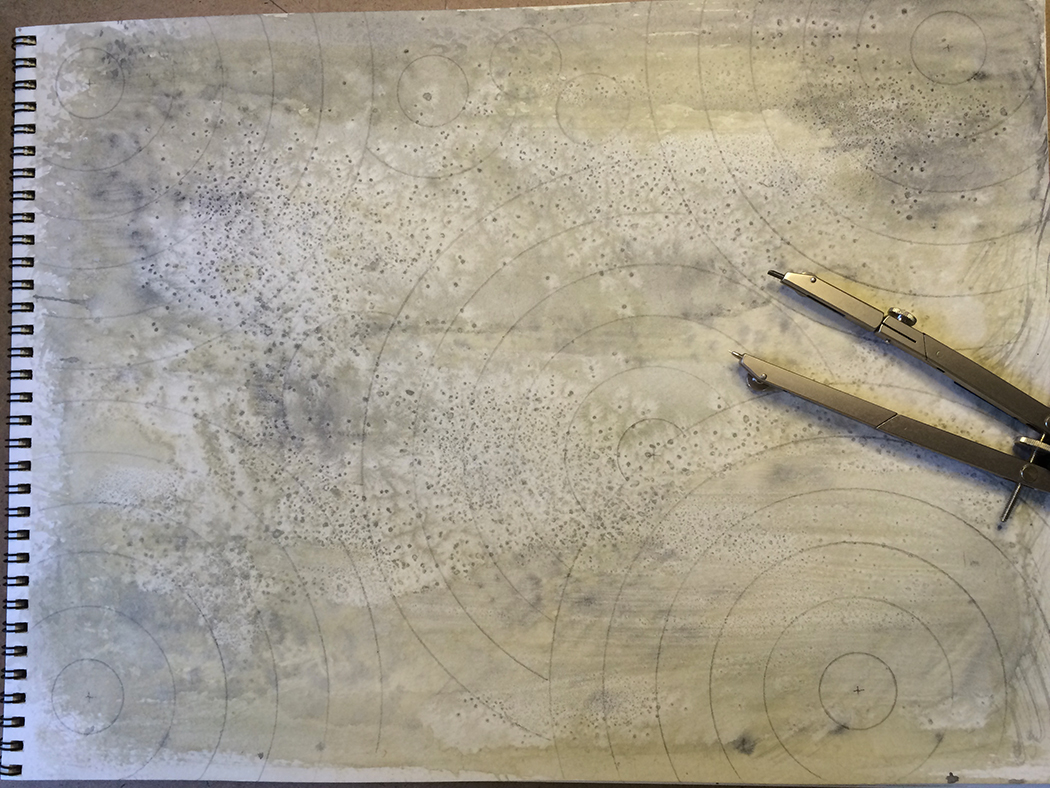
When it was dry, I brushed the salt crystals off, and drew concentric circles the diameter of the surround.

modern miniatures, Sea House Warming Hut, painting stone texture

And cut them out. With scissors.

modern miniatures, Sea House Warming Hut, making stone tile

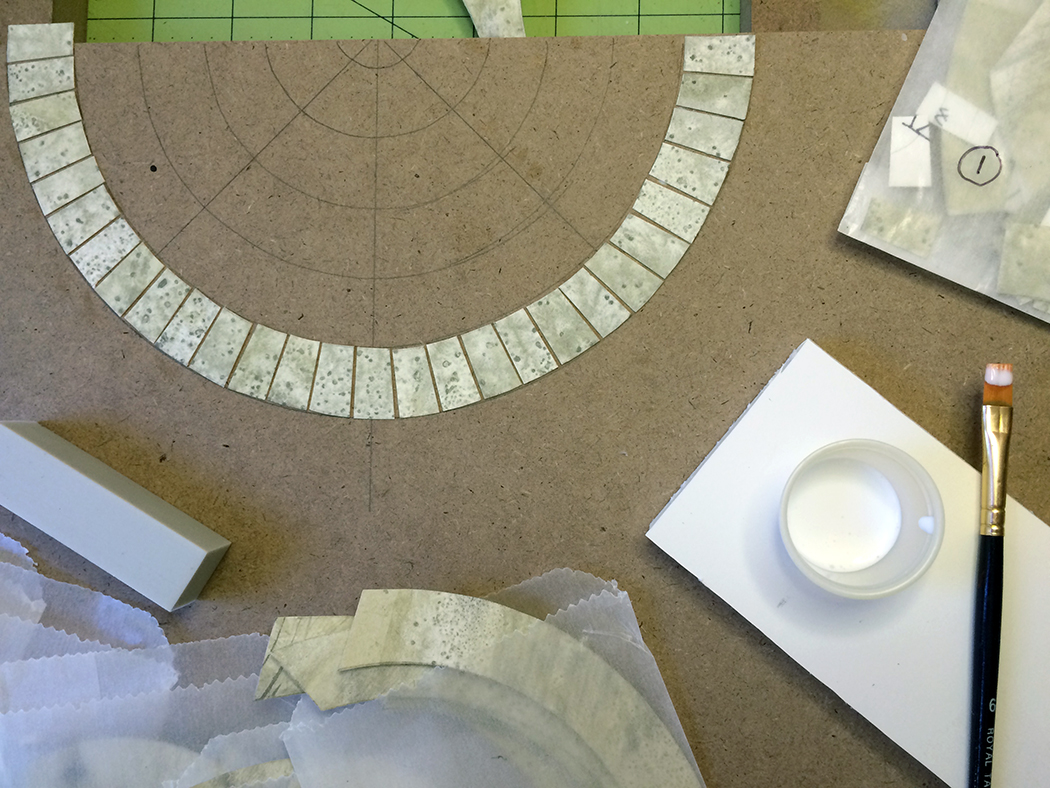
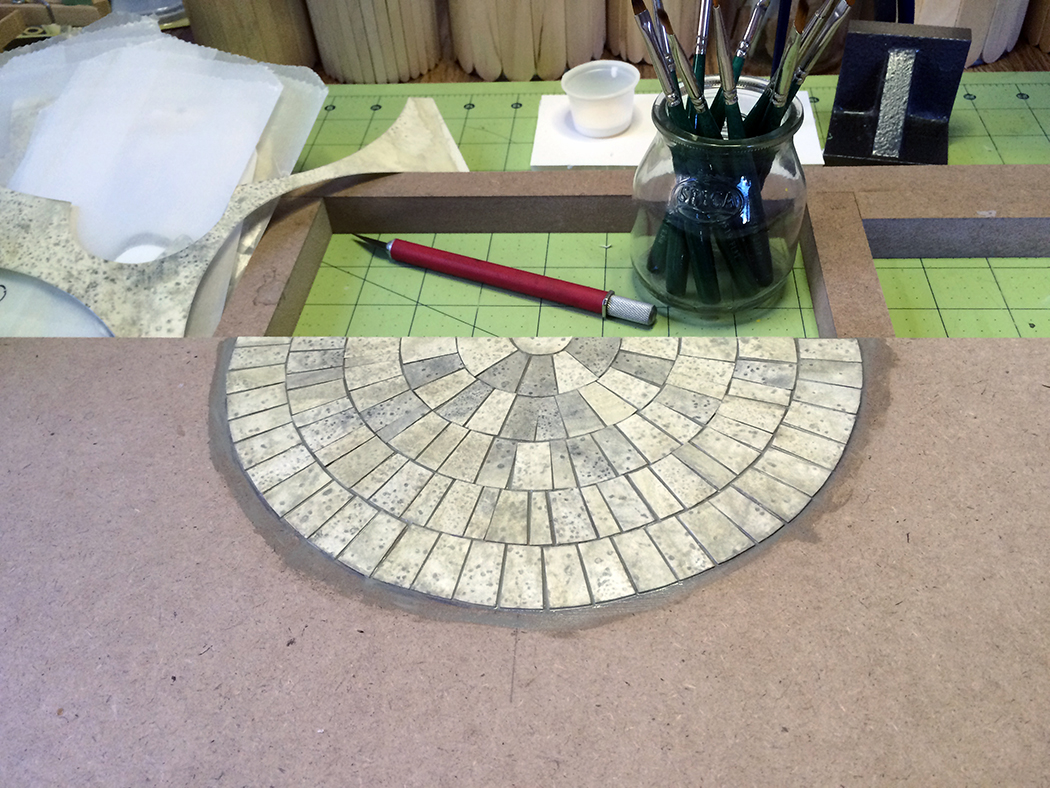
I cut individual tiles to fit the area and glued them down.

modern miniatures, Sea House Warming Hut, stone tiles

I “mortared”with a medium gray acrylic glaze. When that dries, I’ll give a coat or two of matte varnish.

Sea House Warming Hut, modern miniatures, faux stone tile

Next: wood plank flooring.

Sea House Warming Hut

Sea House has a new logo

The venerable and imaginary Sea House organization has a new logo!

Filled a couple of notebook pages with ideas, sketches, color studies and measurements for the new build for the HBS/miniatures.com 2015 Creatin’ Contest, then went back in time and crafted a new logo for the Sea House Pleasure Pier empire.

Sea House Warming Hut nancyland.com

It can get nipply on the North Coast, and a thoughtfully-provisioned warming hut is a welcome respite after a beach meander or cliff walk. Maybe even a destination?

and so it begins

Dry fit of the miniatures.com 2015 contest base kit

Dry fit of the HBS/miniatures.com 2015 contest base kit

Yay! Denise’s City Cottage Kit, the starting point for the HBS/miniatures.com 2015 building contest has arrived. Once again there’s an interesting roof line, and some solid other architectural details that invite interpretation. Here it is in dry-fit. No idea what it might become, but I’ve opened a fresh page in my notebook, and later will pour a glass of wine to help me listen and think.

I’ve 11 months to do so, as the submission deadline is 16 December, 2015. And because we can now submit our entries online, I expect I’ll be working up to the very last day, as my projects tend to expand to the maximum time allotted them.

peacock rug complete

modern miniature peacock rug

After completing stitching and staring at it for a while, I trimmed the edges of the silk gauze to about a quarter-inch (6 mm).

modern miniature peacock rug

I washed and gently blotted it mostly dry, then pinned it into square(ish) and left it to dry overnight.

modern miniature peacock rug

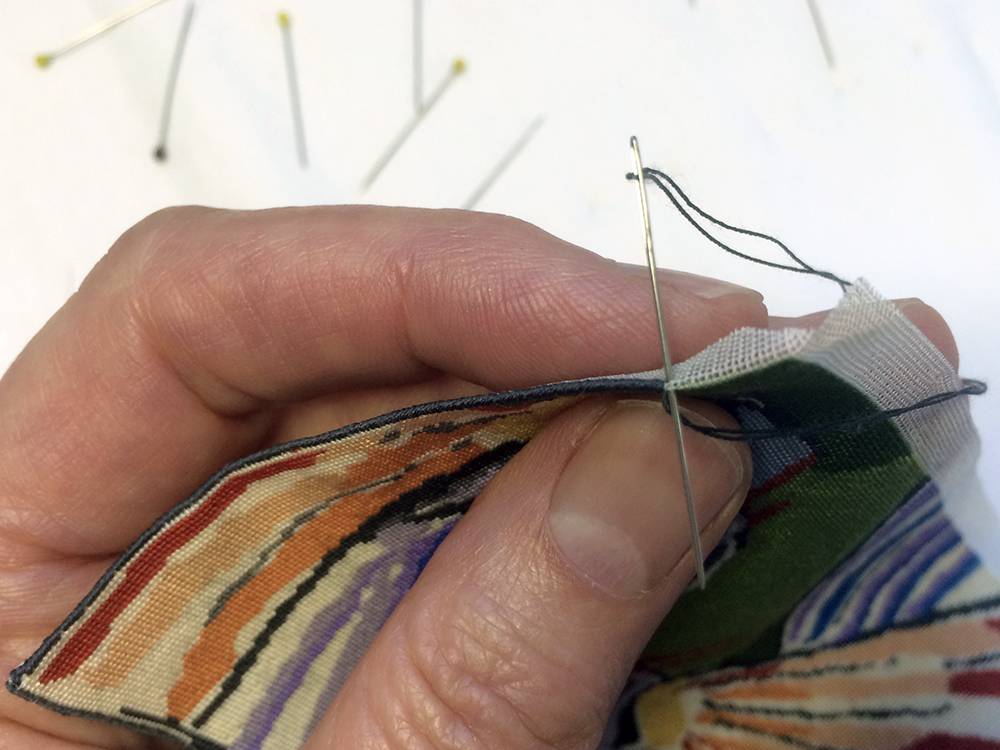
The raw edges are turned to the back, corners mitered, and the edge oversewn exactly one row of the 49-count silk gauze with a double strand of Gütermann silk. I pondered the binding color at length, and finally chose the darker gray.

modern miniatures peacock rug

This is what the back looks like, and shows the combination of tent, basketweave and snarled stitches. Mistakes were made. Many were corrected, but some were discovered too late. Kind of like life.

modern miniature peacock rug

I fused featherweight interfacing to the back, to protect and seal the raw edges. Note to self: dust your build floors more often!

modern miniatures peacock rug

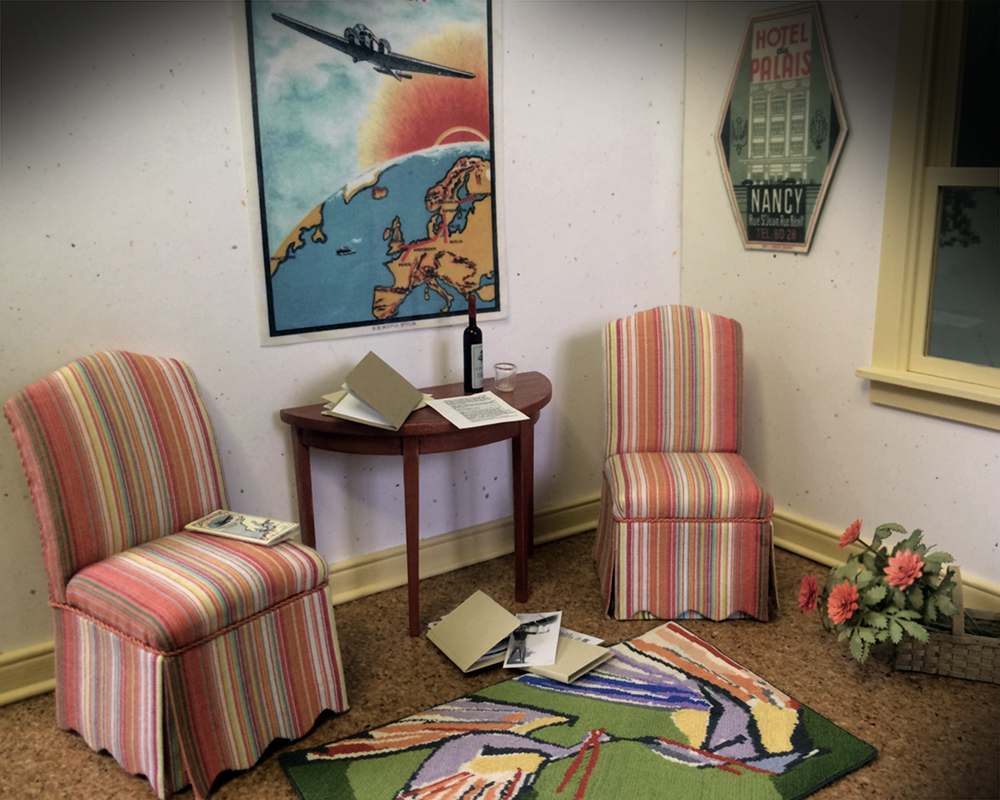
And here’s the finished rug, inviting you in to the Sea House Pavilion for a cup of tea or a glass of wine. It’s a great place to watch the storm blow in.

in no particular order

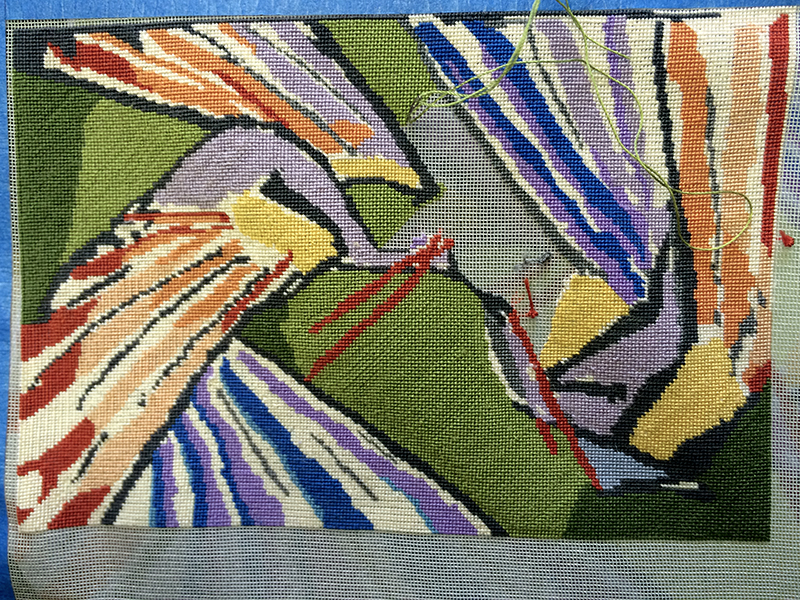
peacocks_120214Peacock rug getting there! Just the remaining green background left to stitch. Then blocking and binding.

(Finished size will be 4.625 x 3.125 inches (11.75 x 7.9 cm), 227 x 153 stitches, Gütermann silk on 49-count silk gauze, from a design by Roger Fry, as charted by Melinda Coss in Bloomsbury Needlepoint From the Tapestries at Charleston Farmhouse.)

Then I’ve been playing around with Kris Compas’s current tutorial for an upholstered parsons chair, using this great cotton stripe from a thrift store shirt. Other than (endless) work on the Peacock rug, I think this is the first miniature building I’ve done since I packed everything up to move in the summer. (The cording is made from three strands of DMC floss, and is more true to scale than using all six strands. In case you noticed.)

parsons_chair_120214

Penultimately, here is my first repeating pattern!

fish_seaweed_00

The color palette is a combination of hues drawn from photos of the ocean and from the persimmon tree in Soquel. The simplicity is perhaps underwhelming, but this represents hours and hours of work. Onward!

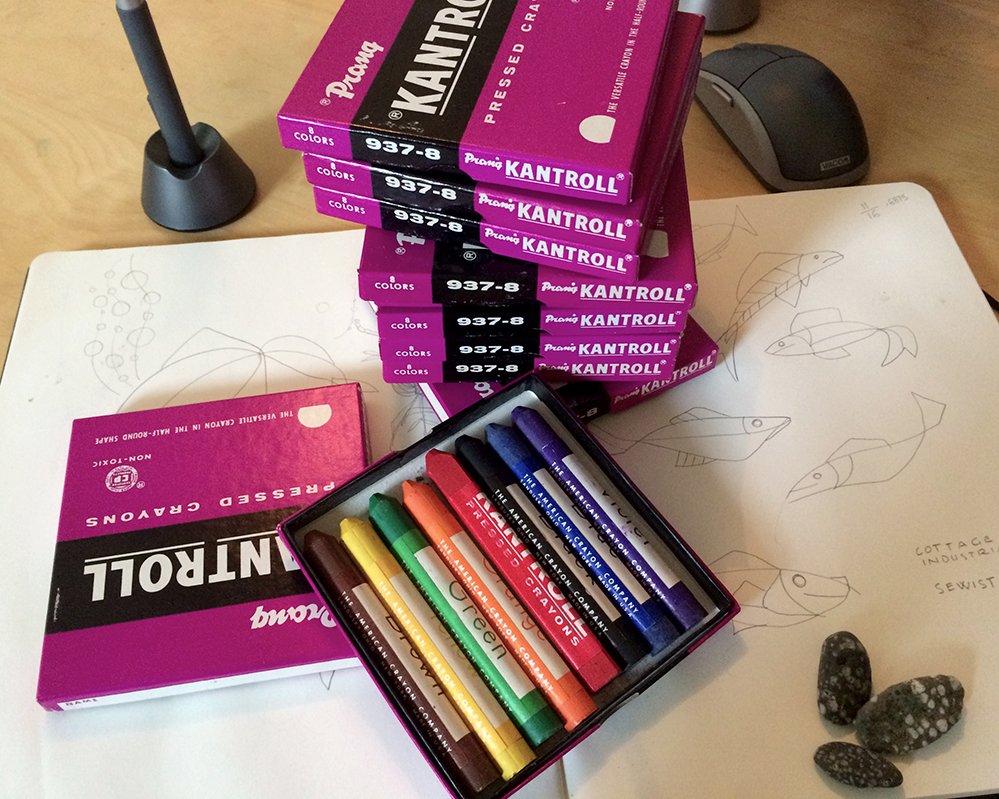
And finally, I did go back to the indie dollar store and buy up all the boxes of Prang KantRolls.

allthecrayons

Mostly because this:

crayons_120114

it’s that time (again)

Yes. We are moving. Well, actually, packing in preparation for moving.

Yes. We are moving. Well, actually, packing in preparation for moving.

About an hour and a half up the coast, to Pacifica. Very excited for new beginnings, very sad to depart the Soquel hills and the superior Santa Cruz County climate.

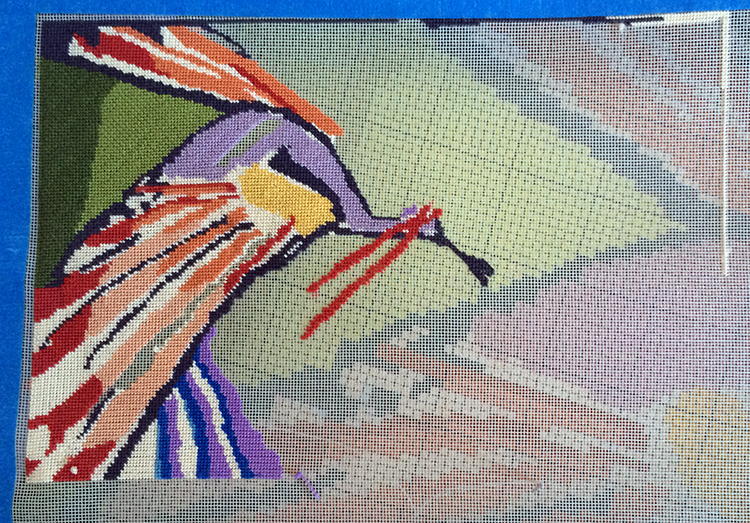
Finding a new house (oh, and working) is why I’ve not been doing any building the last few months. But I have been stitching — sometimes late or in the middle of the night — on the Animals rug, and a new, smaller rug project: Peacock.

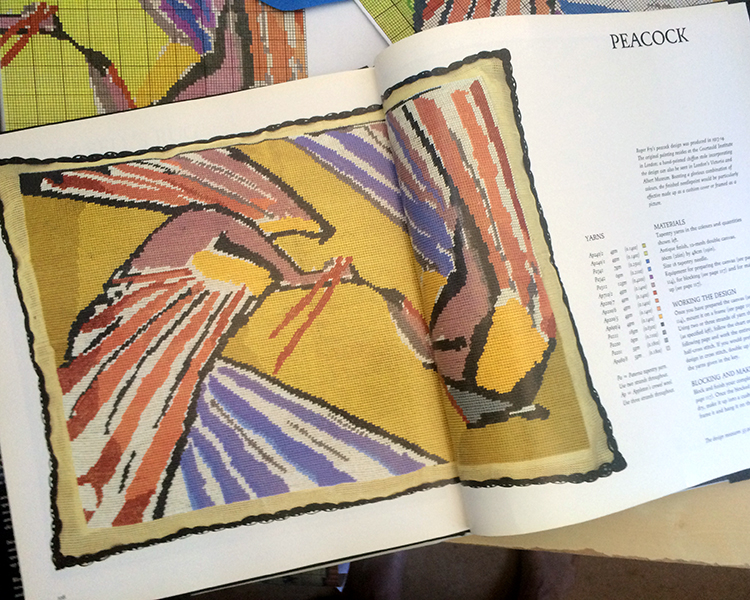
Peacock, designed by Roger Bell in 1913–14.

Peacock, designed by Roger Bell in 1913–14.

I came across this remarkable book, Bloomsbury Needlepoint From the Tapestries at Charleston Farmhouse by Melinda Coss. It is both great art history and charts of designs by Duncan Grant, Roger Fry and Vanessa Bell.

You want this book.

You want this book.

Roger Fry’s original 1914 design was worked on 10-count double mesh canvas, and measured 22 xx 15 inches (55.9 x 38.1 cm).

Roger Fry’s original 1914 design was worked on 10-count double mesh canvas, and measured 22 x 15 inches (55.9 x 38.1 cm).

My version is on 49-count silk gauze with Gütermann silk, 227 x 153 stitches, 4.625 x 3.125 inches (11.75 x 7.9 cm). And although I wish Gütermann had more and better shades of greens and blues (especially), this piece gives me the comfort and focus I need right now. Thank you, tiny needlepoint!


Animals rug: carrying on

animals_061414-2

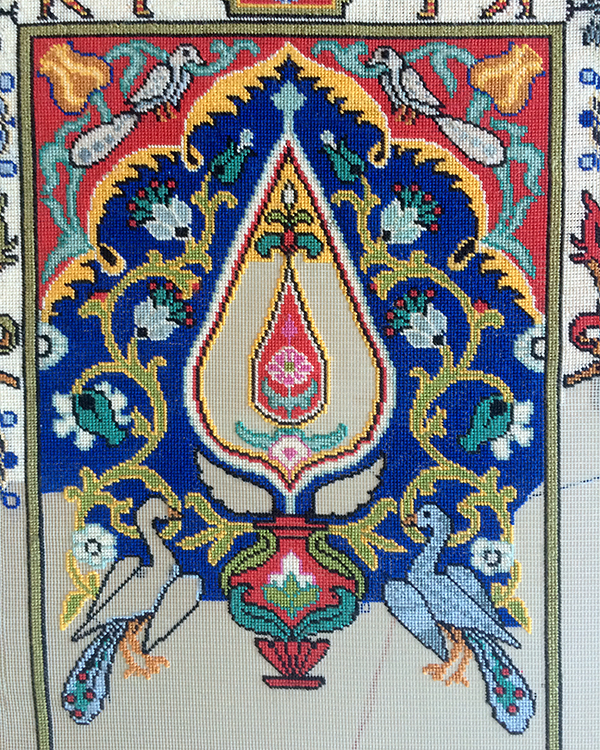
Things being what they are, the Animals rug is pretty much the only thing I’ve been working on, and I love it (still). It’s been made somewhat easier with my acquisition of a Needlework System 4 stand, which I also love. I had a personal best breakthrough when I managed to stitch an entire flying saucer-paisley motif correctly (main border, left middle). Compare to the other two, and you’ll see the, um, variations. There are three more to stitch, so we’ll see how that goes.

The area below the blue birds is about to get very interesting, as I work the swirly-jagged yellow border reversed at the bottom. I think the terminal flowers might appear behind the blue birds’ tails. After I get that border in, I’ll be able to determine what else will go in the background.

Here’s a closer view of the center panel:

animals_061414-1

I felt very clever using the flower colors on the big blue birds’ tails. There is a garland of small flowers in the center shape with a yellow background, and I’m undecided what colors to work them in, likewise with the wing-shaped leaves.

Details: 49-count silk gauze, 281 x 398 stitches — well now a bit more (5.75 x 8.125+ inches, 14.57 x 20.63+ cm); DMC cotton and Gütermann silk. Original design by Natalia Frank.