Poppies for the Warming Hut Roof

1:12 California poppies kit from The Miniature Garden Center

Contents of a 1:12 scale California poppies kit

I went micro today, and made up one of the flower kits from The Miniature Garden Center. Those dots you see are 3/16-inch (4.7 mm) in diameter.

volunteer poppies near the herb garden

Inspiration: volunteer poppies near the herb garden

California poppies might be my favorite flowering plant. If it wasn’t for freesias. Or peonies. Or coneflowers.

miniature California poppies

The kit assembled, with some variations.

Because these will be growing on a windswept roof, I cut the two-inch long stem wires in half. California poppies are rarely leggy.
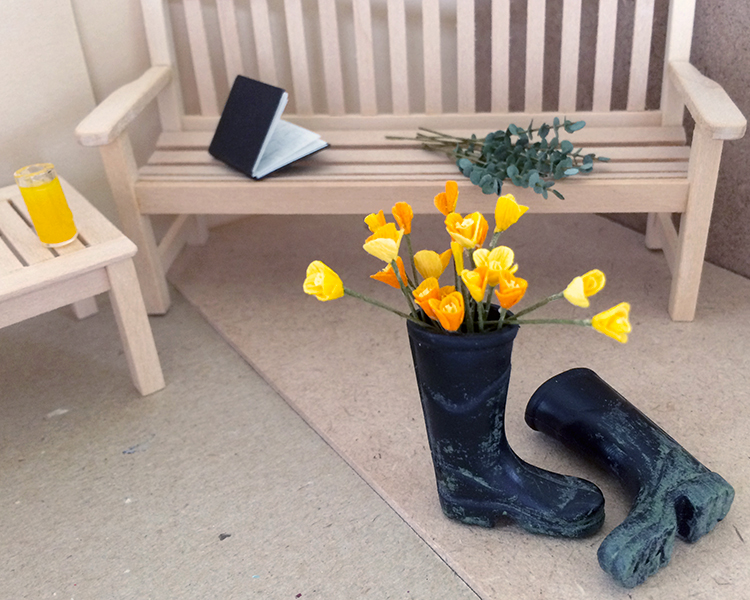
miniature California poppies

Waiting to be planted on the living roof

Even though California poppies are too delicate and wild to be a good cut flower, they’ll be a nice spot of color in building tableaux. I made more eucalyptus branches, too. Come sit and have a glass of orange juice, and enjoy the morning light.

Oh also, this is the whole of the background picture I used in the deck extension shot. It was taken at sundown on the aforementioned cliffs at Mussel Rock. There was a brisk wind that lifted Lula’s ears as she leaned into it.

Lula reading the smell stories on the wind, December 2014

Lula reading the smell stories on the wind, December 2014

Your scale reference here is that she was a 130-pound (59 kilo) Mastiff mix (Dogue de Bordeaux and Bullmastiff), and she died two weeks after this walk. We miss her.

Warming Hut Paint Prep

Warming Hut nancyland.com

There are many, many sides of many windows that must be masked, with many small strips of masking tape. But still, the paint will leak.

With 90 percent honesty, prepping and painting miniature woodwork is as tedious as prepping and painting their full-size counterparts. For the Sea House Warming Hut, I considered staining all the trim — a mildly less tedious process — using the same Minwax Classic Gray that the exterior cladding will be. Instead, I opted to paint a semigloss “Simply White” for contrast. My impatient paint application suggests the multiple paint layers slapped on over the years in an effort to preserve coastal buildings from salty corrosion.

And so I carry on, striving for both mindfulness in the process and the satisfaction that only sanding with tiny squares of 600-grit paper can bring.

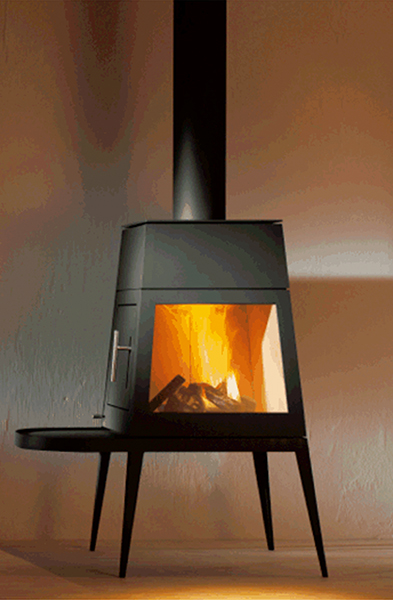
Through the unpainted window above you can see the Chrysnbon kit stove I assembled and painted like 300 different colors before returning to matte black, that will heat the hut. Still unsure if I’ll use it. I’m rather taken with this modern “Shaker” stove, designed by Antonio Citterio with Toan Nguyen in 2006. I think it would translate to 1:12 scale beautifully, and be fun to build.

Shaker wood burning stove/fireplace, designed by Antonio Citterio with Toan Nguyen. Beauty.

Shaker wood burning stove/fireplace, designed by Antonio Citterio with Toan Nguyen. Beauty.

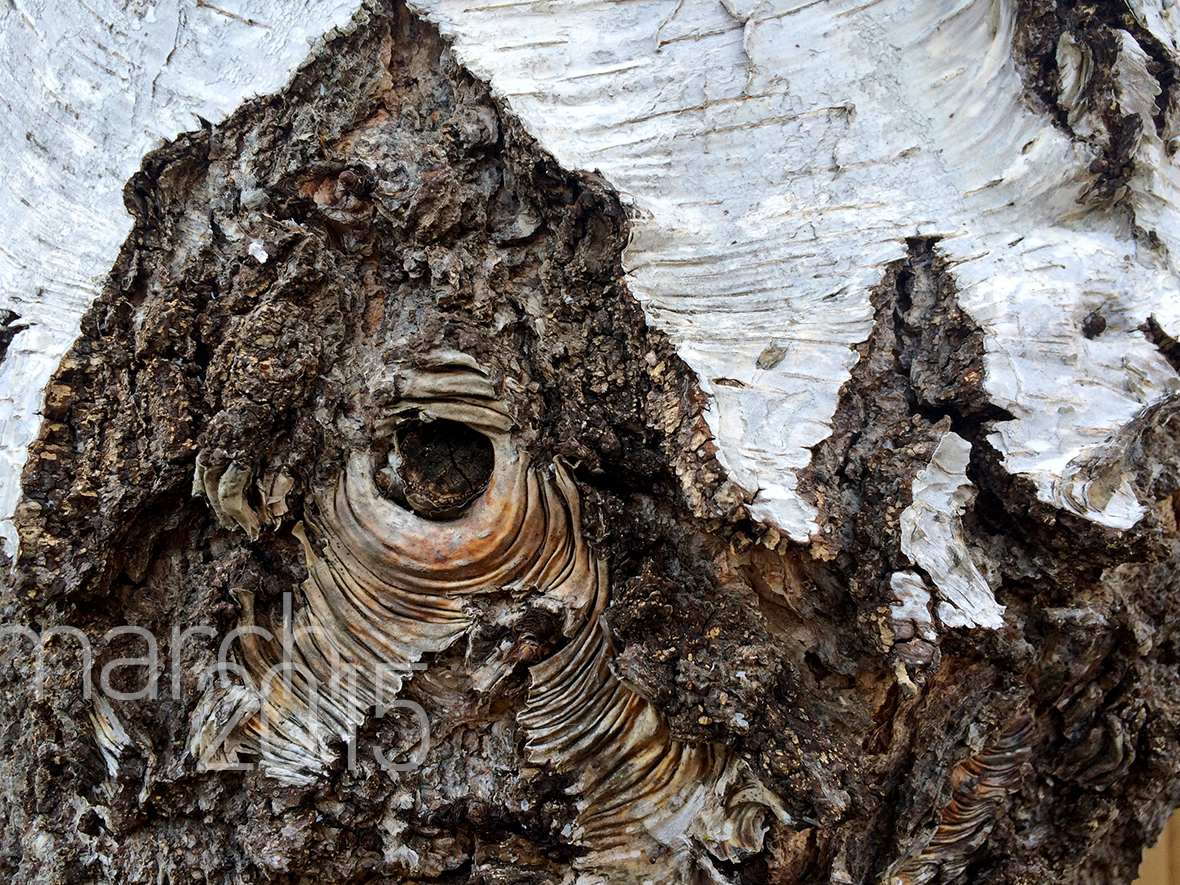
Finally, this is the unobscured featured image for March on this site’s landing page. It’s a birch tree in Soquel, California that wants to see you.

nancyland.com march 2015 header

Until next time, when the paint is dry, and ready to be sanded, then painted. And sanded.

Rafters and Stonework

modern miniatures, Sea House Warming Hut

Sand. Paint. Wait. Sand. Paint. Wait. Sand. Paint. Wait.

Got the first and second coats of paint on the rafters. I’m going to glue it up, then put a third coat on the whole assembly. And yes, it’s the same green (MSL 106 Rhododendron Leaf) used on the Sea House Pavilion :)

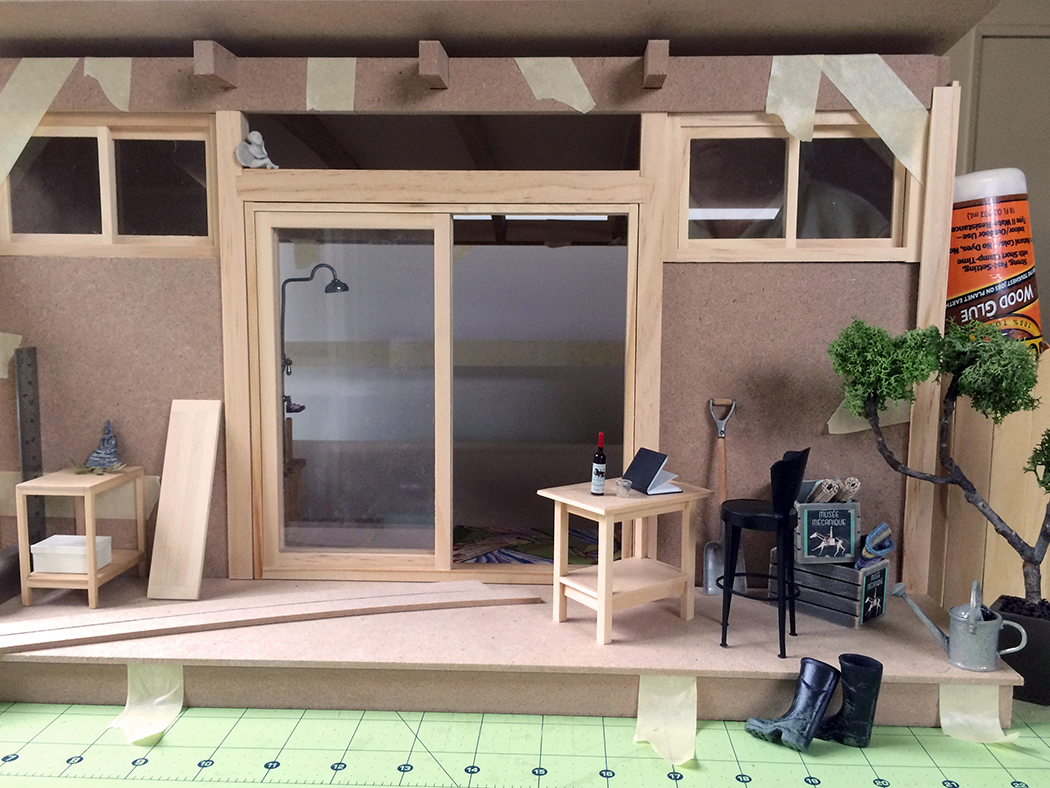
The floor is going to be wide-plank salvaged wood from the original Pleasure Pier, inset with a circle of native-quarried stone for the vintage wood-burning stove.

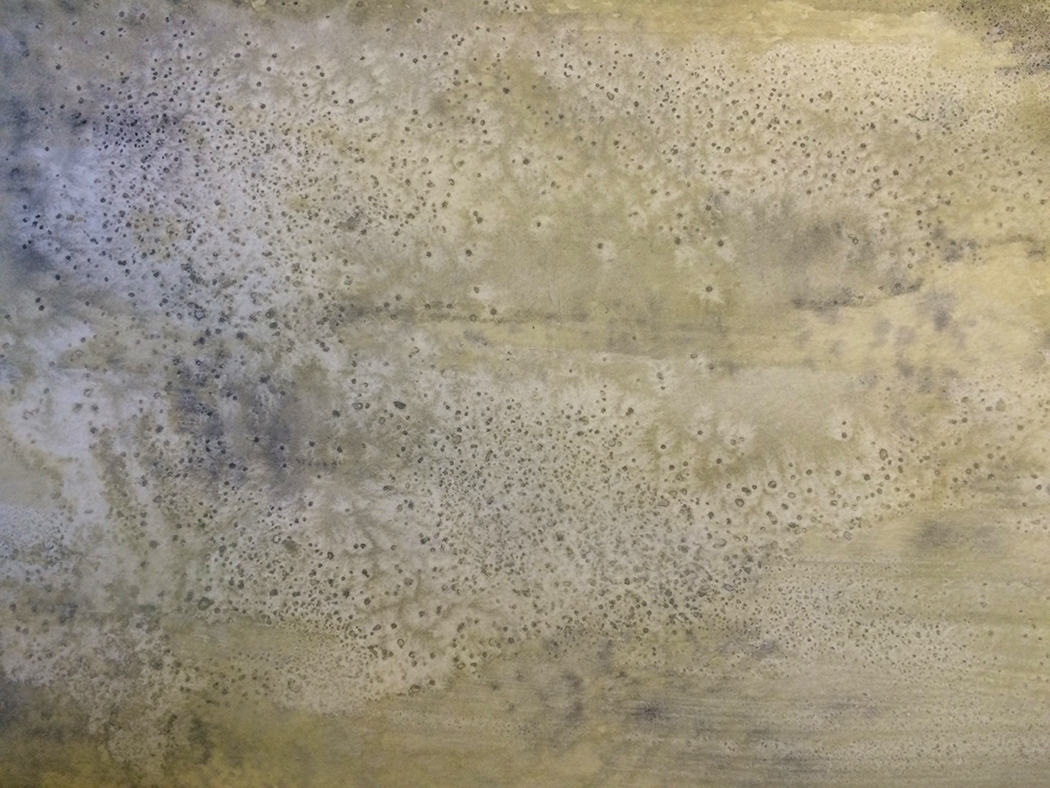
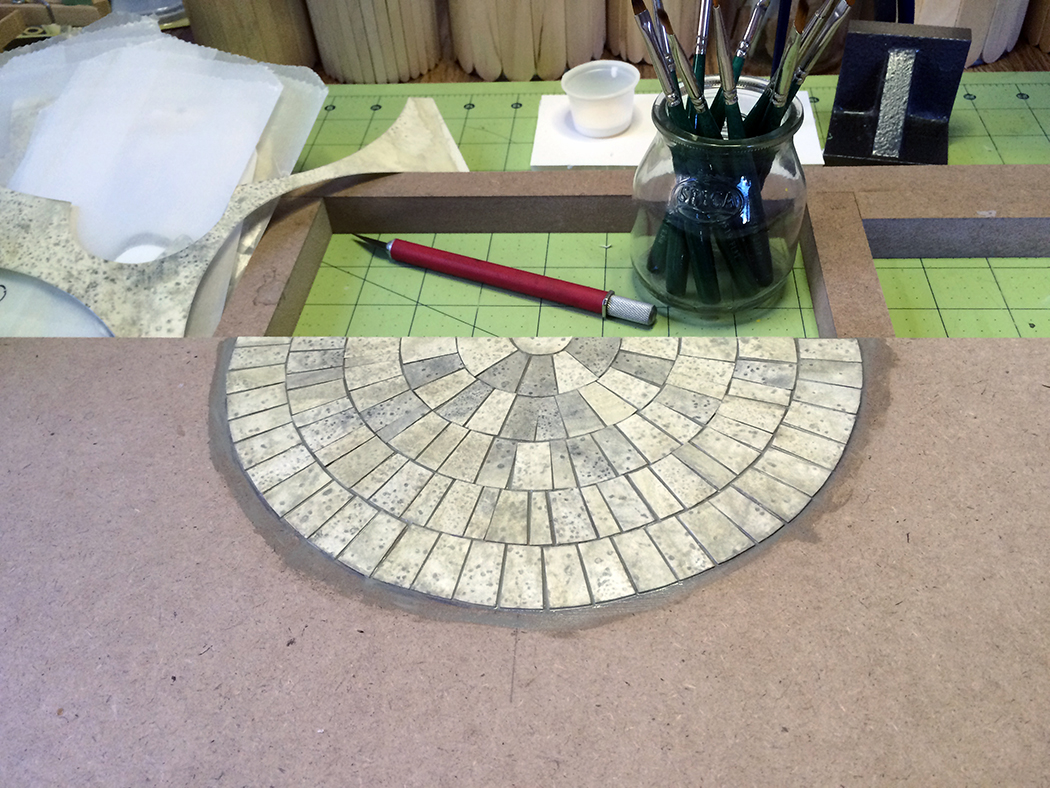
I painted several acrylic washes ( warm and green-gray, black, and “sand”) on 140 lb. watercolor paper and while still wet, sprinkled it with sea salt. Science magic!

modern miniatures, Sea House warming Hut, stone

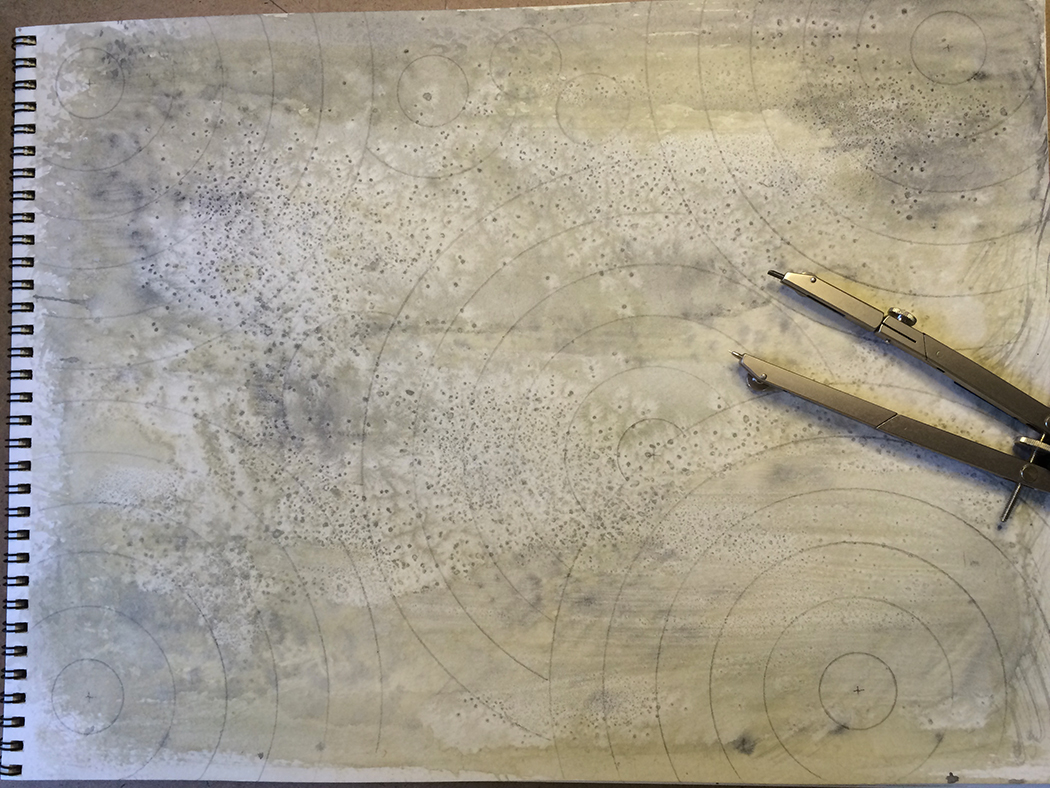
When it was dry, I brushed the salt crystals off, and drew concentric circles the diameter of the surround.

modern miniatures, Sea House Warming Hut, painting stone texture

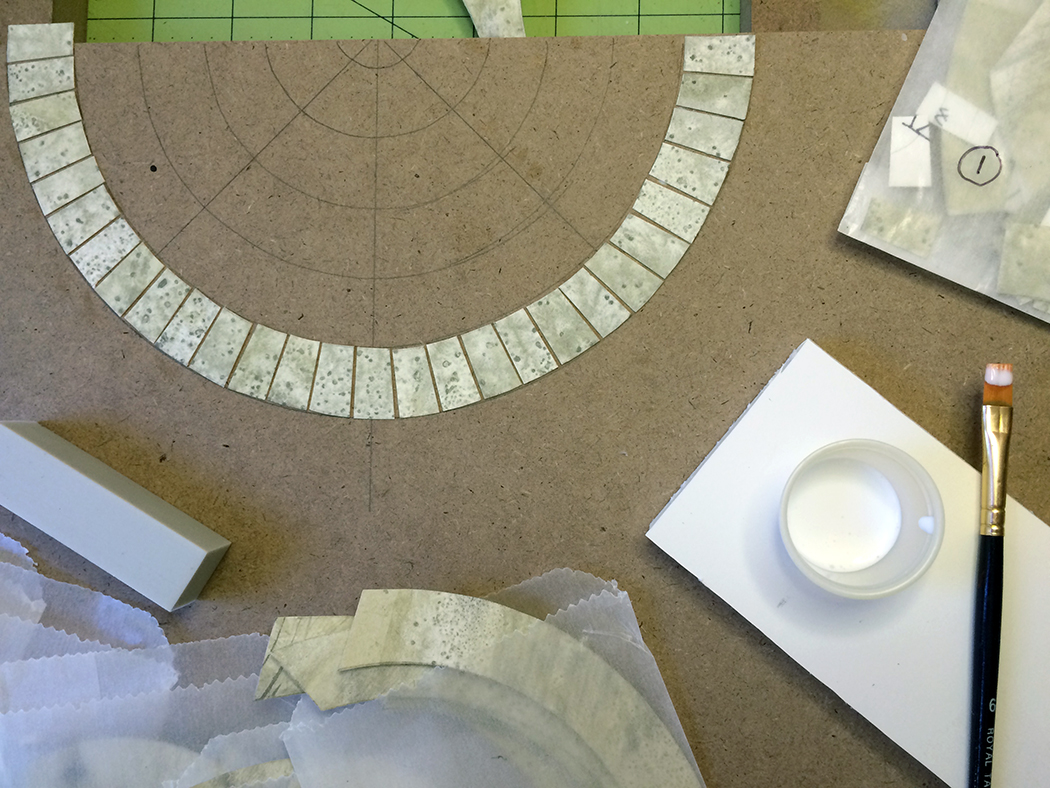
And cut them out. With scissors.

modern miniatures, Sea House Warming Hut, making stone tile

I cut individual tiles to fit the area and glued them down.

modern miniatures, Sea House Warming Hut, stone tiles

I “mortared”with a medium gray acrylic glaze. When that dries, I’ll give a coat or two of matte varnish.

Sea House Warming Hut, modern miniatures, faux stone tile

Next: wood plank flooring.

and so it begins

Dry fit of the miniatures.com 2015 contest base kit

Dry fit of the HBS/miniatures.com 2015 contest base kit

Yay! Denise’s City Cottage Kit, the starting point for the HBS/miniatures.com 2015 building contest has arrived. Once again there’s an interesting roof line, and some solid other architectural details that invite interpretation. Here it is in dry-fit. No idea what it might become, but I’ve opened a fresh page in my notebook, and later will pour a glass of wine to help me listen and think.

I’ve 11 months to do so, as the submission deadline is 16 December, 2015. And because we can now submit our entries online, I expect I’ll be working up to the very last day, as my projects tend to expand to the maximum time allotted them.

Advice in the most unexpected manner

Anni Albers, MoMA
“Working material into the hand, learning by working it of its obedience and its resistance, its potency and its weakness, its charm and dullness. The material itself is full of suggestions for its use if we approach it unaggressively, receptively. It is a source of unending stimulation and advises us in a most unexpected manner.”

—Anni Albers, “Design Anonymous and Timeless,” Magazine of Art, 1947
From a piece by Sarah Jones on the Kaufmann Mercantile blog. The Josef and Anni Albers Foundation has more.
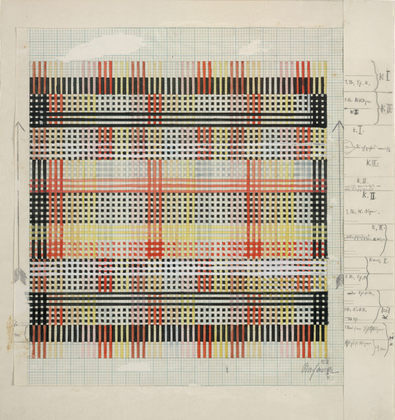
Image is Anni Albers’ Design for Tablecloth, 1930, from the MoMA

Birthday love

josh_salesin_030814

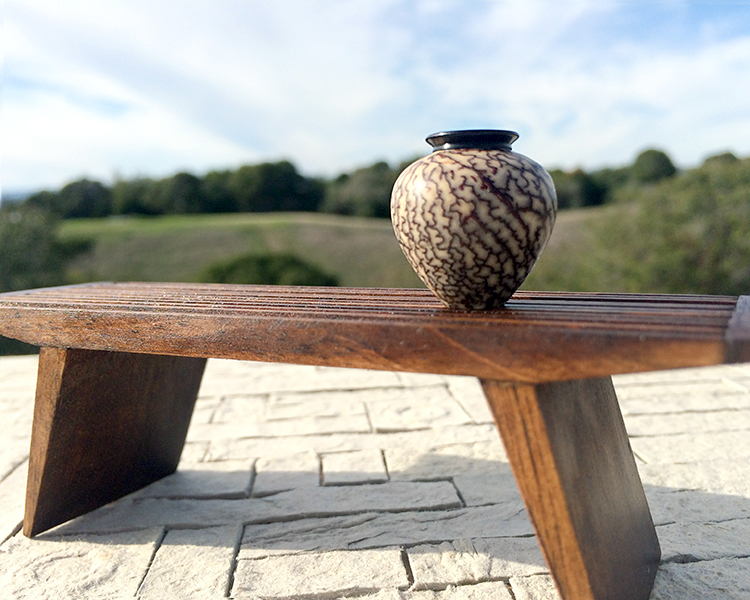
Miniature palm nut vessel by Joshua Salesin. .875 inch (22 mm) tall (shown on a 1:12 scale Peter Tucker bench)

A longtime colleague and friend, the multi-talented Joshua Salesin gifted me one of his exquisite miniature vases, this one made from a palm nut, turned on his 175-year old lathe. I am so honored.

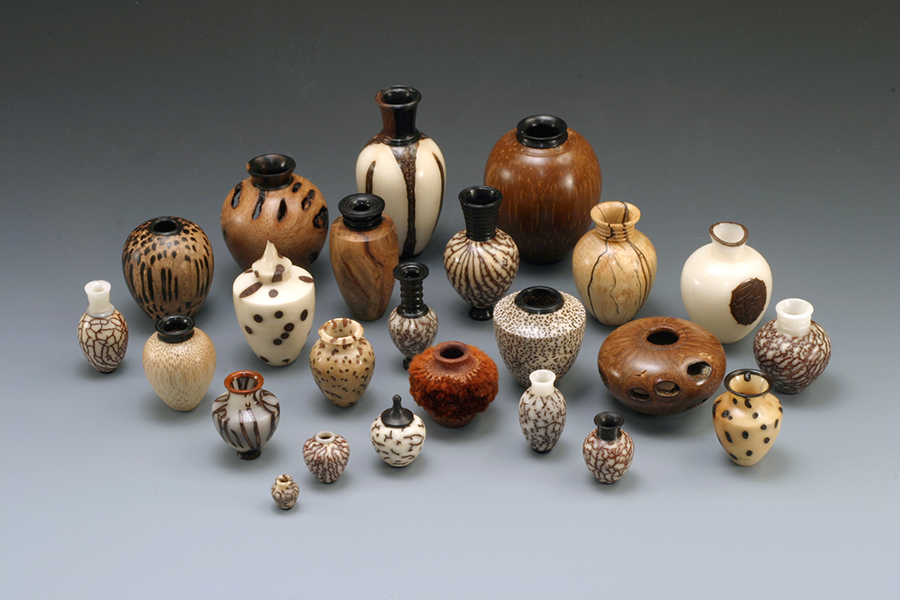
Here are some of his wee vessels made in 2005. The largest is about 2.5 inches (6.35 cm).

Miniature wood vessels by Joshua Salesin, 2005

Miniature wood vessels by Joshua Salesin, 2005

Read about his process and techniques, and see the broad range of his superb and very original work at www.joshuasalesin.com.

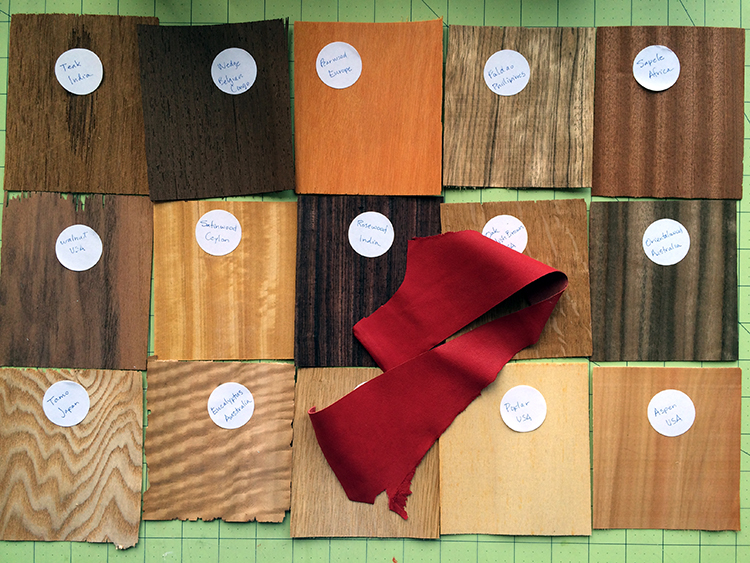
Another old friend, Tauna Coulson, also ridiculously multi-talented, raided her stash and presented me with a bag of amaze. She knows me so well! (Unsurprising, as we shared office space for many years.) Among the miniature builders-pertinent stuff was a ribbon-tied set of 15 wood veneer samples, and a piece of the softest, most-perfect-shade-of-red leather:

tauna_030714

Such treasures!