Short answer? Paperclay. Long answer follows.

I settled in to finish the long back foundation wall, literally before the storm and power went out. Above you see the carton materials wrapped from the left side wall and primed in Ceramcoat “Mudstone”, then the beginnings of the long traverse using various parts of egg carton. Then I noticed something.
A while ago, our thoughtful reader and observer Barbara W. had sent me a mold from Woodland Scenics. Although sized as “boulders” it occurred to me that at 1:12 scale they would make excellent rubble, the kind I was using in the foundation.
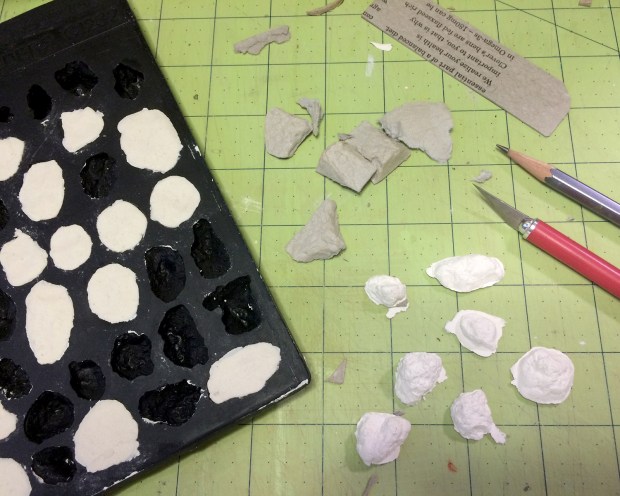
I reviewed my on-hand options and chose a pouch of Creative Paperclay. I had never worked with this material before, though it was on my list. I chose some of the larger boulder forms and filled the mold. I forgot about it until I started the back wall foundation masonry. Then I noticed that the molded boulders had a similar texture to the carton materials I was using. Like, really similar.
The dried paperclay is a remarkable material. It is extremely stable and lightweight, easy to trim, and as I was soon to find out, paints very well.
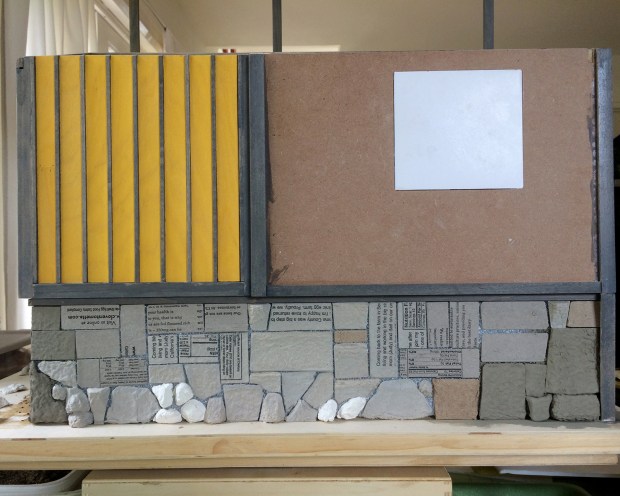 I reloaded the mold with the full set of rocks in paperclay to use around the rest of the foundation, and finished out the back wall with the few that had already dried (those in white), along with egg carton and packaging forms. It seems to take two or three days for the paperclay to dry thoroughly.
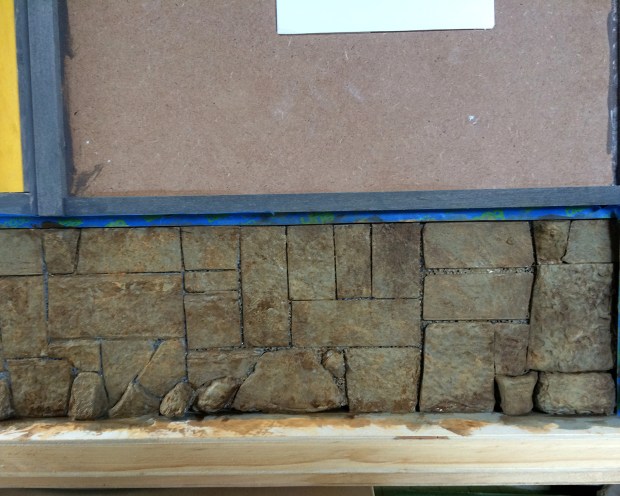
I applied the same set of acrylic layers and washes as the interior foundation.
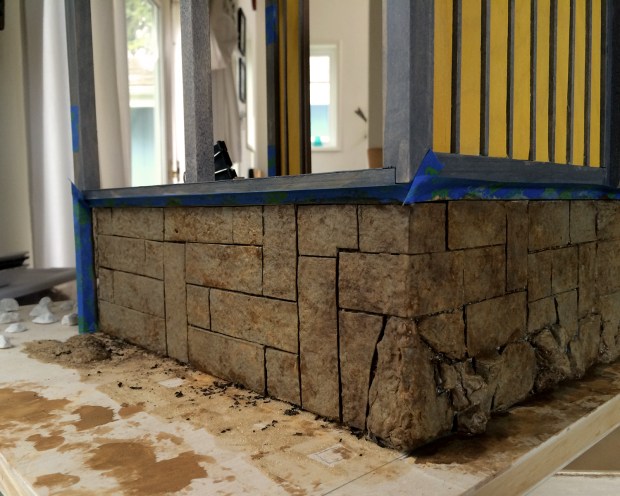
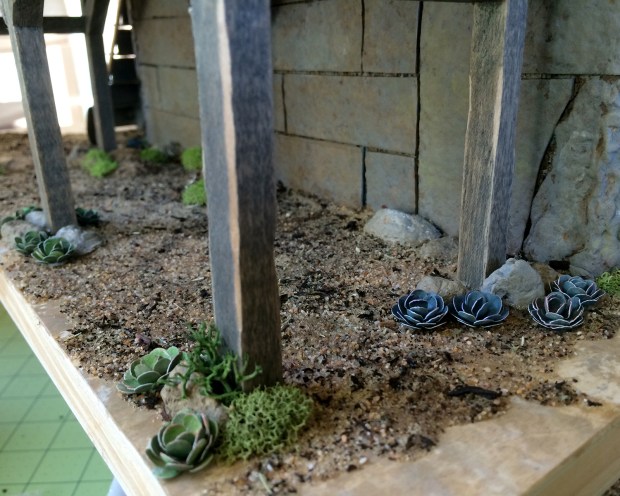
Here’s a dramatic corner shot.

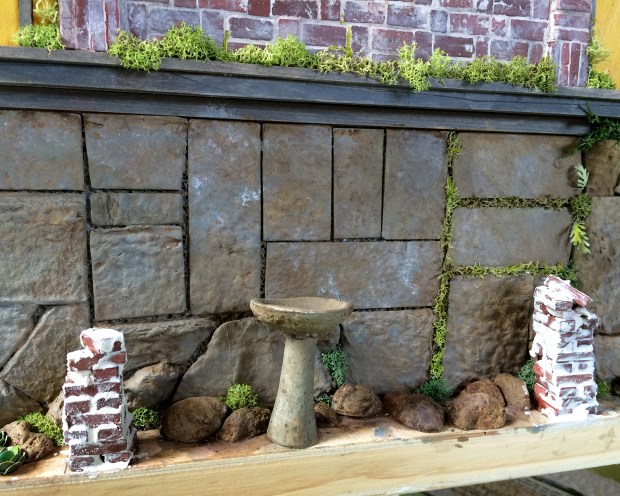
And the entire finished back foundation wall.

Although there is additional touch up and detailing to add, this needs to dry thoroughly. I could not resist gluing in some moss, though, to make it come alive. Thanks, BW, for the gift of the mold and allowing me to discover paperclay. The fun has just commenced.










 nancyland.com