First Packaging Prototype

first_packaging2_111816

Exciting times here in Nancyland. Been researching and getting in supplies for packaging and shipping, and working on the graphics for labels and such. Need to reshoot two four photos for the first kit instruction sheet, and that’s done. Then do glamour shots and write product descriptions for the Etsy shop, and actually list stuff for sale. Getting good response to the newsletter offering — thank you, thank you — and Volume 01, Issue 01 drops the first of December. Whirlwindy!

Newsletter, Walnuts

I’ve been wanting to publish a newsletter for some time. Printed magazines have always been dear to my heart, and I see an email newsletter as a cost-effective way of sharing my interest imperative of a daily creative practice — however it occurs to you — as essential human activity, without all the adverts. I’m using Constant Contact for delivery, in part because I’m familiar with it from my volunteer work with Pacifica Beach Coalition, and hey, start with what you know.

walnuts_111716

Years ago I made an advent calendar for my daughter, when she first moved away for college. It was a garland of shelled walnuts containing tiny treasures glued over a length of ribbon, meant to be re-cracked as the days unfolded. This is a perfect project for miniaturists, for who among us does not have an overflowing stash of tiny treasures?

walnut_navel_111716

Construction is easy enough. Get a pound or so of jumbo walnuts in the shell.
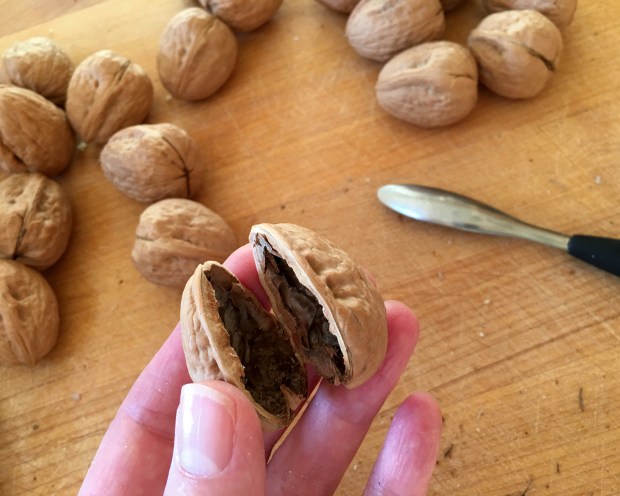
walnuts_split_111716

Split them cleanly open, and remove the good bits. (It’s just weird to call nuts meat.) Share with your squirrels and birds or save for cooking/snacking. I found a shellfish fork to be the handiest tool for all tasks, but use what you have. Keep the shell pairs together.

walnut_helper_111716.jpg

Ensure you have a dedicated helper.

treasure_111716

This is the really fun part. Depending on to whom you intend to give this, go through your stash and find small treasures that will fit in a walnut shell. This one is for my almost-four-year-old granddaughter.

more_treasures_111716

It’s helpful to test fit and line up your treasures so you can roll with assembly. Make sure you keep your walnut shells paired!

glue1_111716

A thinnish, flexible ribbon or raffia works best. (I’ve needlessly complicated the process here by using a sheer ribbon and a novelty yarn, but both have sentimental value :) Dot glue on both sides of the shell, sandwiching the ribbon, and realign the cracked shell edges.
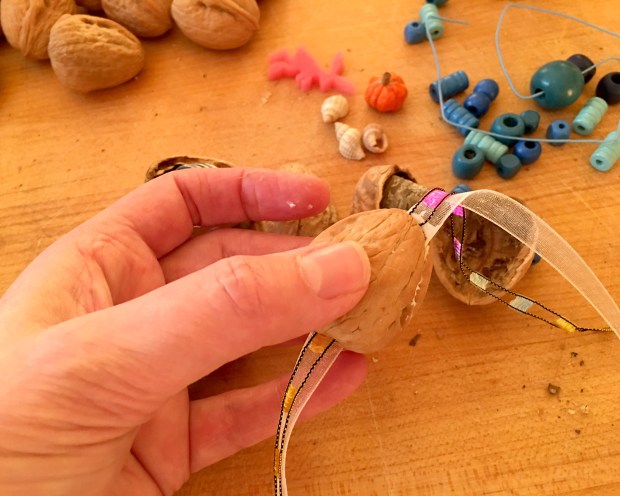
holduntildry_111716

Hold until dry. Think about good things.

repeat_111716

Decide a pleasing interval between walnuts, and repeat the process for the number of days you wish to advent, depending on what you’re counting down (or up). The finished walnut garland can be hung in any number of ways. Of course you’ll want to give some consideration to the contents vs. the force necessary to re-break the shell, but it’s pretty easy.

If you’re fancy, the walnuts could be gilded or embellished with numerals. Or glitter… or rose thorns. You get the idea. Evoke.

For me, cracking and shelling walnuts returns me to my childhood, when every home had a nut bowl on a living room side table, always available for a snack. Holiday baking involved conscripted labor. Our job as kids was to crack a very large bag of walnuts, almonds, pecans, hazelnuts, the odd Brazil nut — our mother would never indulge the cost of pre-shelled nuts! — and extract the usable parts. As I recall, whole walnut and pecan halves earned a dividend. These memories are imbued with a happiness of shared industry and rich nut tidbits.

Anyway. Projects, ideas, like this are what I have in mind for my newsletter content, as well as quick inspirations, fun facts, helpful hints, and links to relevant, deeper content around the subject of being a heartfelt creative person. Sound interesting? There’s a clunky link in the sidebar to subscribe, as well as a new “Newsletter” page with a contact form. Obviously I’m still working everything out. I’m thinking a once a month issue to begin with. Interested?

Sempervivums

new_color_111516

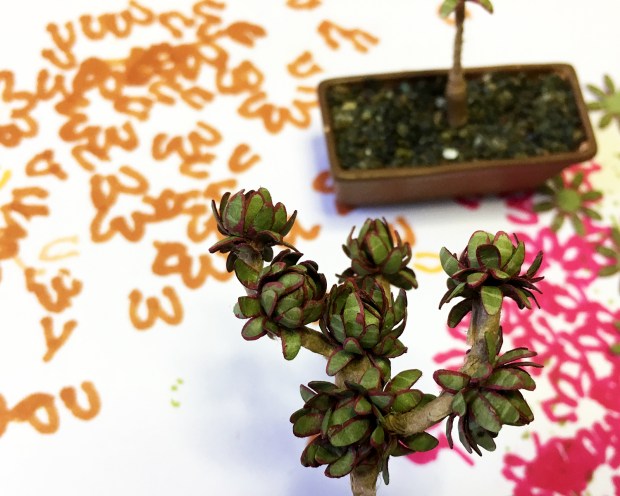
Another new species of succulent! I’m classifying this one in the sempervivum genus. Also, I’m working towards putting these (and others) into production, as both kits and potted specimens, in my Etsy shop! You can peek through the window here. I’ve been sourcing some great planters and containers for both inside and out, as well as classic terra cotta pots. Wish me focus and follow-through!

shop_icon3_111616

Defense

defense_111416

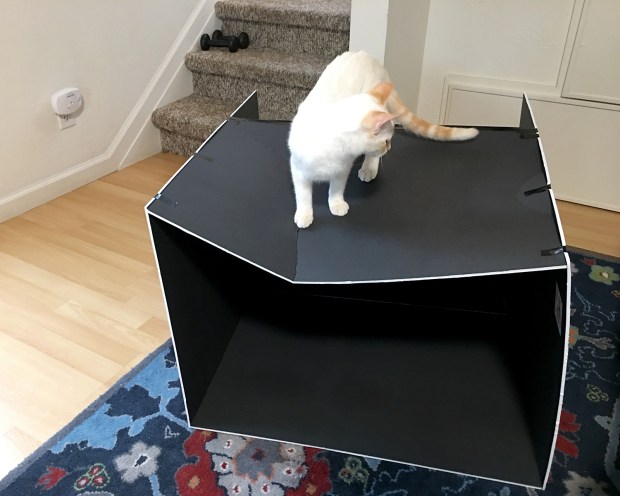
It’s come to this. I bought a stack of dollar-store foamcore and built this fortress to repel the kitten’s perpetual investigations. It looks ridiculous. Hoping the sloping top will deter her from lounging on the roof as she would do when the build was merely shrouded.

defense_bent_111416

Of course, when I lifted the stronghold to work on the build… “Hey, what’s that cracking sound?”

As Paula Poundstone recounted, I can’t have nice things.

Legs, Mortised

mortised_legs_110916

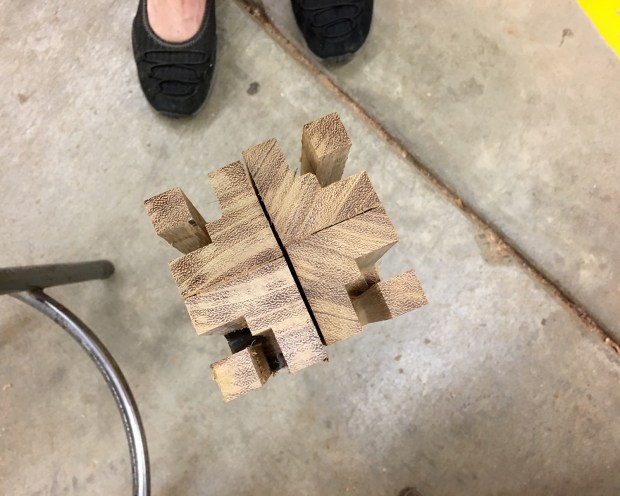
Here’s an above view of my four table legs, with rough half-inch mortises routed. The legs are 17 inches (43 cm) tall and 1.75 (4.75 cm) inches square. Look at that beautiful end grain! Note my steel-toed safety ballet flats! What I am proudest of is that I set up the routing machine by myself (after watching an experienced woodworker, again, and checking my setup with our instructor). Also I learned some counter-intuitive things. Wood smoking? Go faster!

legs_mortised_110916

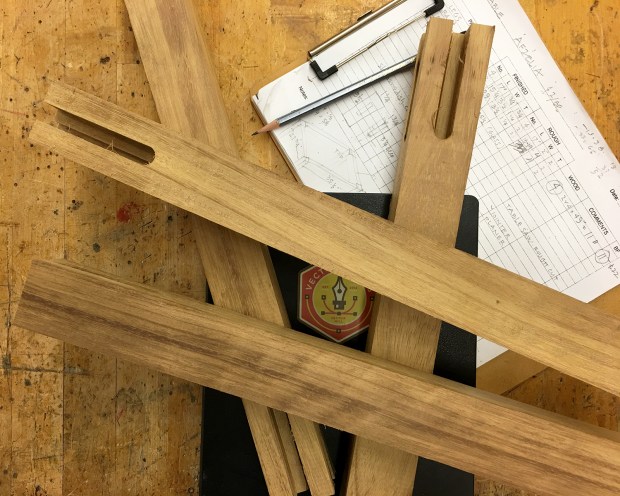
Here are my table legs in casual disarray. Observe the authentic surface of the high school woodshop tabletop, my trusty Moleskine notebook, and clipboard of important shop papers! Missing only is a true carpenter’s pencil.

esplanade_110916

First thing this morning there was line upon line of big waves visible from our window, more than I think I’ve ever seen before. We quickly dressed and brought our coffees down to Esplanade Beach. Here you can see Brian partway down the trail to the (currently nonexistent) beach, with waves washing the riprap and cliff base. The sun is just clearing the houses on the cliff, illuminating a 15- or 20-foot wave. We watched for close to an hour from various vantage points, with a view from Pedro Point, to Mussel Rock, and the Marin headlands in the far distance. Recommend as a good way to start this particular day.

What?! Echeverias, Yes, again

8-petal_110616

I got a new eight-petaled punch, about 5/8-inch (16 mm). It has spawned a whole new genus of succulents. These are punched from a sage green cardstock painted with an acrylic wash. After lengthy fooling around, I prefer detailing each shape with markers.

8-petal-2_110616.jpg

Here’s where my documentation lapses. Profoundly. I call Sunday, North American time change, and very good California champagne.

8-petal-3_110616

I’m really happy with the end result, and will be more mindful to share my steps. It’s basically three punched and shaped forms, and then a lot of individually applied shaped petals. Or leaves, whatever they’re called. This version more closely approximates what I see in parts of my own succulent garden.

This is also where I *really* want to buy a laser cutter, to be able to realistically emulate the considerable varieties of succulents and cacti. What do you think? Anyone else out there enamored of miniature succulents to want to make them in their boundless assortment? Do you know of anyone already making kits?

Woods Class

afzelia_110216

I’ve been taking a wood skills class through adult education at Westmoor High School. My neighbor Lynn got me interested. She’s been taking it for untold semesters. Basically what it gets you is access to a full wood shop, with all the giant, scary full-size machines, an accomplished instructor, and classmates of varying skills and experience.

It is awesome.

For us newbies (and others) our instructor had secured a very good price on a lot of rough lumber called Afzelia. I’d never heard of it before. Turns out it’s a very well-behaving (his words) and interesting wood. We’re all, I mean, we newbies (there are many serial takers of this class) are doing some variation of a table with four legs mortised-and tenoned into rails, and a top as yet to be determined…

Above you can see two of my 1.75-inch square table legs, after being rough cut, jointed, planed, re-sawn, and then planed to dimension. My professional woodworking friends, I beg your forbearance. Observe the color and grain diversity! My sneaking suspicion is that there is a reason this wood is not more widely know, but so far, for me it has been a revelation.

mitre_tip_110216

At my level, woods class involves a lot of waiting, for machine time or instructor instructing. Fortunately, there is an awesome library in the classroom.

mitre_tip2_110216

These tips, from a book I’ll reference next time (Wednesday 6–9pm) are insight and solutions I thought directly helpful for us small-scale builders.

I approached this class with trepidation, but with a hopeful sense of cross-pollination? Miniature wood-working skills absolutely do not apply. Maybe other than artistry, attention to detail, tidiness, respect for sharp blades, and willingness to let glue dry. Anyway, I’m loving it.

+++++++++

Felines and Flora

I’ll just get the cat pix out of the way first thing.

albie_scarlett_01_102916

albie_scarlett_00_102916

Classic long-suffering Albie and his unwanted sidekick. All he wants to do is sleep on the bed and not be mauled. She shadows and adores and mauls him.

stemmed_102916

See the succulent/cactus hybrid hovering slightly above her sisters in the long planter? This is a new feature :) I’m adding believable stems to some of them.

stems_102916

This may be one of the most enigmatic photos I’ve ever published. Here are tiny stems very close up — they’re just over an inch long. They’re made from floral wire wrapped with torn strips of brown paper bag. Easy to make a gentle curve and plant.

palms_wired_102916

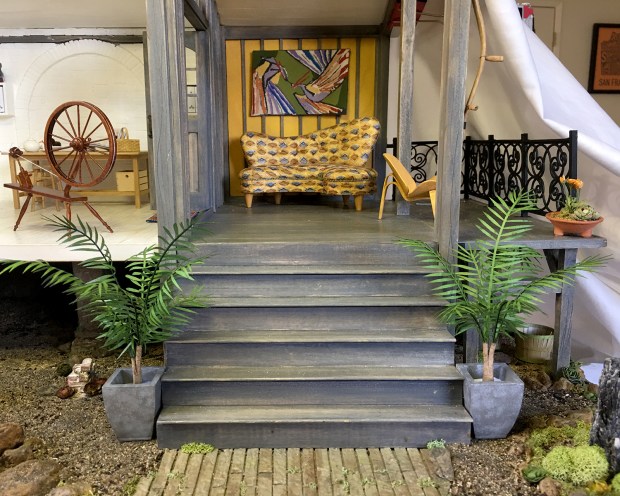
In other projects, I got all the sizes of leaves from JMG Miniatures to make potted palms for either side of the stairway. They come five to a bag and are cut from a nice green sturdy stock. I’m not even painting them! I glued a fine gauge green wire onto the central stem of each frond to enable sculpting.

palms_curled_102916.jpg

Once the glue was dry, I curled them around a fat watercolor pencil (Derwent Inktense, Teal Green 1300, not mandatory).

palm_wrap_102916

I gathered groups of three or four fronds, and bound them together with strips of torn brown paper bag.

palm_drying_102916

I bundled three or four frond clusters around another length of floral wire, and covered the lot of them with more torn paper bag strips, and stabbed them to dry in their eventual planters. These are those ever-versatile, well-modeled chocolate brown Houseworks tapered pots to which I had given a “zinc” finish.

palms_planted_102916

Here they are “palmed” and waiting for the glue to dry in the pots. I’ll cluster more succulents around the bases, tying in with the rest of the casual landscaping. I like how they both frame and add a “parlor” friendliness to the entrance. Since this is meant to be a refurbished working farm building, I didn’t want to put in a stuffy staircase banister.

In the showroom proper you can see an exquisite spinning wheel, gifted by our beloved reader BW. We’ve both agreed it’s a bit too pristine, but I’m reluctant to augment it. I need to channel my inner Sleeping Beauty for counsel.

Until then…

November

subtle_landscape

For no particular reason, I’m ready to move on to November. I woke this morning directly from a dream to this view of rapidly moving clouds and shadows cast on the ocean. This (next) month’s splash screen caption is a lyric from the band Real Estate’s 2014 song “Had to Hear”. (The full line being, “I don’t need the horizon to tell me where the sky ends —
It’s a subtle landscape where I come from.”) It’s not a great photo, but totally captures my mood, as enhanced by the song. You’re welcome.

powermatic_102616

Tonight in Wood Skills adult ed class at at Westmoor High School, I noticed this display on one of the machines. We just don’t see enough graphic design as clean and untroubled as this any more. When I reached up to touch the opening between 200 and 300, the metal cleanly sliced my finger tip open. Powermatic!

Echeveria!

deck_ech_102316

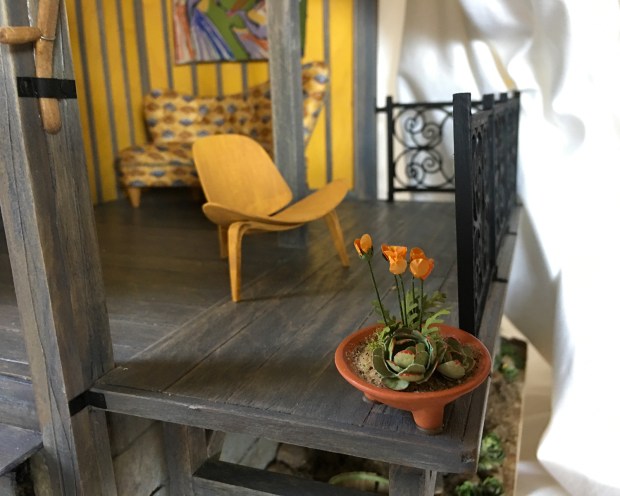
Been making California poppy and echeveria planters for a little while now.

ech_poppies_102316

ech_flat_pots_102316

I first learned how to make echeveria from this wonderful tutorial by Annie Christensen of We Love Miniatures. She uses brushed pastels at the end to tint the leaves. All the succulents in the Argo Wool Works foundation plantings were made using her method.

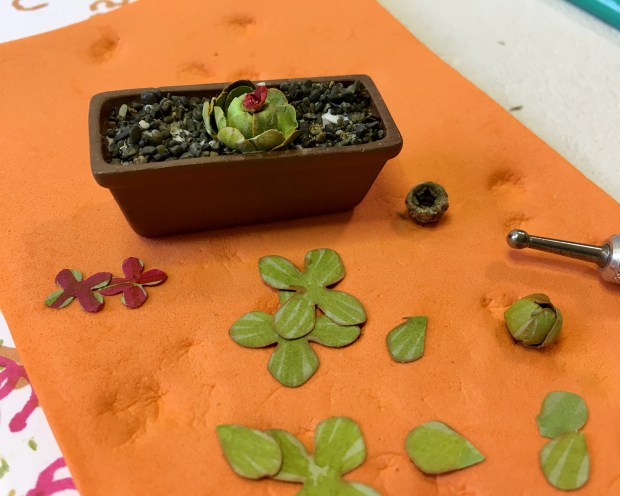
Lately, I’ve taken to using markers to tint and edge the various shapes punched from cardstock painted with acrylic wash, as seen above.

Also, do you see those footed flat clay planters? They’re from Falcon Miniatures, made in Thailand, and seem no longer available. If any of you know a source, I’d be very stoked :)

new_ech_012316.jpg

This afternoon I was fooling around, searching for some new shapes from the limited punches I have. I covered a bottle brush seed pod with overlapping petal shapes, and set that in a base of cupped leaves. Then I stuffed an emerging flower shape in the apex hole — I really need to look up the correct botanical terms — and… a new, fairly convincing succulent/cactus hybrid variety was born! I’m quite pleased with its appearance and will post a step-by, after I get a manicure :)

stretch_joy_102316

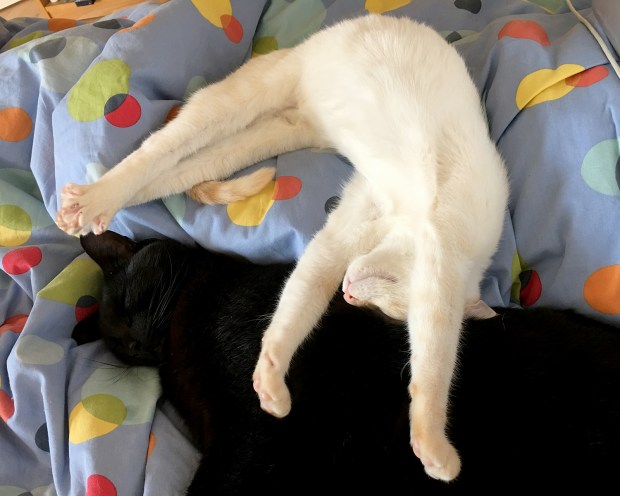
This picture of Scarlett nuzzling into Albie expresses my joy. I expect one day to stop posting so very many cat pictures, but she is so stinking cute and delightful…