Ceiling, Standing Stone, Brick Arch, Yipes Stripes, Bench

ceiling_050316

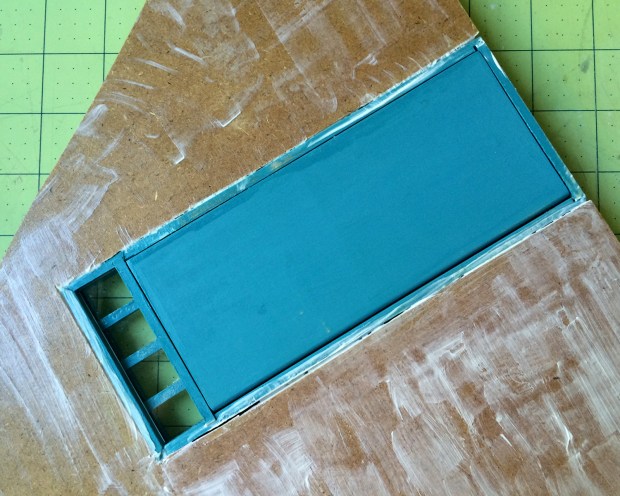
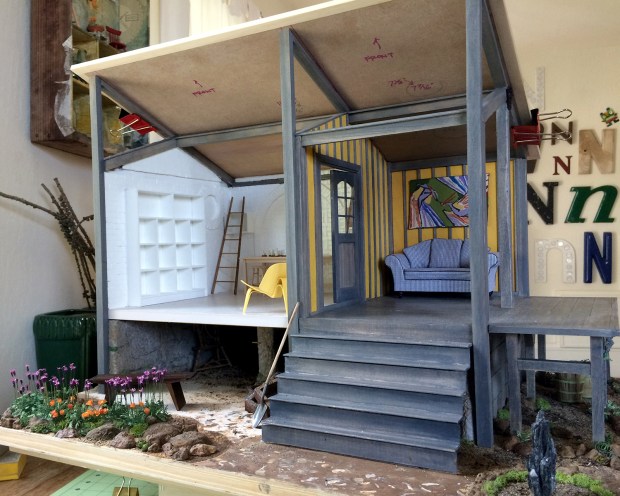
For the Argo Wool Works showroom ceiling, I glued the two roof sections from the Backyard Bungalow base kit together, and edged with half- by quarter-inch (13 x 6 mm) basswood to extend the overhang. I measured the placement of the beams and walls in dry fit like three or four times, encountering anomalies each time.
roof_dryfit_050516.jpg

Yet another dry fit, this time with the upper window frames in place, and one section of ceiling planks. I’ve decided a 1/16-inch wiggle room is acceptable, especially since the whole ceiling and under eaves will be semigloss white, and any gaps will blend into the painted bricks… or something. I’m using the ever versatile 3/4-inch rustic clapboard siding from miniatures.com to cover the ceiling.

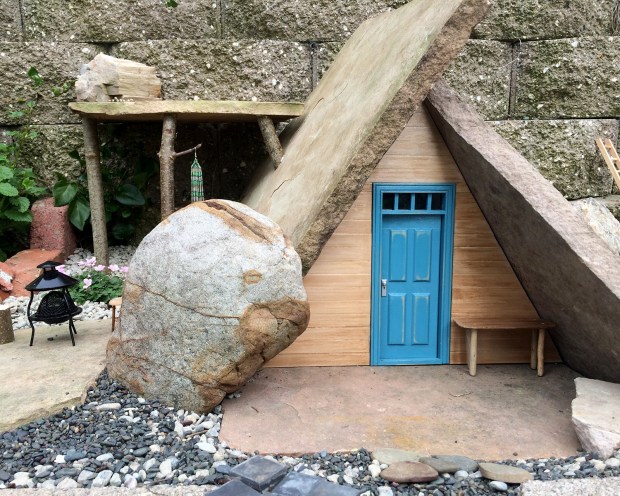
In the lower right of the photo you can see this standing stone feature I’m working on:

upright_rock_050516

It’s two gorgeous crystalline mineral shards that I promptly forgot the name of, found at a very eccentric bead and rock shop here in Pacifica.

back_brick_arch_050516

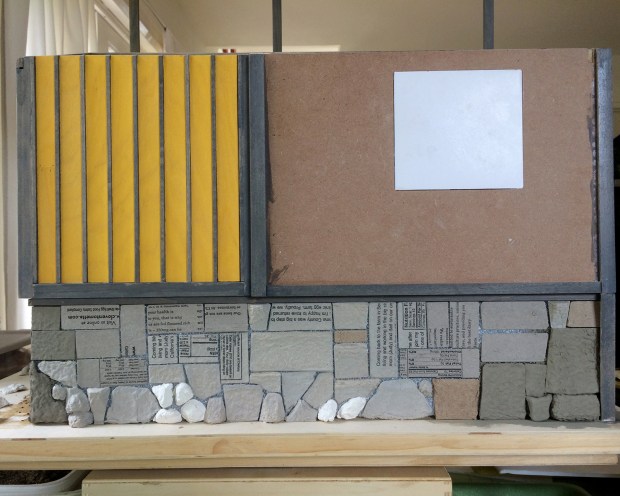
The back of the build was to be clad with the yellow and gray siding, but I decided today to have the bricked-in arch from the interior carry through to the outside wall for interest. I might mess with the foundation to suggest remnants of more of the building, too. There’s only just over an inch of space on the base, but I think it’ll be enough :)
yipes_stripes_050516

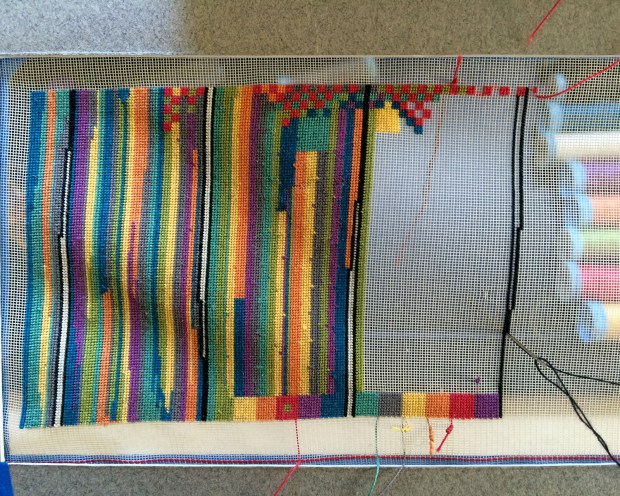
Small progress on the Yipes, Stripes rug, at 2.5 x +2.5 inches, it’s a bit more than half finished. It’ll fit well in the showroom. (Stitched on 48-count silk gauze with ten colors of Gütermann silk; making up the design as I stitch :)

bench_silk_050516

And here, lit by the westering sun, is my first bit of tie silk upholstery — nothing too challenging. Our dear BW sent a vintage Daisy House bench kit (so sad they’re no longer in business), and the fabric is a lustrous gray, black and ivory woven dot pattern. Thanks again, BW and Suz and Dave!

Elephant Tea Cozy

tea_cozy_041316

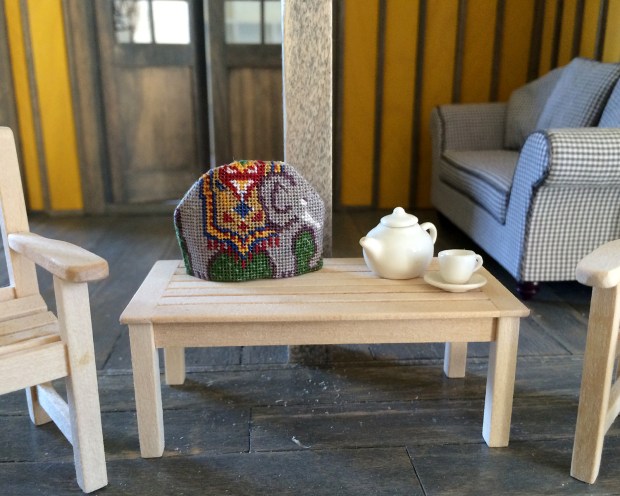
Finished the elephant tea cozy from Janet Granger Designs! It is stitched on 32-count silk gauze with Anchor stranded cotton. Bummer side note: Janet’s site was hacked and hijacked and she’s in the process of restoring it; you may not be able get through :(

The differences in the elephant’s blanket shawl were not intentional, nor part of the pattern. By the time I realized I was off, I was disinclined to rip it all out. I can live with an imperfect tea cozy, especially because you only see one side at a time :)

tea_cozy_041316-2

Here it is trimmed, and the two sides hemmed and stitched together. So adorable. I want to make the ginger cat next.

tea_cozy_041316-3

A new load of barewood outdoor furniture was delivered today, so I made tea —green, with fresh mint leaves and ginger — and sat on the unfinished deck to think about color.

Table and chairs from my stash of Bruce Dawson, regrettably retired from miniatures. Ooooh! I just saw that SP Miniatures has some of his cherry pieces. Grab them while you can!  Teapot, cup and saucer are from HBS/miniatures.com.

California Poppies

poppies_start_040216

Native poppy season is well underway here in Northern California. One of my art supply stockists (thank you, Britain, for that great word) was selling Letraset markers for $0.67 (!) so I laid in a fresh supply of flower colors. The 3/16-inch (4–5mm) petals — four per flower — are punched from inexpensive 20 lb. paper. Stamens are a thin strip of paper tinted deep yellow, cut into a fine fringe and rolled around the stem tips. I’m using 28-gauge paper-wrapped wire cut to approximately .75 to 1.25-inch (19–31mm) lengths.

poppies_02_040316

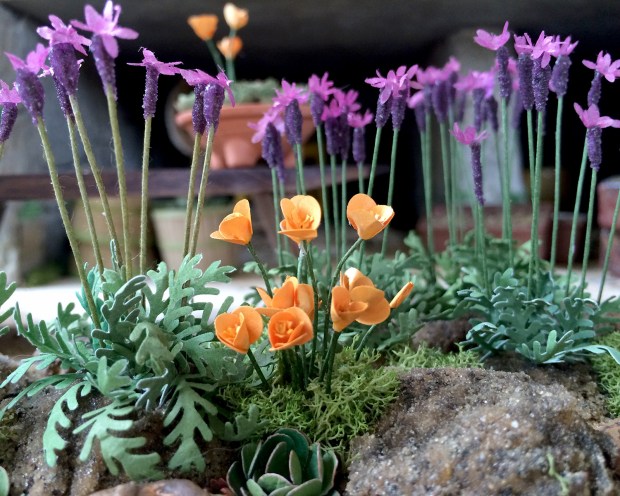
Here’s the first clump of poppies in with the lavender. The color with these markers when dry is a bit muted, so I’m going to mix in some Sharpie for vibrancy in subsequent propagation. I’m using small mounds of preserved moss to suggest their foliage, as I did on the Sea House Warming Hut living roof. There is continuity in Nancyland :)

poppies_040316

The yummy bench is from Peter Tucker, found at the Good Sam show a few years back.

You are welcome to come sit and watch the gardens grow :)


Ties, Lavender, Echeveria, Rocks

Albie_ties_031916

Albie immediately curled up on the rest of the ties, and I set up to make more lavender.

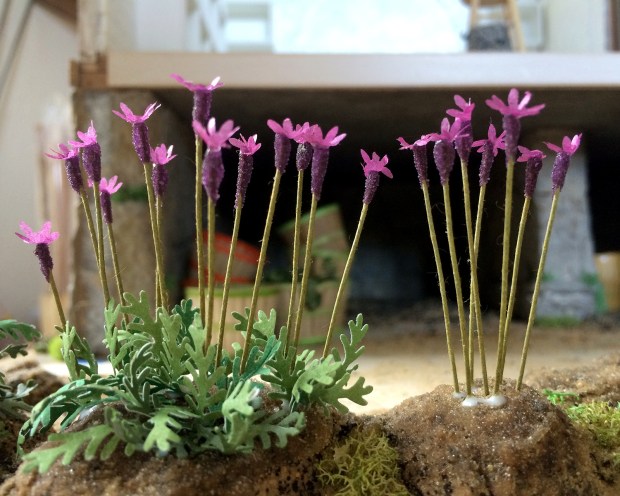
I’m still experimenting with technique, but I try to make a shrubbery’s worth of stems each time, so if they change I can call them varieties or cultivars :) #miniaturejustifications

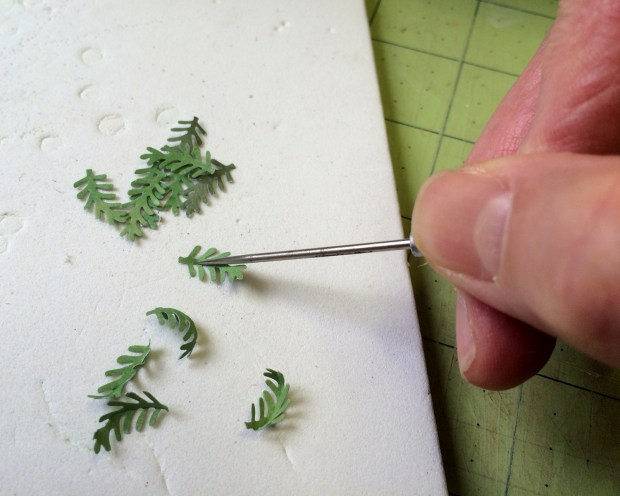
I’m using paper-wrapped stem wire, purple superfine sand (Activa Scenic brand) for the flowers, tissue paper for the petals, tacky glue, and cardstock painted  grayish-green for the foliage. Most tutorials call for lycopodium as foliage, but I’ve decided on this well-designed and versatile punch from Punch Bunch.

fern_punch02_032016

I got my birthday order from The Miniature Garden, which included some 28-gauge paper covered stem wire, yay! Turns out what I’ve been using is 26-gauge, so voilà, the first (subtle) variety. (The #28 is on the left.)

26_28_032016

I cut 1.5-inch (3.8 cm) lengths of stem wire and rolled one end a scant quarter-inch (6mm) in tacky glue.

glue_stems_sand_032016

Rather than dip the glued end, I pour the sand repeatedly over the stem wire. This builds up and preserves the shape of the flower.

drying stems_032016

The sanded stems are placed upright to dry. (The fluffy ones you see on the left are made with Flowersoft, a poofy kind of scatter that I’m considering using.)

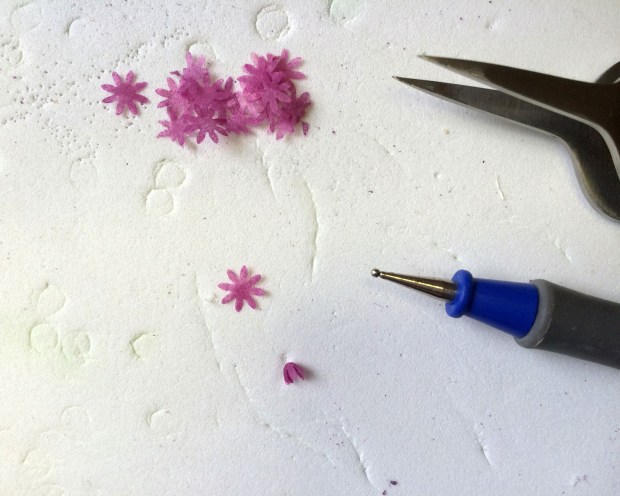
The petals on top are made from tissue paper punched with a small flower shape, cupped with a ball stylus, and glued to the flower.

cupping_flowers_032016.jpg

In the foreground you can see the Flowersoft flowers with petals cut from waxed paper tinted with a marker. Behind those are the sanded flowers with tissue petals.

flowersoft_stems_032016

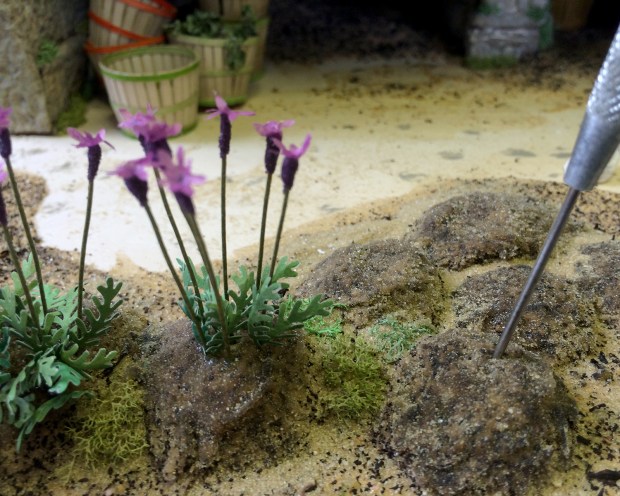
The lavender spikes are planted in the mounds with an awl and glue.

making_holes_032016

These ones were built on #26 wire stems.

26_gauge_planted_032016

The foliage is shaped with a stylus and glued in around the stems to create a pleasantly convincing, if stylized, base.

shaping_ferns_032016

eche_lav_032016

Making more echeveria hen and chicks to cluster in around the lavender mounds. If you look closely above, you can see once again the difference between #26 and #28 (on the right) stem wire.

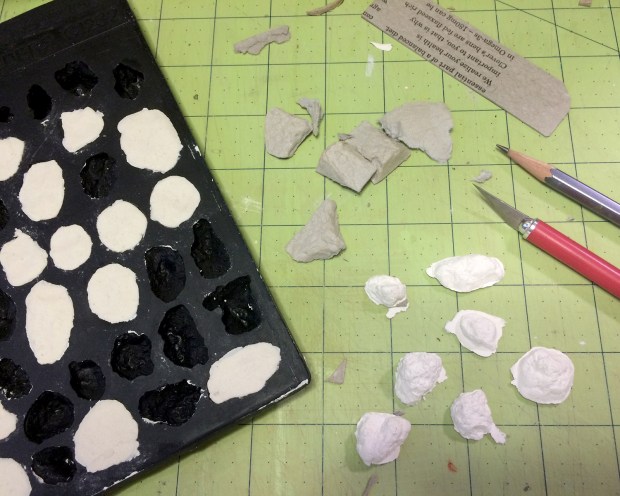
paperclay_rocks_unThere’s an entire molds-worth of paperclay rocks dried and awaiting mineralization. These will be nestled and half-buried around the lavender, poppy and succulents bed as an unobtrusive border.
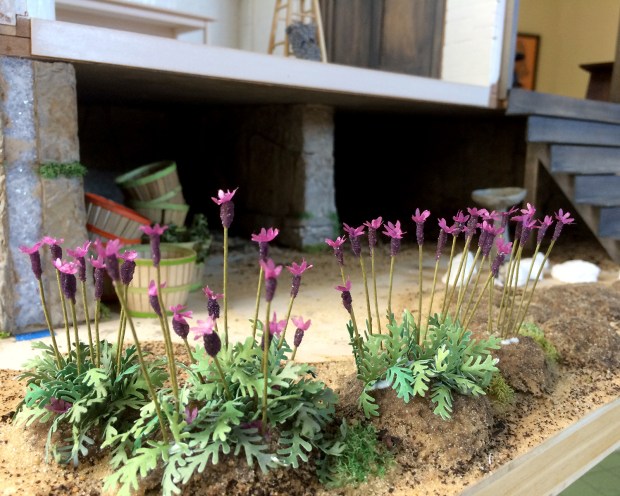
Happy vernal equinox (for those of us in the Northern Hemisphere)!


Lavender, Ties

lavender_031916-1I mentioned that Argo Wool Works also grows lavender. There are a few good approaches to making miniature lavender, and after a thoughtful review, I’ve adopted a hybrid technique. This is always the question in miniatures: how best to convey a feeling, an illusion of the real thing? Absolute adherence to reality, or a simpatico synthesis of appearance? Answers often surprise me, as did this lavender.
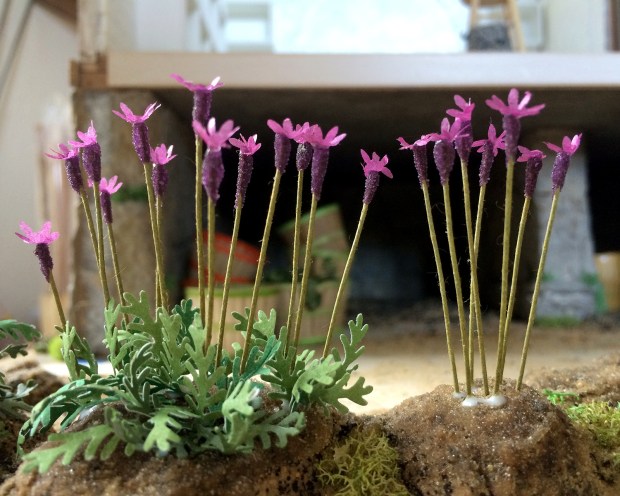
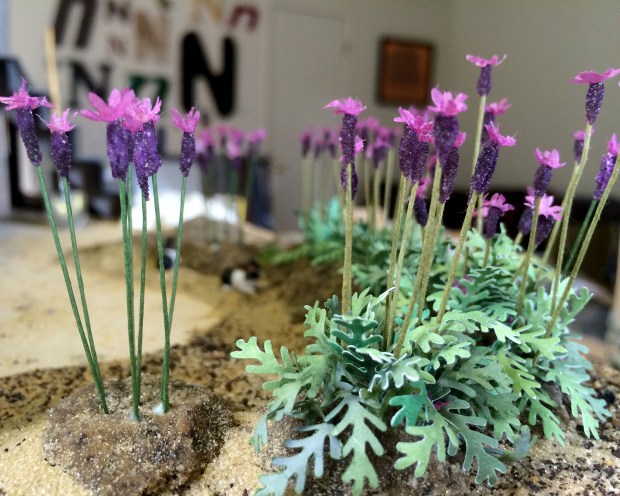
lavender_031916-2These are the start of the demonstration lavender beds outside the AWW showroom, as planted in the egg styrofoam and sand-covered mounds established earlier. I’ll post a more step-by-step later, when I’ve more available time. I think the method is worthwhile :)
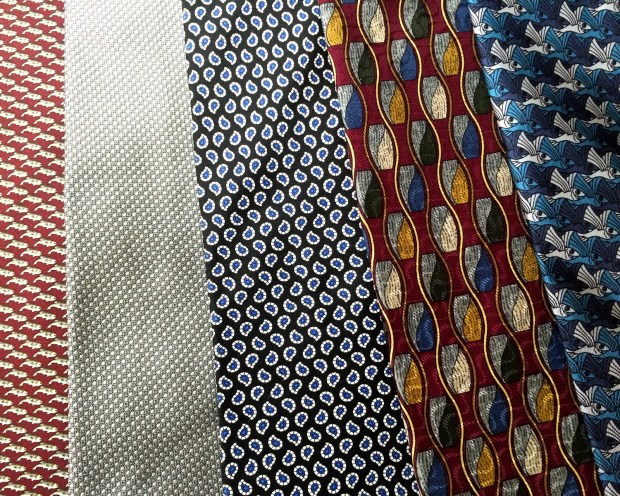
The final observances of my family’s multiple March birthdays have been celebrated. I was delighted to receive an unexpected gift from one of my oldest, dearest friends, who noted my quest for fabulous silk ties with a large bag of said items. Her husband — another oldest, dearest friend — is a professional wearer of ties.ties_031916.jpgThese are the top five I pulled out for the squiggly vintage Chippendale sofa, and/or throw pillows. The far left is out of focus, but is a delightful fish pattern. The next is an exquisite gray/black circular motif… on through a classic understated Paisley, a retro-looking I don’t even know what, and a brilliant Escher tribute.

Adding to the Spring bounty is another bestowal of wood veneer and samples that would have otherwise gone into landfill, from family member Tony. This is a large roll of oak veneer, and samples of bamboo, cut both horizontally and vertically.more_veneer_031916So, so beautiful, and interesting! May your cups runneth over with unexpected gifts and bounty to share.
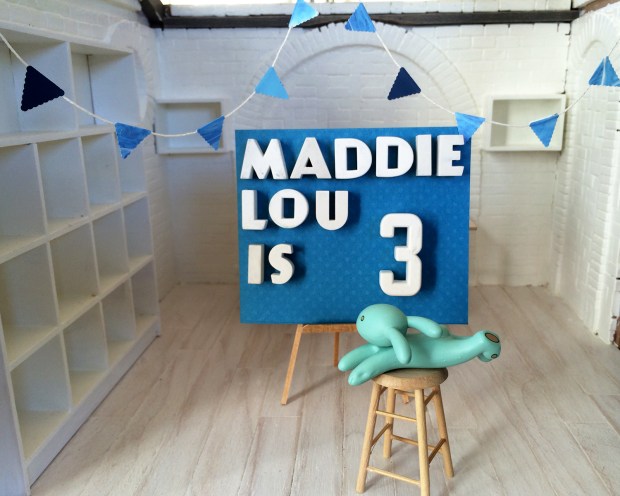
3

MLR_031716

Her favorite color remains blue, and she can fly like this bunny.

MLR_031316

My favorite modern miniature of all time.


A Wee Armchair

lisa_chair_030816

Here’s a peek at Kris Compas’s Lisa Chair Kit. I used the same fabric and finishes as the coordinating sofa. It’s an interesting build — some of those pieces are wee. The kit’s very well thought out, with detailed instructions, and of course the ultra-convenience of not having to measure and cut the parts.

The optimal placement of cabriole legs is a mystery to me. I badly placed them three times, (I know, how hard could it be?!) and since that involves drilling holes, the bottom of the chair is now less than pristine :( After whining to Kris in an email about it, she made some smart suggestions, and I was able to do a good-enough fix. Just don’t inspect the underside.

The painting in the background is the foundation color wash dabbing paper :)

The Thing Missing From My Life

Short answer? Paperclay. Long answer follows.

back_wall_030516

I settled in to finish the long back foundation wall, literally before the storm and power went out. Above you see the carton materials wrapped from the left side wall and primed in Ceramcoat “Mudstone”, then the beginnings of the long traverse using various parts of egg carton. Then I noticed something.

A while ago, our thoughtful reader and observer Barbara W. had sent me a mold from Woodland Scenics. Although sized as “boulders” it occurred to me that at 1:12 scale they would make excellent rubble, the kind I was using in the foundation.

paperclay_rocks_030516.jpg

I reviewed my on-hand options and chose a pouch of Creative Paperclay. I had never worked with this material before, though it was on my list. I chose some of the larger boulder forms and filled the mold. I forgot about it until I started the back wall foundation masonry. Then I noticed that the molded boulders had a similar texture to the carton materials I was using. Like, really similar.

The dried paperclay is a remarkable material. It is extremely stable and lightweight, easy to trim, and as I was soon to find out, paints very well.

back_wall_rocked_030616.jpgI reloaded the mold with the full set of rocks in paperclay to use around the rest of the foundation, and finished out the back wall with the few that had already dried (those in white), along with egg carton and packaging forms. It seems to take two or three days for the paperclay to dry thoroughly.
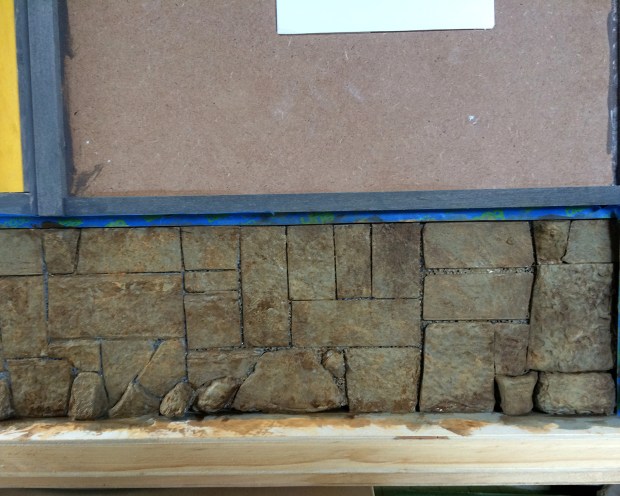
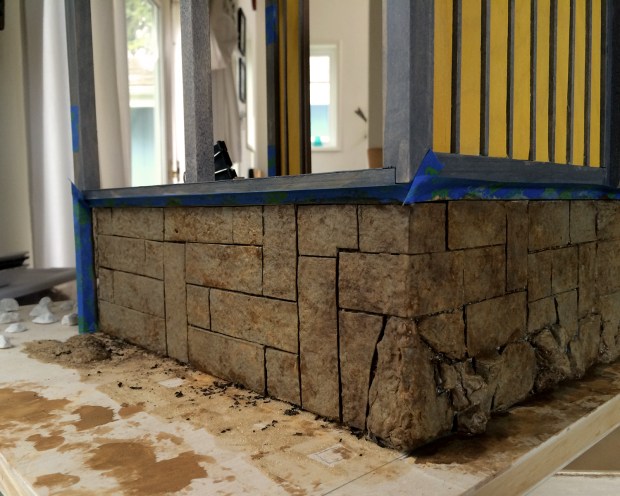
back_wall_washes_030616

I applied the same set of acrylic layers and washes as the interior foundation.

corner_030616.jpg

Here’s a dramatic corner shot.

back_wall_030616

And the entire finished back foundation wall.

back_moss_030616

Although there is additional touch up and detailing to add, this needs to dry thoroughly. I could not resist gluing in some moss, though, to make it come alive. Thanks, BW, for the gift of the mold and allowing me to discover paperclay. The fun has just commenced.