a wealth of opportunity

modern miniatures

The limited edition 2015 HBS/miniatures.com Creatin’ Contest starting kit

Like some of the other miniaturists who were enticed to participate in HBS/miniatures.com build blog-along, I had already purchased and begun to build this year’s starting kit. And I’ll enter the Sea House Warming Hut in the contest come December 16, even though I have no aspiration of winning, having been honored with the Grand Prize in 2013 for my Sea House Pavilion. (Note to all those who don’t enter their projects because you think you have no chance: no one was more astonished to win than I was. Truly. So show your work and enter! It’s way fun.)

So what to do with this second kit provided by HBS?

Much as I’d like to, I haven’t the time (or space) to do another project. I’d like to offer the kit as encouragement to anyone who might be hesitant to enter the contest, or undertake miniature world building. Leave a comment, and I’ll randomly draw a name on Tuesday, March 31, 2015 from those who respond. I ask only that you consider using the kit to enter the contest, and that you pay shipping costs (I’m in Northern California, and the kit weighs about 11 pounds). What say you?
modern miniatures

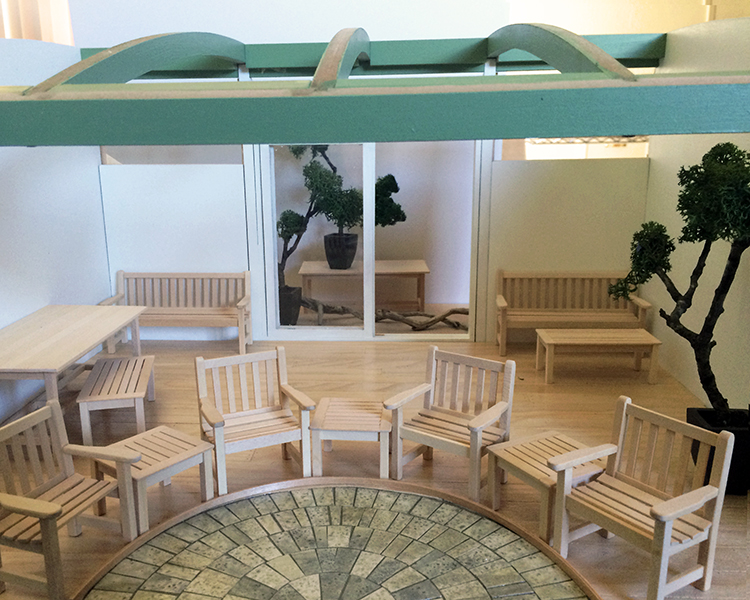
Perfect furniture by Bruce Dawson, who has shuttered his studio and is closing out inventory :(

Not a lot of progress on the Warming Hut, what with all the March birthday celebrations.

I did see that one of my favorite miniature furniture builders, Bruce Dawson, is retiring (again) and closing out all his inventory through his Etsy shop bedMiniatures. Shown above are the unpainted 1:12 basswood items I picked up. (He has some half-inch scale pieces as well.) Do check out his shop. His prices are more than reasonable. There are still a few cherry Mission style tables and bookcases that are especially wonderful. Don’t miss this opportunity! You’ll be very, very glad.

count olaf’s house

I got to take a behind-the-scenes tour at Letterman Digital Arts Center in the Presidio, and encountered the model of Count Olaf’s house used in the 2004 movie Lemony Snicket.

Count Olaf’s house movie prop, built at ILM

Count Olaf’s house movie prop, built at ILM

It randomly occupies half of a small lobby, and stands maybe seven feet (2.1 m) tall. It is fabulous. The sign says it took three months to build in the Industrial Light and Magic model shop, and another two weeks to light and film it on stage.

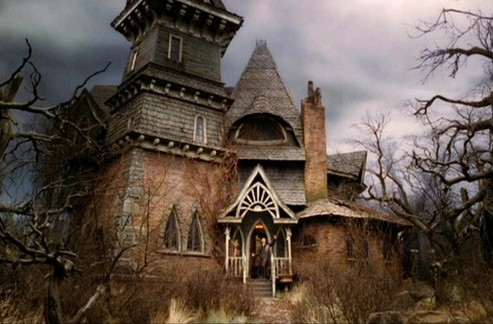
This is how it appears in the film:

image from the Lemony Snicket wiki

image from the Lemony Snicket wiki

Says the Lemony Snicket wiki:

The house is described as a dilapidated mess. The bricks are stained with soot and grime, the front door needs repainting (and contains a carving of an eye), and the entire building sags to one side. Rising above the house is a tall and dirty tower. In The Bad Beginning: Rare Edition, Lemony notes that his sister Kit has proposed that some of the eyes in Olaf’s house contain secret peepholes, cameras, or microscopic lenses.

Fittingly, they have let the model accumulate dust :)

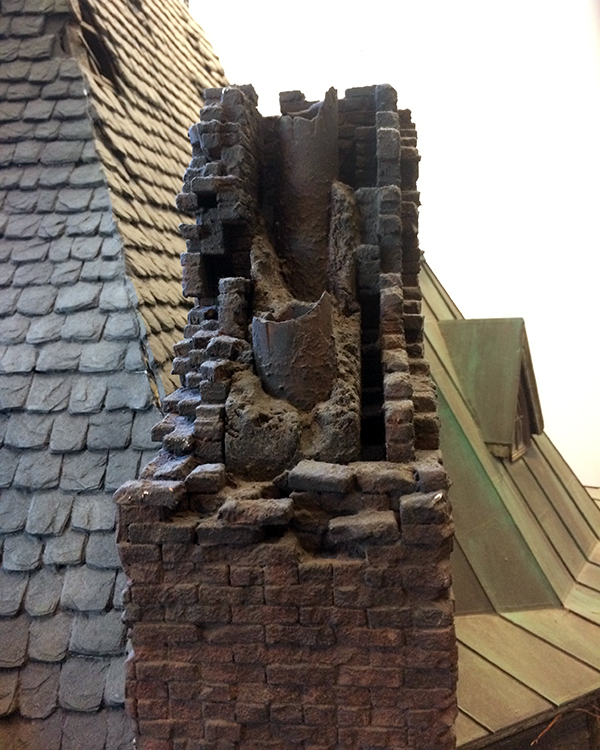
The ruined chimney:

LS_chimney

A disheveled downspout, a course of eye motif blocks, and a great circular window with web panes. Looks like the model builders used bermuda grass roots or something similar for the dead vines creeping up all over the house. (Minus one point, though, for the not-in-scale tattered lace curtains :)

LS_drainpipe

The front door (with reassembly notes :)

LS_frontdoor

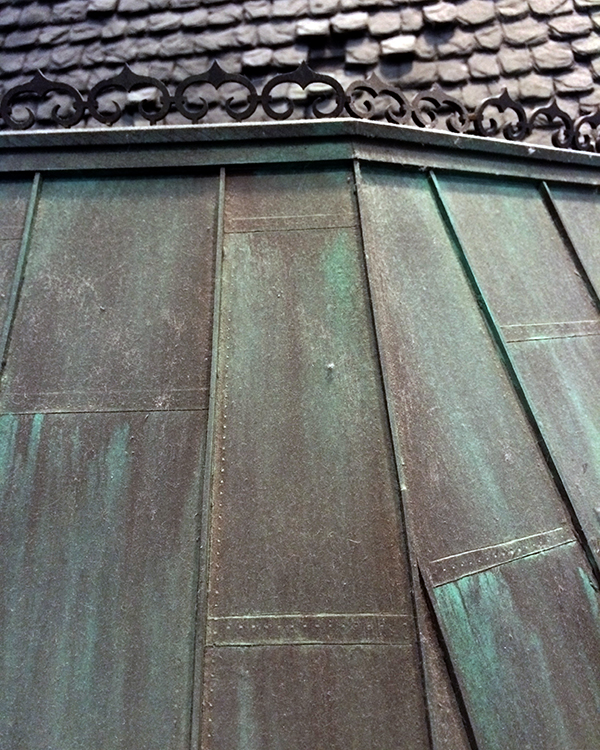
Here you can see the dust coat and teeny, tiny rivets. I was particularly taken with them.

LS_rivets

The inadequately-repaired drafty dome, with more rivets (and dust):

LS_onion

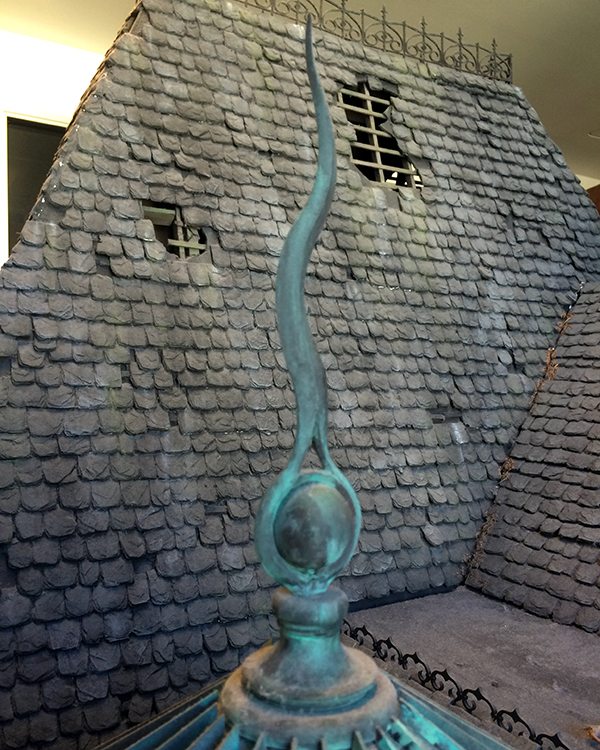
and its finial topper:

LS_roof_finial

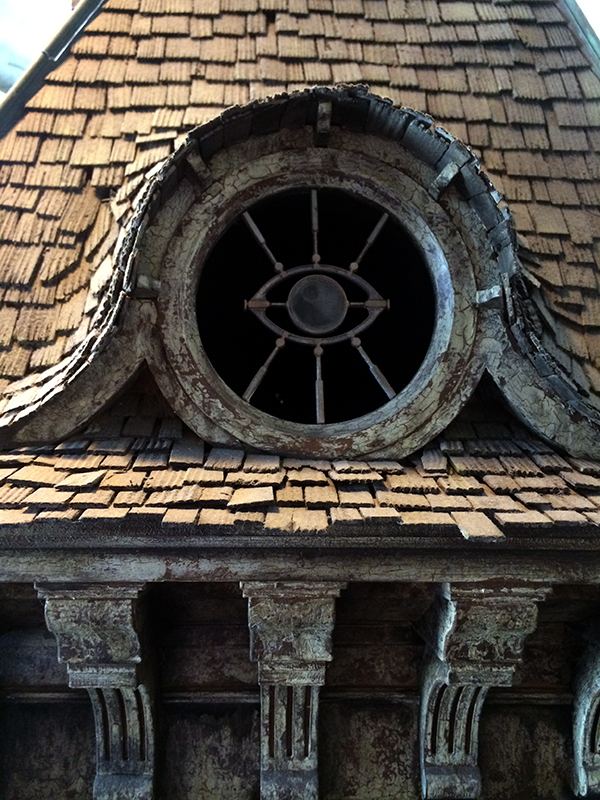
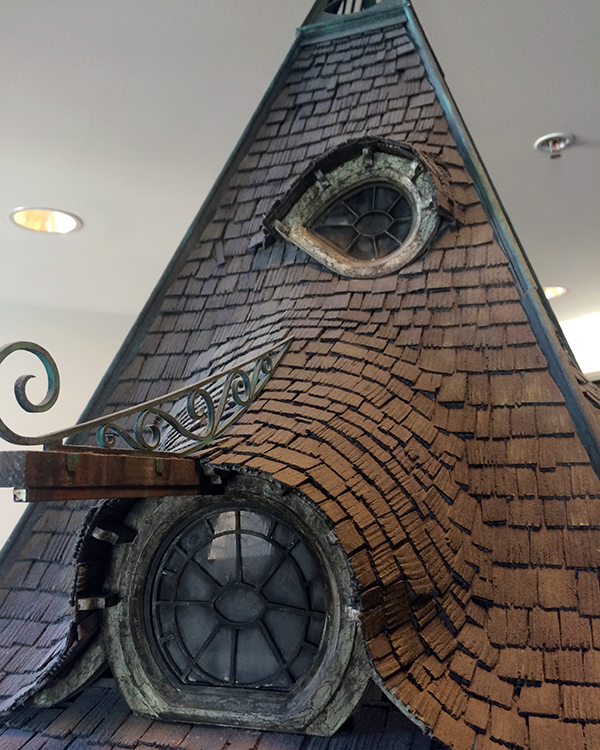
This is a particularly fine eye-paned window, and a closer look at the corbels. Such great distress and weathering.

LS_dormer

And finally, a closer look at some of the tower eye windows:

LS_roof_windows

Advice in the most unexpected manner

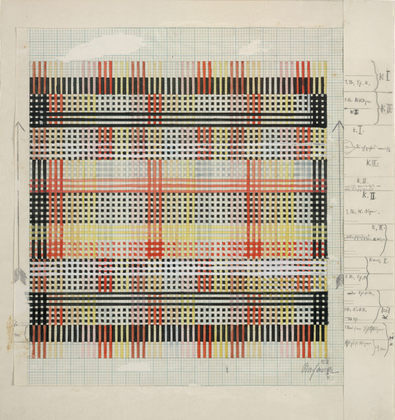
Anni Albers, MoMA
“Working material into the hand, learning by working it of its obedience and its resistance, its potency and its weakness, its charm and dullness. The material itself is full of suggestions for its use if we approach it unaggressively, receptively. It is a source of unending stimulation and advises us in a most unexpected manner.”

—Anni Albers, “Design Anonymous and Timeless,” Magazine of Art, 1947
From a piece by Sarah Jones on the Kaufmann Mercantile blog. The Josef and Anni Albers Foundation has more.
Image is Anni Albers’ Design for Tablecloth, 1930, from the MoMA