New Echeveria Kit in Development

ec01_color_113016Experimenting with color for a new echeveria kit for the shop. This is two shades of green and an orange on white stock.

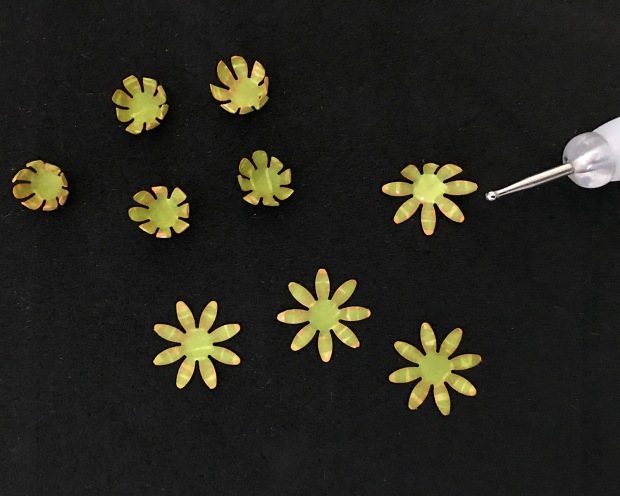
ec01_shaping_113016

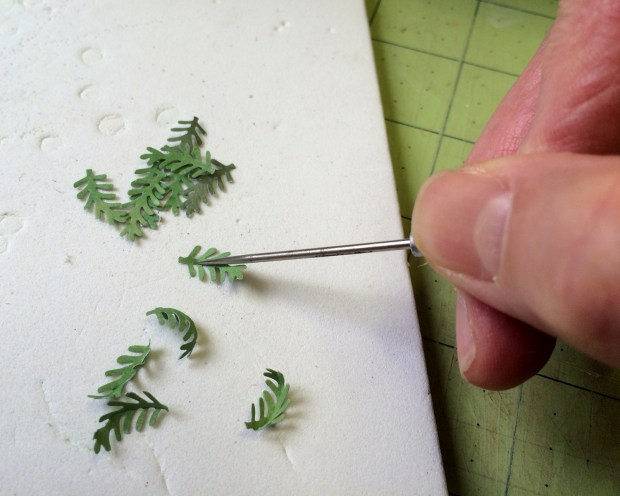
Shaping with a fine point stylus.

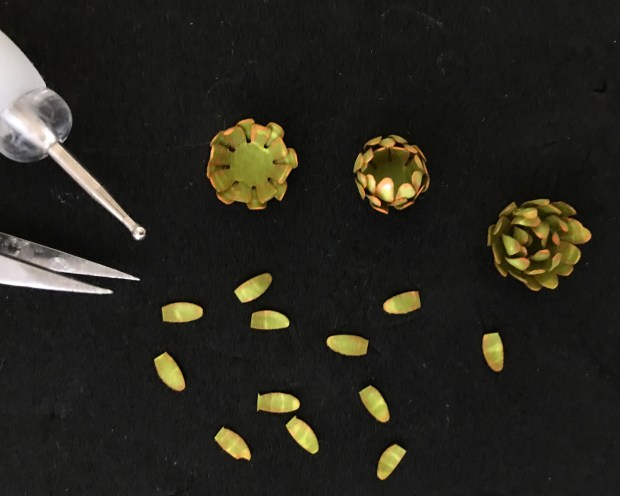
ec01_building_13016

Trying out construction techniques and build sequences. This succulent is wonderfully small, just a half-inch (13 mm) in diameter.

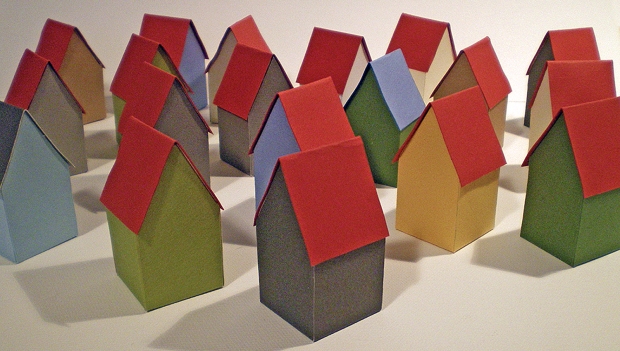
houses_blog

The first issue of my newsletter, Cut, Fold + Make, goes out tonight! Look for it in your inbox on the first of each month. Included is a free pattern to make these iconic, and very versatile little paper houses.

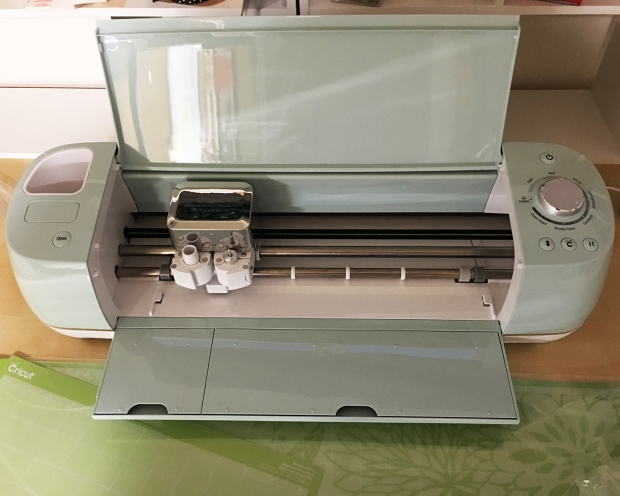
arrived_113016

And possibly most exciting of all the things: this just arrived. Let’s get started.


New Kit

scarlett_sv02_112716

Listed another kit in the Etsy shop, a larger, more-specimeny succulent that pairs nicely with SV01. Continued heartfelt gratitude and thanks for your warm wishes and interest. I wish I had like a whole line plan to lay out — and I do! In my head! — instead of this kit-by-kit piecemeal showing. And soon, on offer, completed specimens, in some of the most wonderful containers I’ve ever seen! However. I am learning by doing, and this is bootstrap crafty business making. Rhetorical question: would we have it any other way?

First Listing

sv01_spray

So pleased to announce the first kit is available over at MMS+S. I expect I’ll be making editing tweaks for a while, in between assembling and listing new kits. Potted specimen succulents and sundries coming real soon. Heartfelt thank yous to all who showed interest. Happy making!

Newsletter, Walnuts

I’ve been wanting to publish a newsletter for some time. Printed magazines have always been dear to my heart, and I see an email newsletter as a cost-effective way of sharing my interest imperative of a daily creative practice — however it occurs to you — as essential human activity, without all the adverts. I’m using Constant Contact for delivery, in part because I’m familiar with it from my volunteer work with Pacifica Beach Coalition, and hey, start with what you know.

walnuts_111716

Years ago I made an advent calendar for my daughter, when she first moved away for college. It was a garland of shelled walnuts containing tiny treasures glued over a length of ribbon, meant to be re-cracked as the days unfolded. This is a perfect project for miniaturists, for who among us does not have an overflowing stash of tiny treasures?

walnut_navel_111716

Construction is easy enough. Get a pound or so of jumbo walnuts in the shell.
walnuts_split_111716

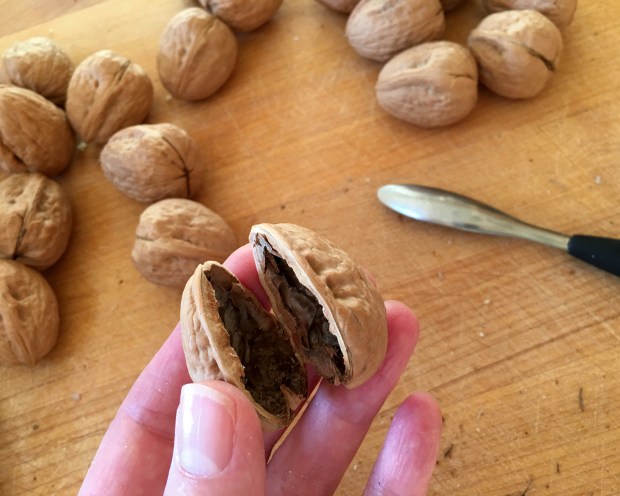
Split them cleanly open, and remove the good bits. (It’s just weird to call nuts meat.) Share with your squirrels and birds or save for cooking/snacking. I found a shellfish fork to be the handiest tool for all tasks, but use what you have. Keep the shell pairs together.

walnut_helper_111716.jpg

Ensure you have a dedicated helper.

treasure_111716

This is the really fun part. Depending on to whom you intend to give this, go through your stash and find small treasures that will fit in a walnut shell. This one is for my almost-four-year-old granddaughter.

more_treasures_111716

It’s helpful to test fit and line up your treasures so you can roll with assembly. Make sure you keep your walnut shells paired!

glue1_111716

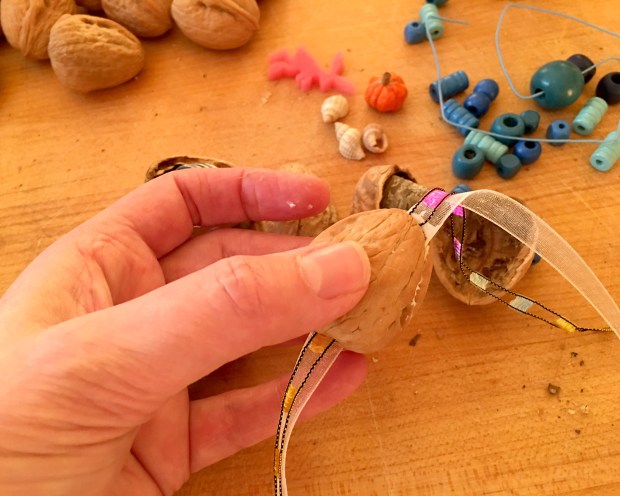
A thinnish, flexible ribbon or raffia works best. (I’ve needlessly complicated the process here by using a sheer ribbon and a novelty yarn, but both have sentimental value :) Dot glue on both sides of the shell, sandwiching the ribbon, and realign the cracked shell edges.
holduntildry_111716

Hold until dry. Think about good things.

repeat_111716

Decide a pleasing interval between walnuts, and repeat the process for the number of days you wish to advent, depending on what you’re counting down (or up). The finished walnut garland can be hung in any number of ways. Of course you’ll want to give some consideration to the contents vs. the force necessary to re-break the shell, but it’s pretty easy.

If you’re fancy, the walnuts could be gilded or embellished with numerals. Or glitter… or rose thorns. You get the idea. Evoke.

For me, cracking and shelling walnuts returns me to my childhood, when every home had a nut bowl on a living room side table, always available for a snack. Holiday baking involved conscripted labor. Our job as kids was to crack a very large bag of walnuts, almonds, pecans, hazelnuts, the odd Brazil nut — our mother would never indulge the cost of pre-shelled nuts! — and extract the usable parts. As I recall, whole walnut and pecan halves earned a dividend. These memories are imbued with a happiness of shared industry and rich nut tidbits.

Anyway. Projects, ideas, like this are what I have in mind for my newsletter content, as well as quick inspirations, fun facts, helpful hints, and links to relevant, deeper content around the subject of being a heartfelt creative person. Sound interesting? There’s a clunky link in the sidebar to subscribe, as well as a new “Newsletter” page with a contact form. Obviously I’m still working everything out. I’m thinking a once a month issue to begin with. Interested?
Felines and Flora

I’ll just get the cat pix out of the way first thing.

albie_scarlett_01_102916

albie_scarlett_00_102916

Classic long-suffering Albie and his unwanted sidekick. All he wants to do is sleep on the bed and not be mauled. She shadows and adores and mauls him.

stemmed_102916

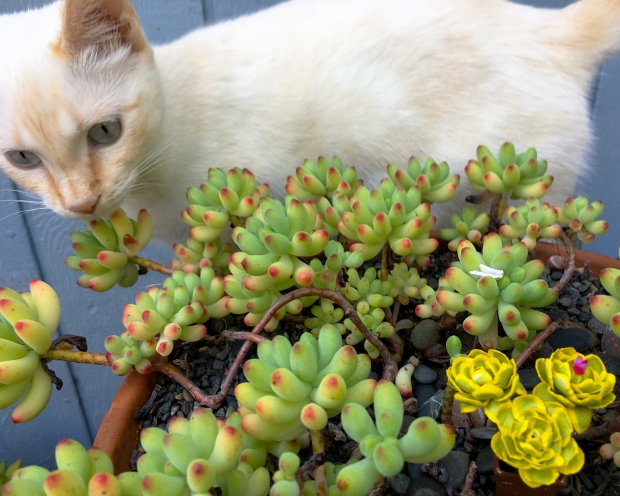
See the succulent/cactus hybrid hovering slightly above her sisters in the long planter? This is a new feature :) I’m adding believable stems to some of them.

stems_102916

This may be one of the most enigmatic photos I’ve ever published. Here are tiny stems very close up — they’re just over an inch long. They’re made from floral wire wrapped with torn strips of brown paper bag. Easy to make a gentle curve and plant.

palms_wired_102916

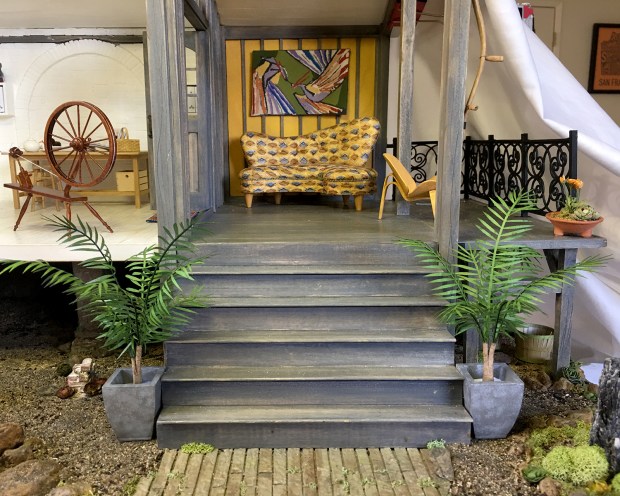
In other projects, I got all the sizes of leaves from JMG Miniatures to make potted palms for either side of the stairway. They come five to a bag and are cut from a nice green sturdy stock. I’m not even painting them! I glued a fine gauge green wire onto the central stem of each frond to enable sculpting.
palms_curled_102916.jpg

Once the glue was dry, I curled them around a fat watercolor pencil (Derwent Inktense, Teal Green 1300, not mandatory).

palm_wrap_102916

I gathered groups of three or four fronds, and bound them together with strips of torn brown paper bag.

palm_drying_102916

I bundled three or four frond clusters around another length of floral wire, and covered the lot of them with more torn paper bag strips, and stabbed them to dry in their eventual planters. These are those ever-versatile, well-modeled chocolate brown Houseworks tapered pots to which I had given a “zinc” finish.

palms_planted_102916

Here they are “palmed” and waiting for the glue to dry in the pots. I’ll cluster more succulents around the bases, tying in with the rest of the casual landscaping. I like how they both frame and add a “parlor” friendliness to the entrance. Since this is meant to be a refurbished working farm building, I didn’t want to put in a stuffy staircase banister.

In the showroom proper you can see an exquisite spinning wheel, gifted by our beloved reader BW. We’ve both agreed it’s a bit too pristine, but I’m reluctant to augment it. I need to channel my inner Sleeping Beauty for counsel.

Until then…

New Project, Poppy, Magnets

cutting_080116

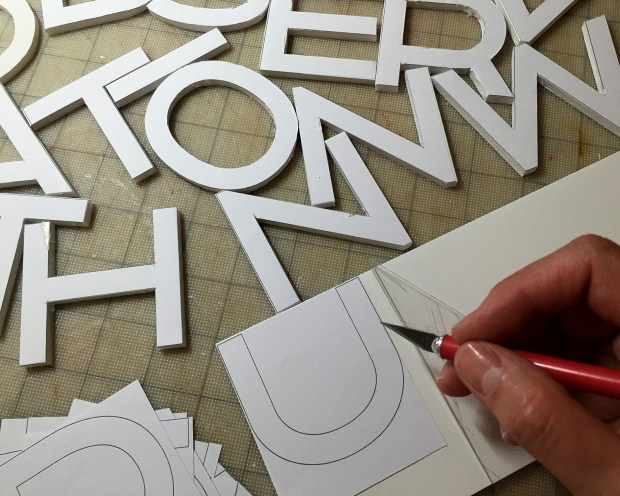
Work is underway on a new mixed media piece, large (for me) at 24 by 36 inches (61 x 91 cm). These letters are about 2.5 inches tall (64 mm) and being cut from foamcore.

punched01_080516.jpg

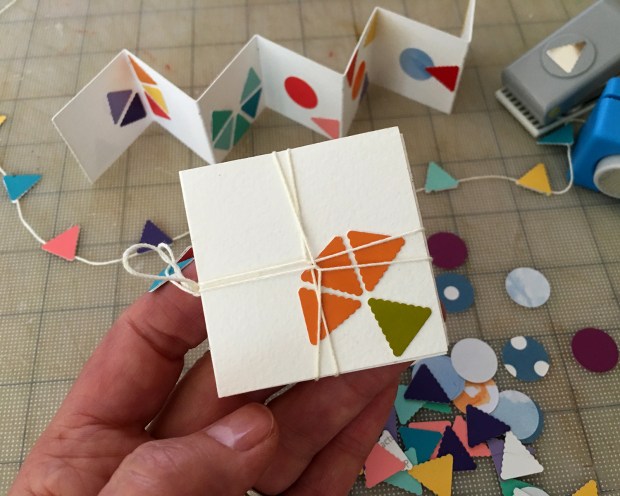
Poppy the Fairy is being kept busy with her correspondence. These are two accordion books, meant for Ava and Aria to embellish, made from watercolor paper and simple punched shapes. That’s Poppy’s new sigil.

punched02_080516

… As well as Ava’s name rendered in triangles, and another tiny sketchbook for Lynnie (at proper 1:12 scale). Her’s from last week was, um, appropriated by her associates :)

do_book_00_081316

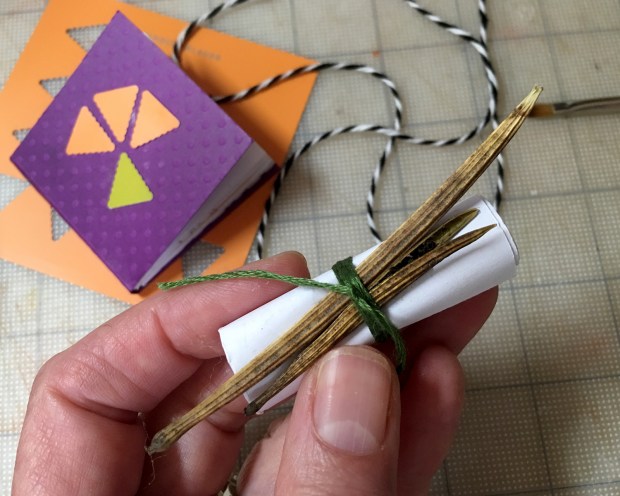
This week, Poppy made a two-inch square book to answer some of the girls’ questions: Can you do ballet, like me? Do you eat snacks? Tucked into the reply scroll are California poppy seed pods, because one of the things fairies do is gather seeds.

do_book_01_081316

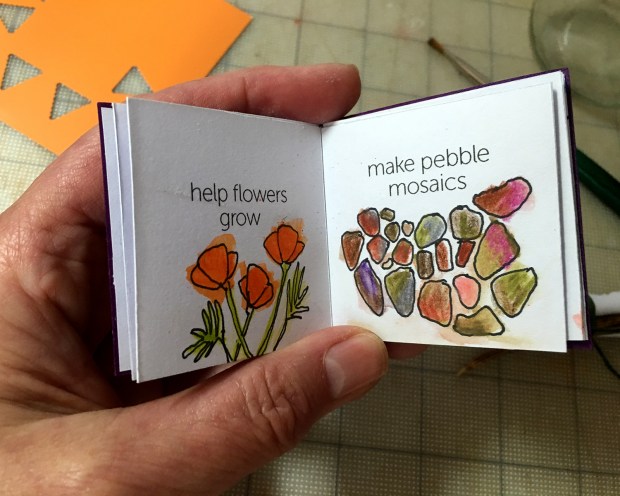
Inside the book are quick ink and watercolor illustrations with text. Here are a few of the pages, listing some of the things fairies do:

do_book_02_081316

do_book_03_081316

do_book_04_081316

I can perhaps see a series, as my understanding of the fay way grows :)

MLR_magets_080616

Maddie Lou spent the weekend with us as her parents enjoyed a night in the City to celebrate their anniversary. Here’s Maddie working on a surprising and spontaneous new deployment of her beloved magnetic blocks in the sun room.

MLR_magnets_080616

The final arrangement. Can you tell her favorite color is blue?

So awesome on so many levels :)

Glue, Sneak Peak

gluing_050916

This is a reality shot of miniature landscaping.

bricks_050916.jpg

And this is a super secret in-process shot of a project unrelated to miniatures… 15 x 20-inch (38.21 x 50.7 cm ) watercolor cold process block pages painted in a matte acrylic wash. Pretty! Also, I’m surprised there are no cats sitting on them, dry or otherwise.

California Poppies

poppies_start_040216

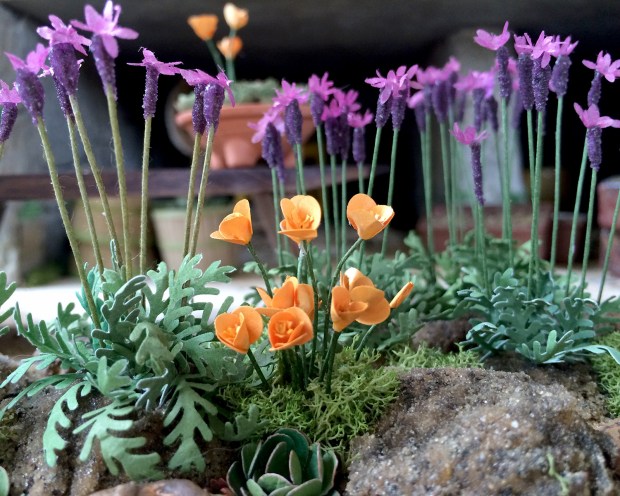
Native poppy season is well underway here in Northern California. One of my art supply stockists (thank you, Britain, for that great word) was selling Letraset markers for $0.67 (!) so I laid in a fresh supply of flower colors. The 3/16-inch (4–5mm) petals — four per flower — are punched from inexpensive 20 lb. paper. Stamens are a thin strip of paper tinted deep yellow, cut into a fine fringe and rolled around the stem tips. I’m using 28-gauge paper-wrapped wire cut to approximately .75 to 1.25-inch (19–31mm) lengths.

poppies_02_040316

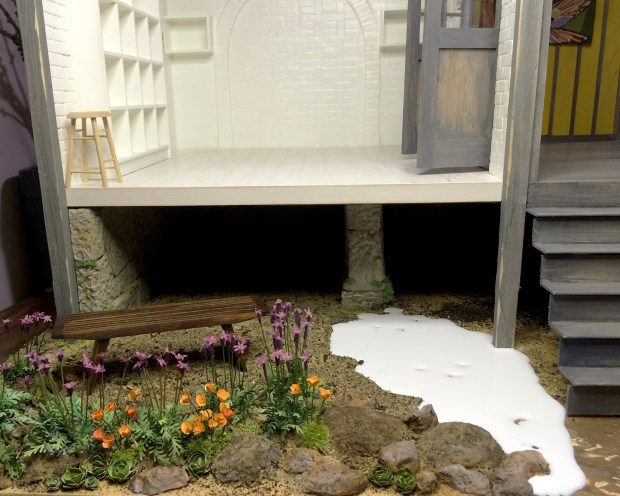
Here’s the first clump of poppies in with the lavender. The color with these markers when dry is a bit muted, so I’m going to mix in some Sharpie for vibrancy in subsequent propagation. I’m using small mounds of preserved moss to suggest their foliage, as I did on the Sea House Warming Hut living roof. There is continuity in Nancyland :)

poppies_040316

The yummy bench is from Peter Tucker, found at the Good Sam show a few years back.

You are welcome to come sit and watch the gardens grow :)


Ties, Lavender, Echeveria, Rocks

Albie_ties_031916

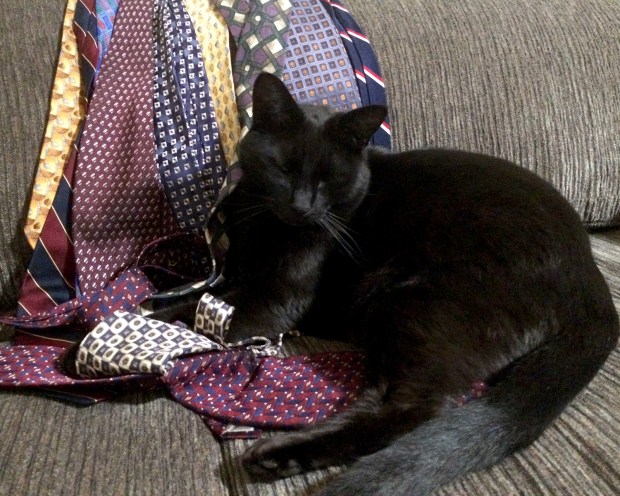
Albie immediately curled up on the rest of the ties, and I set up to make more lavender.
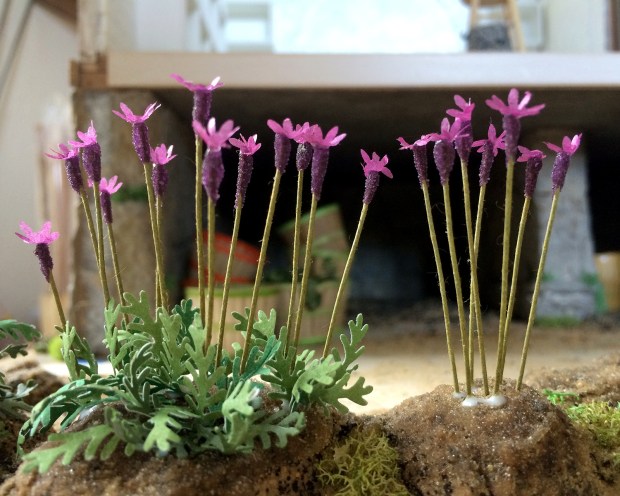
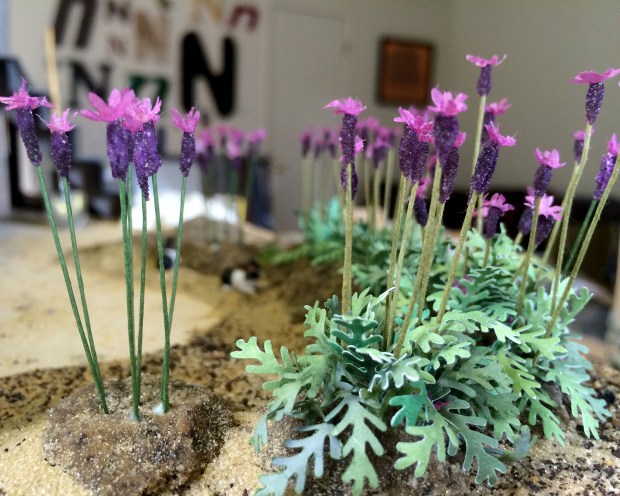
I’m still experimenting with technique, but I try to make a shrubbery’s worth of stems each time, so if they change I can call them varieties or cultivars :) #miniaturejustifications

I’m using paper-wrapped stem wire, purple superfine sand (Activa Scenic brand) for the flowers, tissue paper for the petals, tacky glue, and cardstock painted  grayish-green for the foliage. Most tutorials call for lycopodium as foliage, but I’ve decided on this well-designed and versatile punch from Punch Bunch.

fern_punch02_032016

I got my birthday order from The Miniature Garden, which included some 28-gauge paper covered stem wire, yay! Turns out what I’ve been using is 26-gauge, so voilà, the first (subtle) variety. (The #28 is on the left.)

26_28_032016

I cut 1.5-inch (3.8 cm) lengths of stem wire and rolled one end a scant quarter-inch (6mm) in tacky glue.

glue_stems_sand_032016

Rather than dip the glued end, I pour the sand repeatedly over the stem wire. This builds up and preserves the shape of the flower.

drying stems_032016

The sanded stems are placed upright to dry. (The fluffy ones you see on the left are made with Flowersoft, a poofy kind of scatter that I’m considering using.)

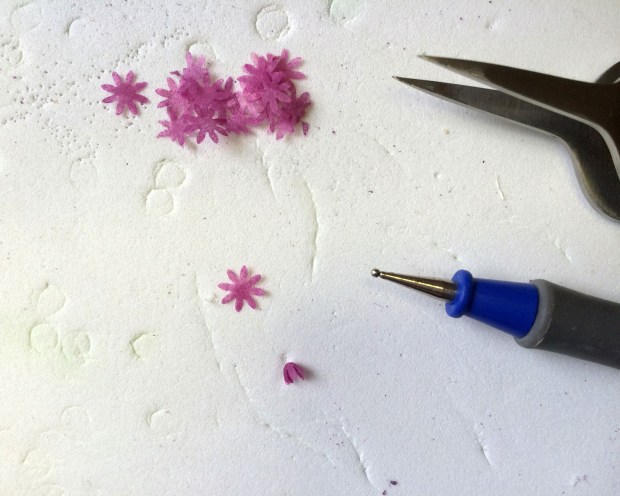
The petals on top are made from tissue paper punched with a small flower shape, cupped with a ball stylus, and glued to the flower.

cupping_flowers_032016.jpg

In the foreground you can see the Flowersoft flowers with petals cut from waxed paper tinted with a marker. Behind those are the sanded flowers with tissue petals.

flowersoft_stems_032016

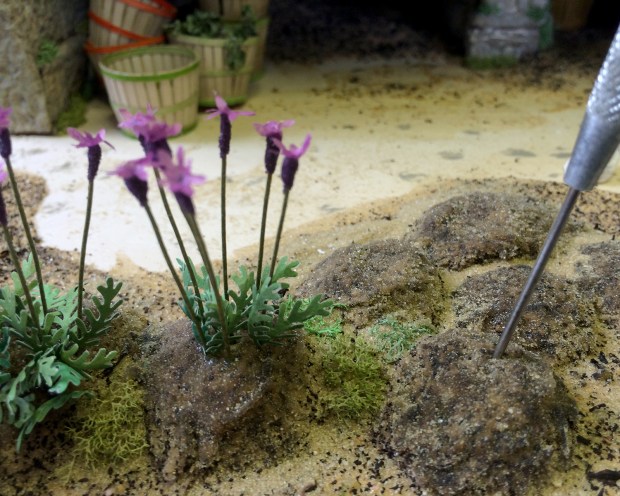
The lavender spikes are planted in the mounds with an awl and glue.

making_holes_032016

These ones were built on #26 wire stems.

26_gauge_planted_032016

The foliage is shaped with a stylus and glued in around the stems to create a pleasantly convincing, if stylized, base.

shaping_ferns_032016

eche_lav_032016

Making more echeveria hen and chicks to cluster in around the lavender mounds. If you look closely above, you can see once again the difference between #26 and #28 (on the right) stem wire.

paperclay_rocks_unThere’s an entire molds-worth of paperclay rocks dried and awaiting mineralization. These will be nestled and half-buried around the lavender, poppy and succulents bed as an unobtrusive border.

Happy vernal equinox (for those of us in the Northern Hemisphere)!