and so it begins

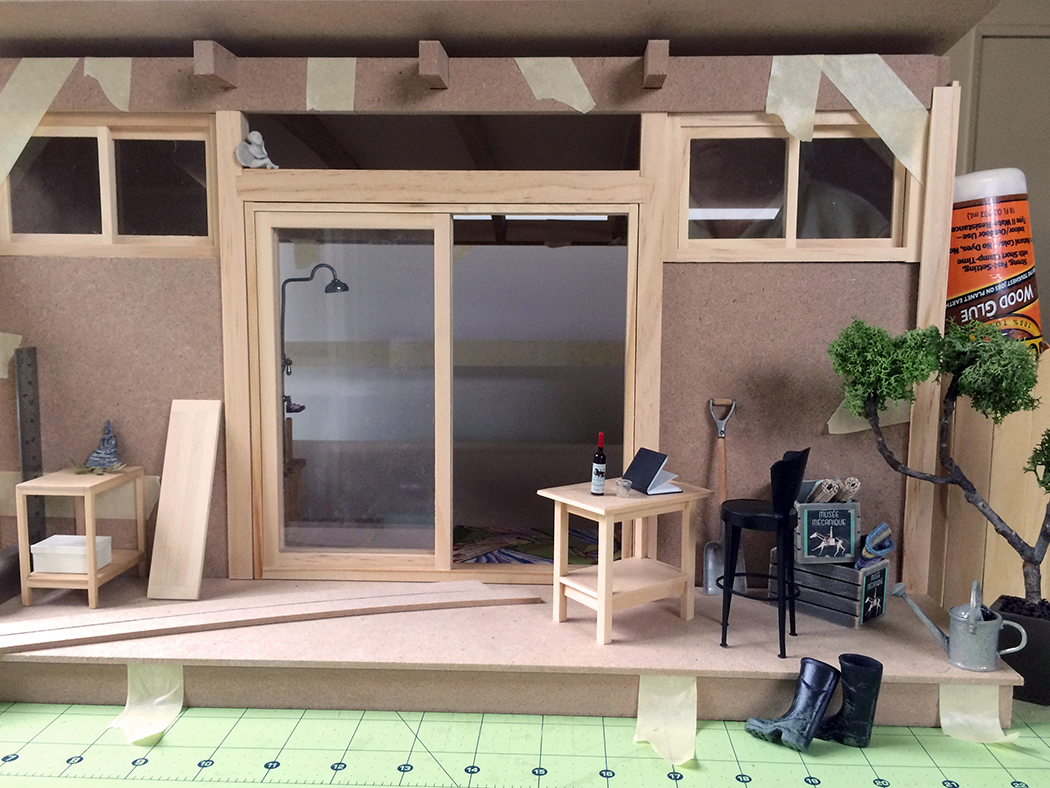
Dry fit of the miniatures.com 2015 contest base kit

Dry fit of the HBS/miniatures.com 2015 contest base kit

Yay! Denise’s City Cottage Kit, the starting point for the HBS/miniatures.com 2015 building contest has arrived. Once again there’s an interesting roof line, and some solid other architectural details that invite interpretation. Here it is in dry-fit. No idea what it might become, but I’ve opened a fresh page in my notebook, and later will pour a glass of wine to help me listen and think.

I’ve 11 months to do so, as the submission deadline is 16 December, 2015. And because we can now submit our entries online, I expect I’ll be working up to the very last day, as my projects tend to expand to the maximum time allotted them.
Advice in the most unexpected manner

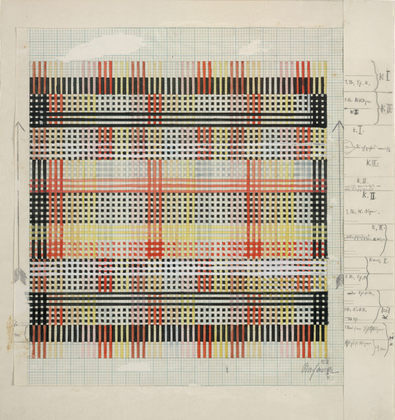
Anni Albers, MoMA
“Working material into the hand, learning by working it of its obedience and its resistance, its potency and its weakness, its charm and dullness. The material itself is full of suggestions for its use if we approach it unaggressively, receptively. It is a source of unending stimulation and advises us in a most unexpected manner.”

—Anni Albers, “Design Anonymous and Timeless,” Magazine of Art, 1947
From a piece by Sarah Jones on the Kaufmann Mercantile blog. The Josef and Anni Albers Foundation has more.
Image is Anni Albers’ Design for Tablecloth, 1930, from the MoMA

peacock rug complete

modern miniature peacock rug

After completing stitching and staring at it for a while, I trimmed the edges of the silk gauze to about a quarter-inch (6 mm).

modern miniature peacock rug

I washed and gently blotted it mostly dry, then pinned it into square(ish) and left it to dry overnight.

modern miniature peacock rug

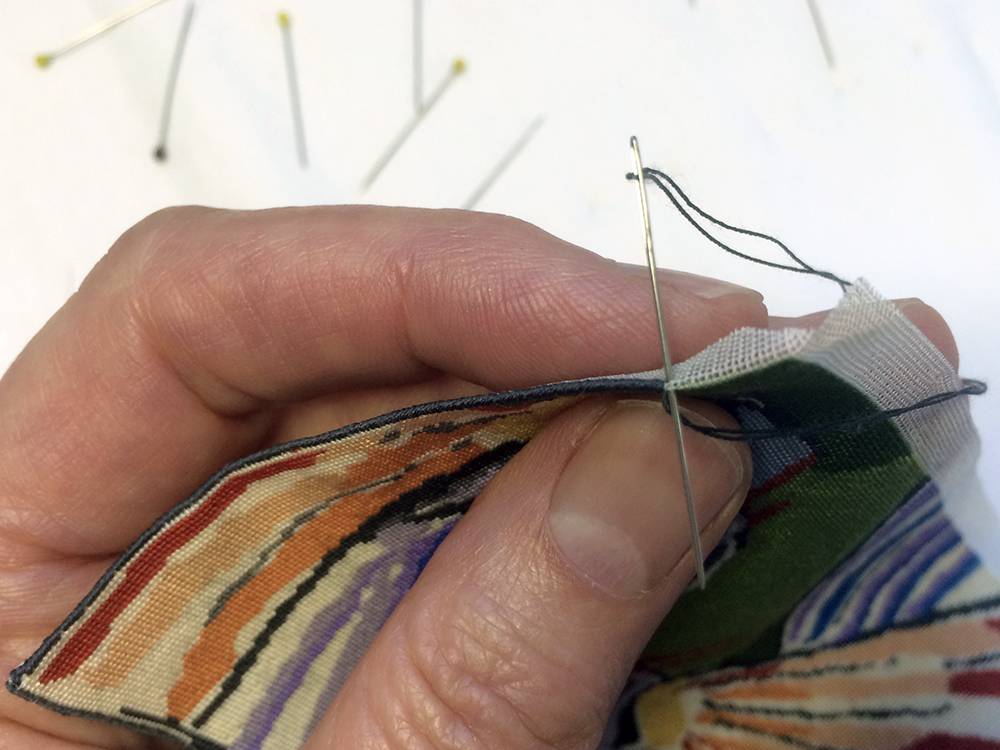
The raw edges are turned to the back, corners mitered, and the edge oversewn exactly one row of the 49-count silk gauze with a double strand of Gütermann silk. I pondered the binding color at length, and finally chose the darker gray.

modern miniatures peacock rug

This is what the back looks like, and shows the combination of tent, basketweave and snarled stitches. Mistakes were made. Many were corrected, but some were discovered too late. Kind of like life.

modern miniature peacock rug

I fused featherweight interfacing to the back, to protect and seal the raw edges. Note to self: dust your build floors more often!

modern miniatures peacock rug

And here’s the finished rug, inviting you in to the Sea House Pavilion for a cup of tea or a glass of wine. It’s a great place to watch the storm blow in.

in no particular order

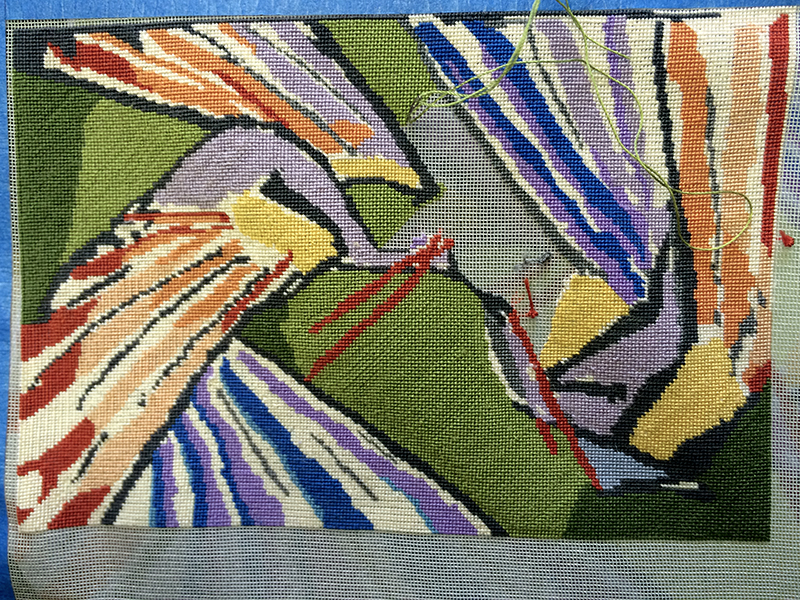
peacocks_120214Peacock rug getting there! Just the remaining green background left to stitch. Then blocking and binding.

(Finished size will be 4.625 x 3.125 inches (11.75 x 7.9 cm), 227 x 153 stitches, Gütermann silk on 49-count silk gauze, from a design by Roger Fry, as charted by Melinda Coss in Bloomsbury Needlepoint From the Tapestries at Charleston Farmhouse.)

Then I’ve been playing around with Kris Compas’s current tutorial for an upholstered parsons chair, using this great cotton stripe from a thrift store shirt. Other than (endless) work on the Peacock rug, I think this is the first miniature building I’ve done since I packed everything up to move in the summer. (The cording is made from three strands of DMC floss, and is more true to scale than using all six strands. In case you noticed.)

parsons_chair_120214

Penultimately, here is my first repeating pattern!

fish_seaweed_00

The color palette is a combination of hues drawn from photos of the ocean and from the persimmon tree in Soquel. The simplicity is perhaps underwhelming, but this represents hours and hours of work. Onward!

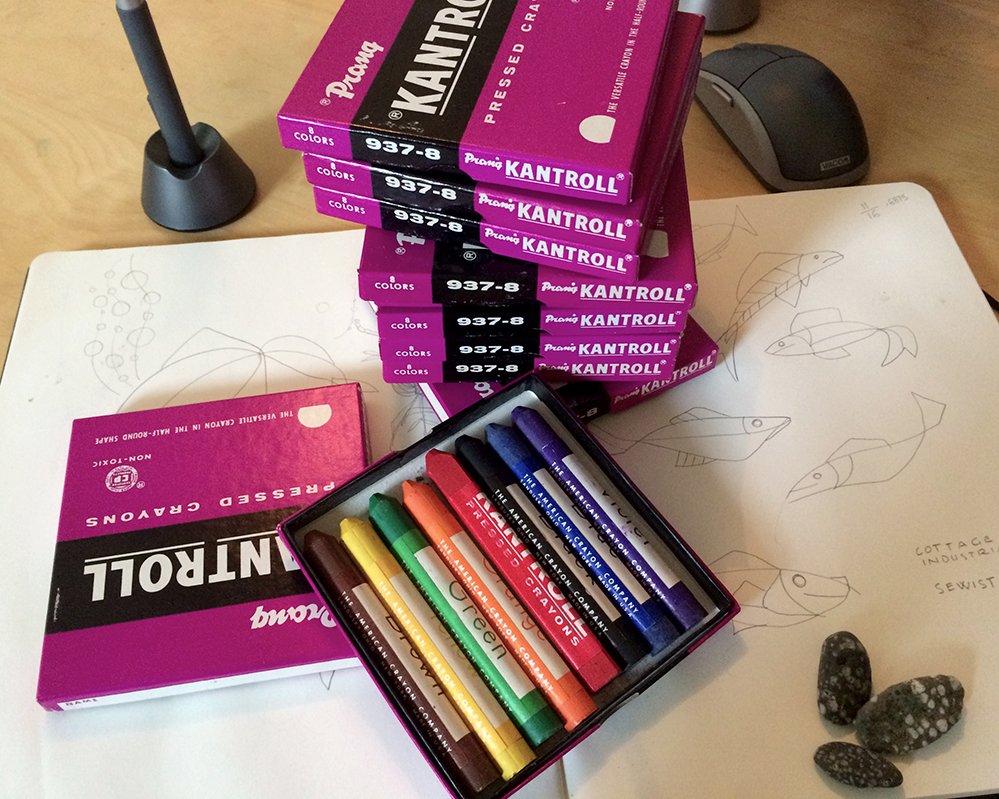
And finally, I did go back to the indie dollar store and buy up all the boxes of Prang KantRolls.

allthecrayons

Mostly because this:

crayons_120114

Prang

Prang_111914

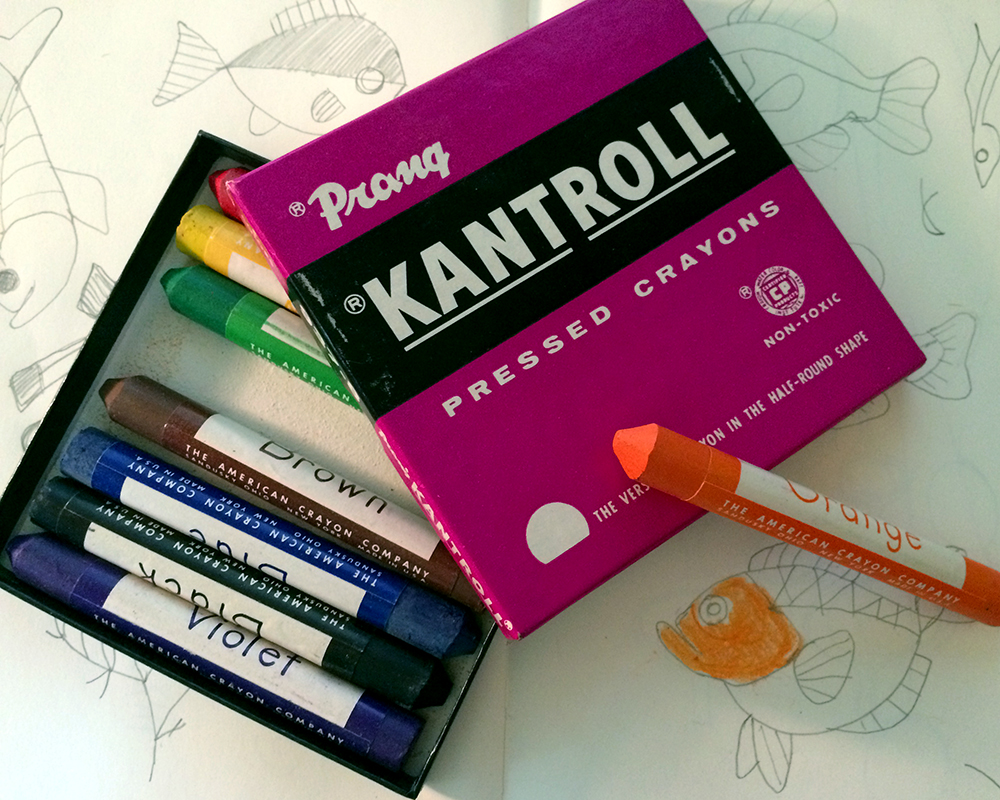
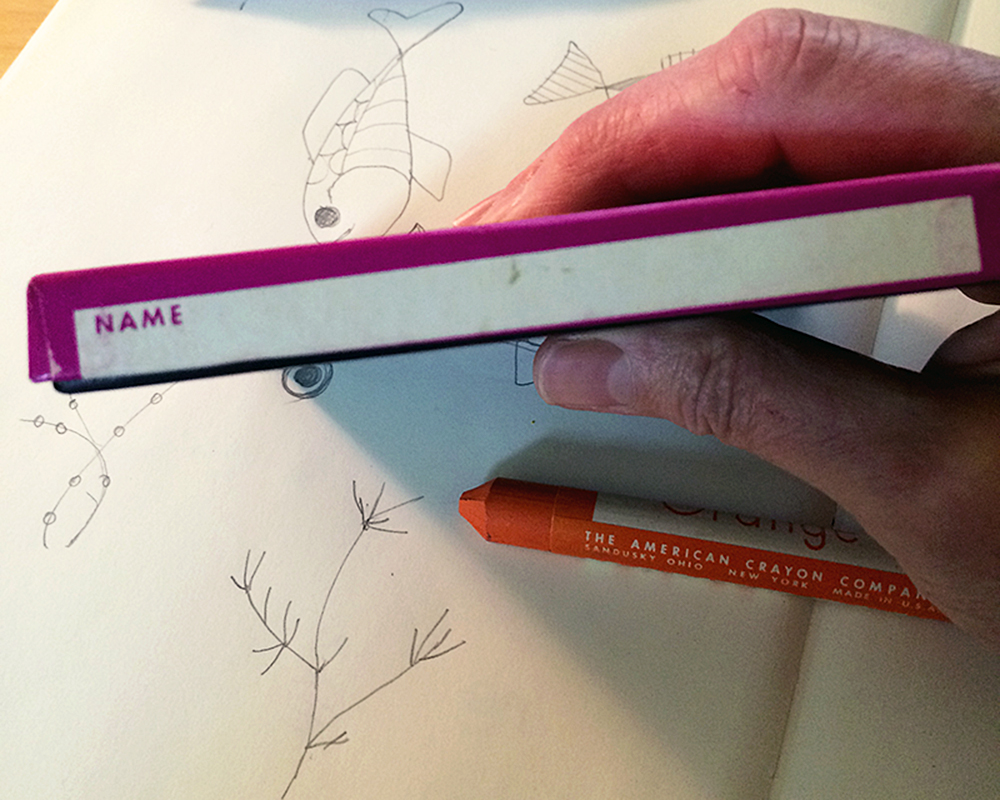
I was checking out our neighborhood indie dollar store for art supplies and found these ®KANTROLL pressed crayons. I’m pretty sure these were the same crayons we used in elementary school, and by the looks of them, they were probably manufactured waaaay back then, too.

NAME_111914

Possibly the best part is the space to write your name in on box.

Think I need to go back and buy up all of them.

Show your work

I am learning a new thing: surface pattern design. Been taking classes, collecting reference, using my photography for color palettes, and most importantly, drawing. Trying to discover my signature style.

Seaweedery

Seaweedery

I am using the ocean as the theme for my first attempts because, of course I am.

Having fun with fishes:

One fish, two fish, star fish, wheel of fortune

One fish, two fish, star fish, flower, wheel of fortune, kiss kiss kiss

and obsessing over color. Feels good to have a direction after floundering around for what feels like far too long.

it’s that time (again)

Yes. We are moving. Well, actually, packing in preparation for moving.

Yes. We are moving. Well, actually, packing in preparation for moving.

About an hour and a half up the coast, to Pacifica. Very excited for new beginnings, very sad to depart the Soquel hills and the superior Santa Cruz County climate.

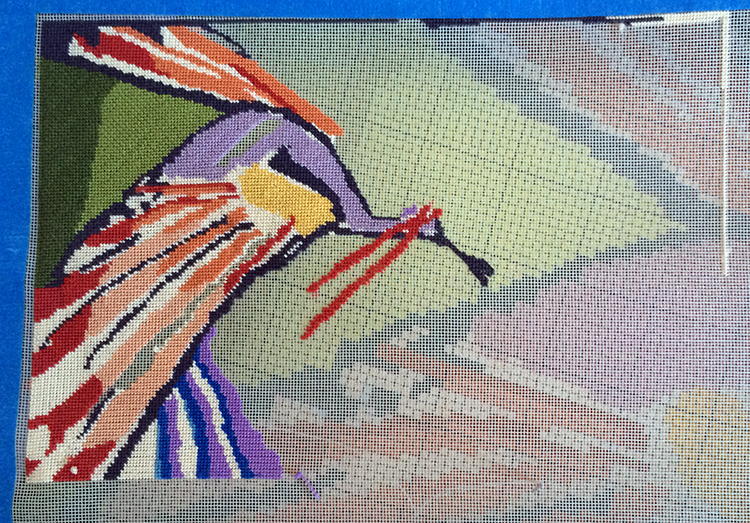
Finding a new house (oh, and working) is why I’ve not been doing any building the last few months. But I have been stitching — sometimes late or in the middle of the night — on the Animals rug, and a new, smaller rug project: Peacock.

Peacock, designed by Roger Bell in 1913–14.

Peacock, designed by Roger Bell in 1913–14.

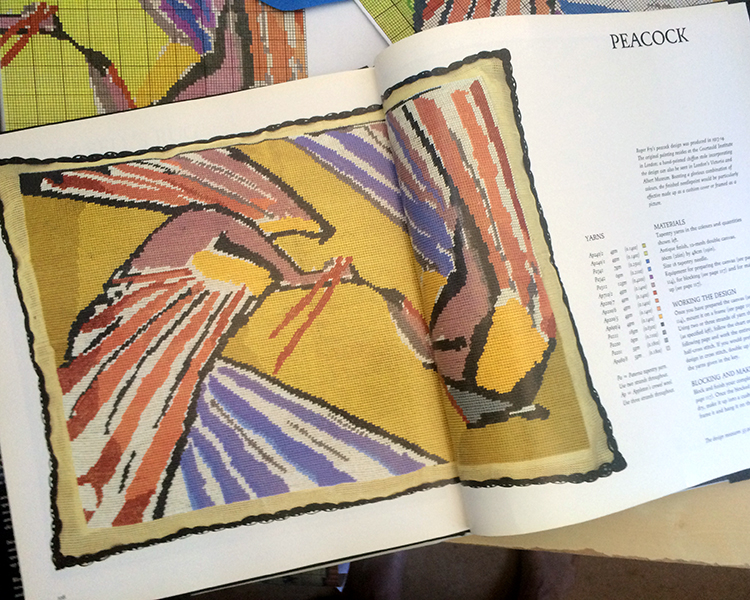
I came across this remarkable book, Bloomsbury Needlepoint From the Tapestries at Charleston Farmhouse by Melinda Coss. It is both great art history and charts of designs by Duncan Grant, Roger Fry and Vanessa Bell.

You want this book.

You want this book.

Roger Fry’s original 1914 design was worked on 10-count double mesh canvas, and measured 22 xx 15 inches (55.9 x 38.1 cm).

Roger Fry’s original 1914 design was worked on 10-count double mesh canvas, and measured 22 x 15 inches (55.9 x 38.1 cm).

My version is on 49-count silk gauze with Gütermann silk, 227 x 153 stitches, 4.625 x 3.125 inches (11.75 x 7.9 cm). And although I wish Gütermann had more and better shades of greens and blues (especially), this piece gives me the comfort and focus I need right now. Thank you, tiny needlepoint!


Animals rug: carrying on

animals_061414-2

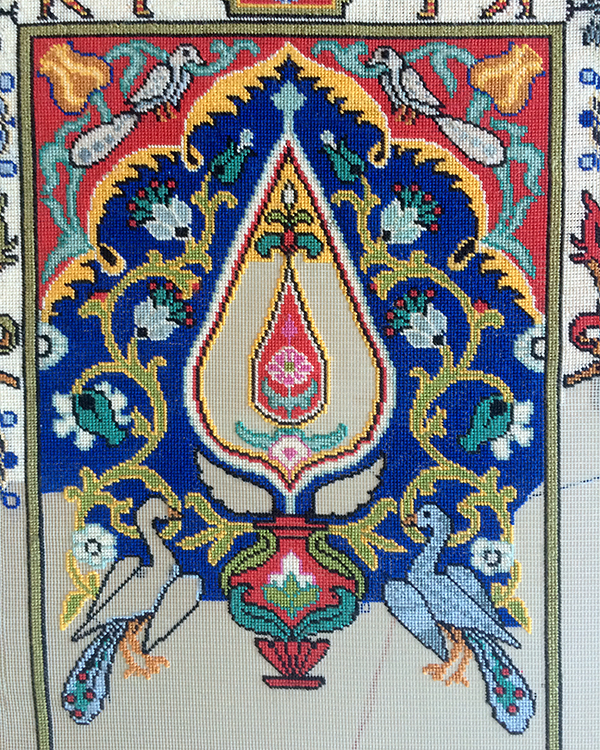
Things being what they are, the Animals rug is pretty much the only thing I’ve been working on, and I love it (still). It’s been made somewhat easier with my acquisition of a Needlework System 4 stand, which I also love. I had a personal best breakthrough when I managed to stitch an entire flying saucer-paisley motif correctly (main border, left middle). Compare to the other two, and you’ll see the, um, variations. There are three more to stitch, so we’ll see how that goes.

The area below the blue birds is about to get very interesting, as I work the swirly-jagged yellow border reversed at the bottom. I think the terminal flowers might appear behind the blue birds’ tails. After I get that border in, I’ll be able to determine what else will go in the background.

Here’s a closer view of the center panel:

animals_061414-1

I felt very clever using the flower colors on the big blue birds’ tails. There is a garland of small flowers in the center shape with a yellow background, and I’m undecided what colors to work them in, likewise with the wing-shaped leaves.

Details: 49-count silk gauze, 281 x 398 stitches — well now a bit more (5.75 x 8.125+ inches, 14.57 x 20.63+ cm); DMC cotton and Gütermann silk. Original design by Natalia Frank.