I got to take a behind-the-scenes tour at Letterman Digital Arts Center in the Presidio, and encountered the model of Count Olaf’s house used in the 2004 movie Lemony Snicket.

Count Olaf’s house movie prop, built at ILM
It randomly occupies half of a small lobby, and stands maybe seven feet (2.1 m) tall. It is fabulous. The sign says it took three months to build in the Industrial Light and Magic model shop, and another two weeks to light and film it on stage.
This is how it appears in the film:
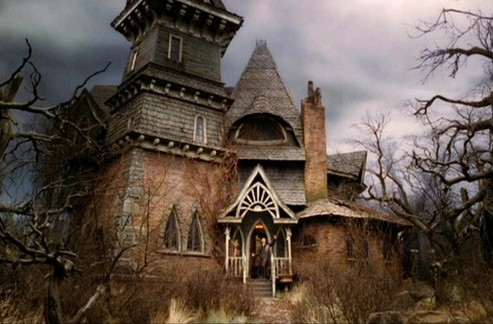
image from the Lemony Snicket wiki
Says the Lemony Snicket wiki:
The house is described as a dilapidated mess. The bricks are stained with soot and grime, the front door needs repainting (and contains a carving of an eye), and the entire building sags to one side. Rising above the house is a tall and dirty tower. In The Bad Beginning: Rare Edition, Lemony notes that his sister Kit has proposed that some of the eyes in Olaf’s house contain secret peepholes, cameras, or microscopic lenses.
Fittingly, they have let the model accumulate dust :)
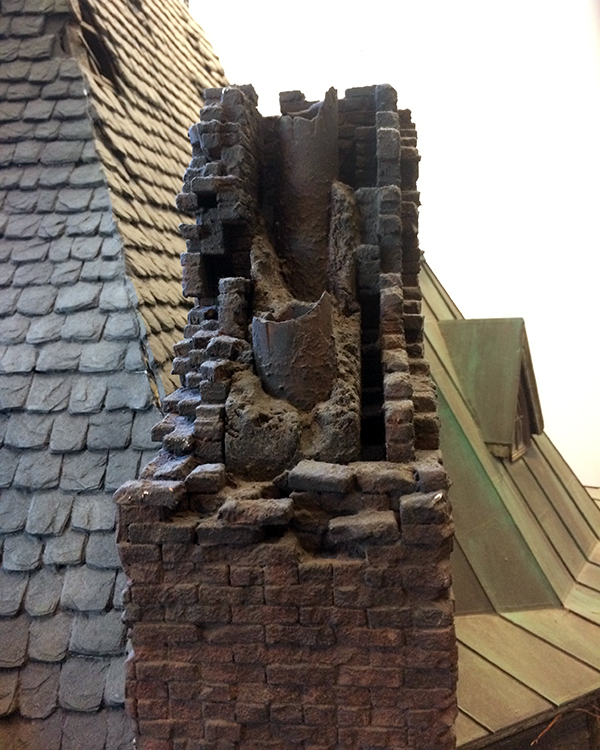
The ruined chimney:
A disheveled downspout, a course of eye motif blocks, and a great circular window with web panes. Looks like the model builders used bermuda grass roots or something similar for the dead vines creeping up all over the house. (Minus one point, though, for the not-in-scale tattered lace curtains :)

The front door (with reassembly notes :)

Here you can see the dust coat and teeny, tiny rivets. I was particularly taken with them.
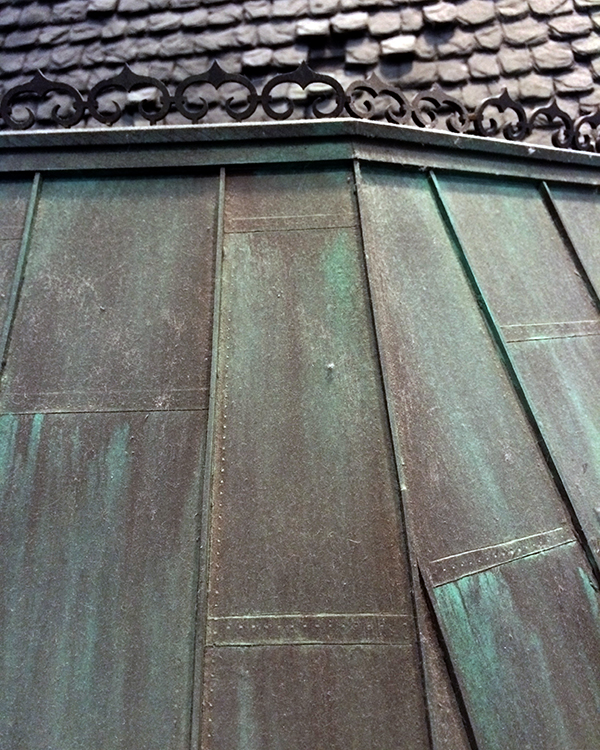
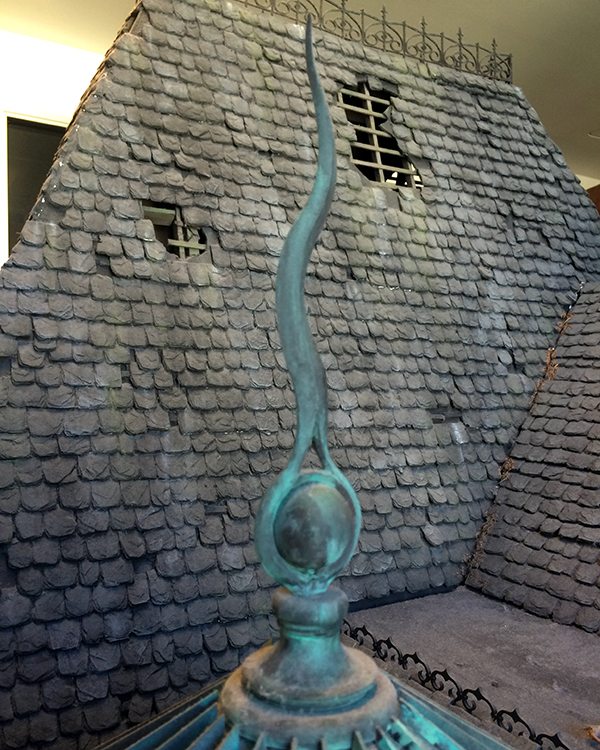
The inadequately-repaired drafty dome, with more rivets (and dust):

and its finial topper:
This is a particularly fine eye-paned window, and a closer look at the corbels. Such great distress and weathering.
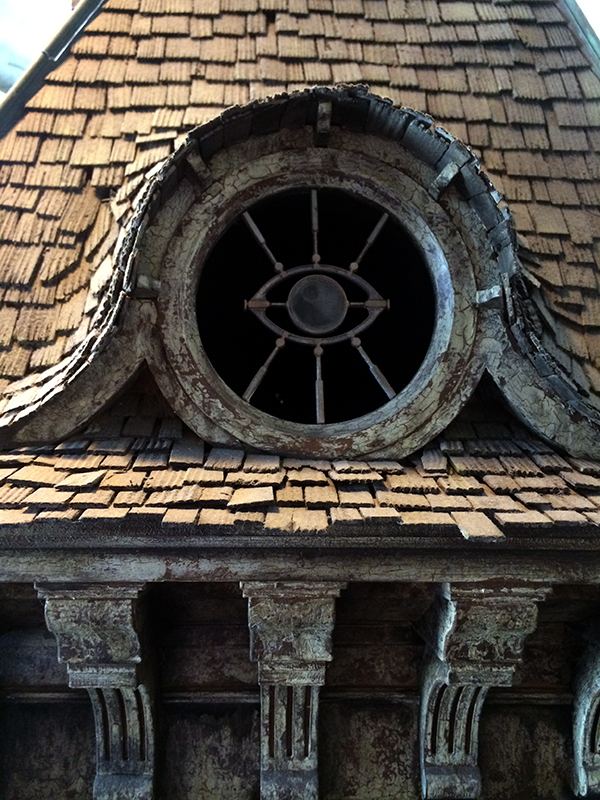
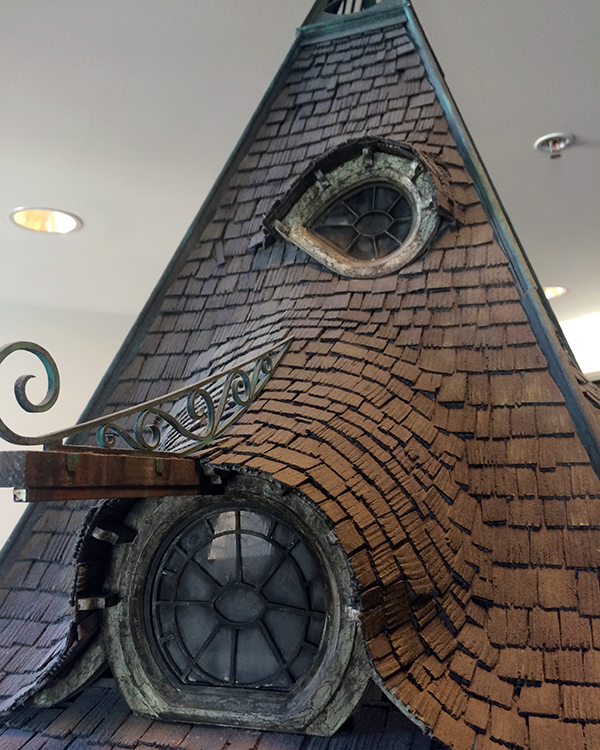
And finally, a closer look at some of the tower eye windows:

 nancyland.com