Sea House Warming Hut: The Living Roof grows

www.nancyland.com

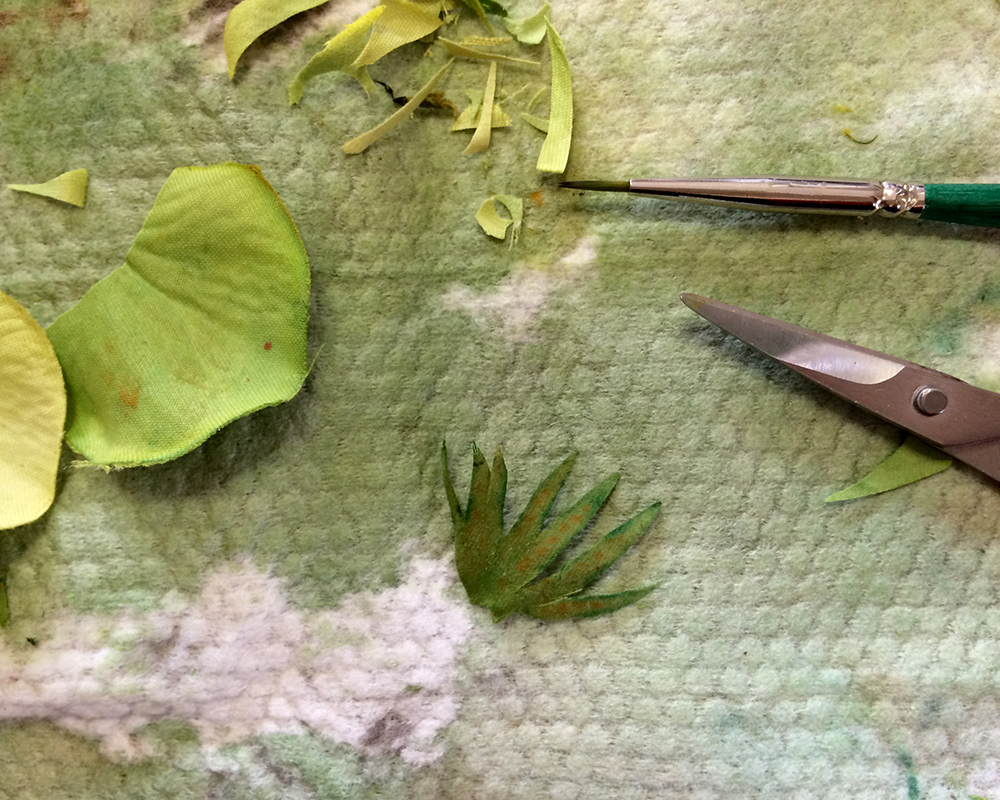
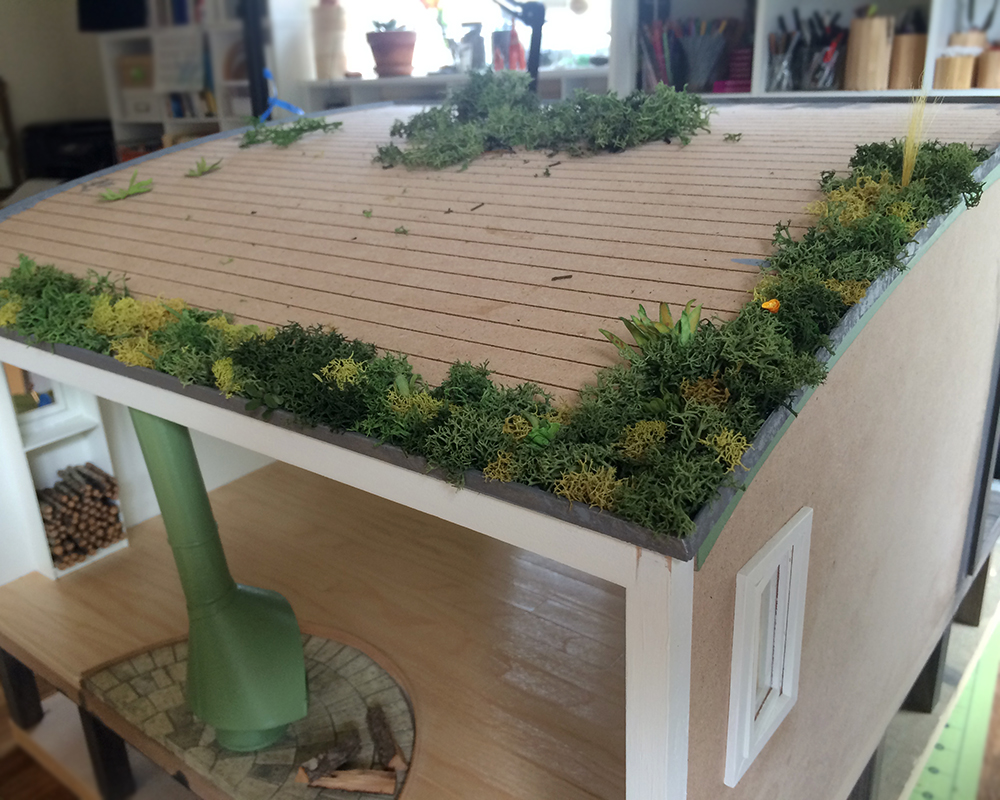
Preserved moss, painted cut silk succulents, a paper poppy, real thyme sprigs. Oh, and maybe a few tufts of dried grass. A lot of glue. Moss is sproingy.

www.nancyland.com

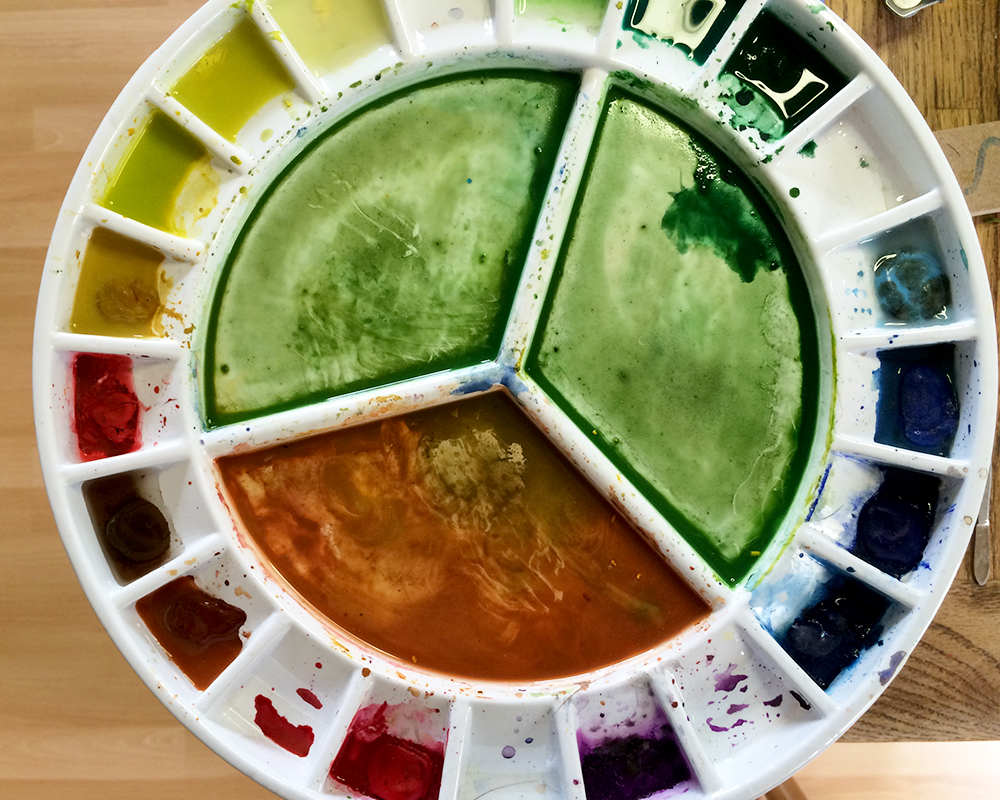
My palette of watercolors.

www.nancyland.com

Wee dotted faux succulent-type plant form. Still fooling around.

I seem to have used up most of my “good” moss clumps foliating the trees and bushes of the Sea House Pavilion, leaving mostly weird stems and sad tendrils. Not ideal for this roof.

Yay for 40% discount coupons at Michael’s.

I See Rocks

www.nancyland.com

The first batch of the Sea House Warming Hut air-dry clay boulders are nice and dry. Mid-week, I saw that a crack had developed in the largest one, and got the idea to fill it with a quartz vein. I have this lovely pearl white acrylic, and if I mix it with some wood glue and load it in a syringe, I think it will behave convincingly. I’ll wait until I model, paint and salt all the boulders, though.
www.nancyland.com

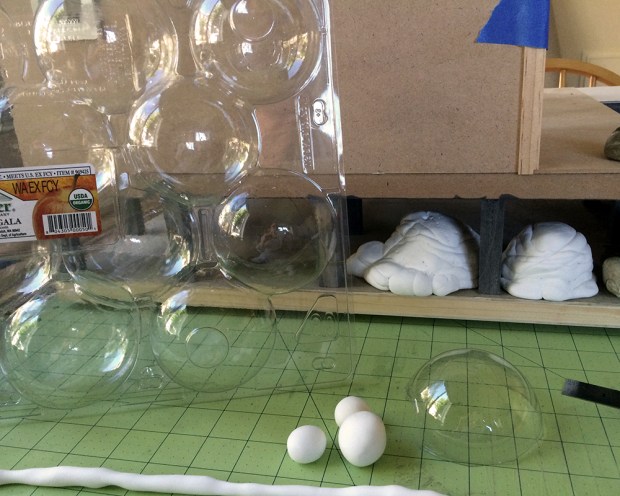
I know I’m not the only one to buy something because of the packaging. In this case, I had wanted to make domed skylights, and this container — of organic gala apples, no less — at the local big box store was ideal. Although the original project was sidelined, the cut-apart plastic is now making excellent bases for individual rocks. My landscape modeling compound of choice is Crayola Model Magic, and making the boulders hollow  saves a lot of cost.

The apples were very good, too.
www.nancyland.com

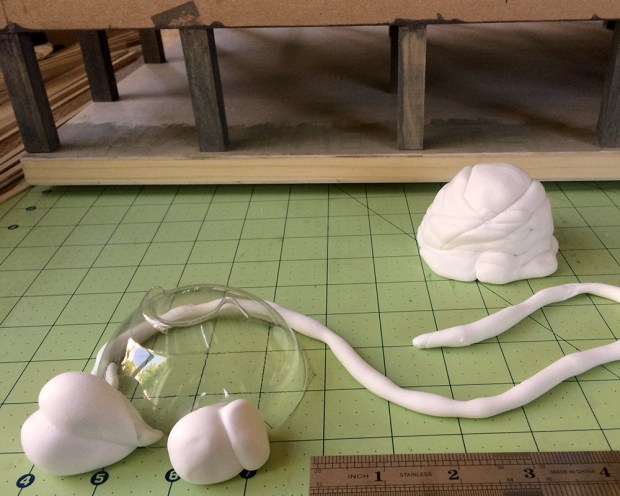
Here is an action shot of a boulder in the making, and my dual purpose small metal ruler.

www.nancyland.com

This is 8 ounces (226 g) worth of boulders and rocks — enough to populate the left side of the build. (You can also see my second-favorite multipurpose modeling tool: a silicone wine stopper.) I’ll let these guys dry for a day, then paint a first coat with the same taupe wash. I want to do the additional glazing and salt crystal sprinkling to all of the rock foundation at the same time. If all goes well this week, I’ll see time to continue my elemental play.

In other news, Christina, the winner of the Denise’s City Cottage kit provided by HBS/miniatures.com giveaway, contacted me and it’s on the way to her. Hopefully she’ll post about her build, too. I’m really enjoying seeing so many approaches, and as always, learning tonnes.

PS: I was FaceTiming with my two-year-old granddaughter, showing her the rocks I made from clay and the rest of the build-in-progress. She was listening and studying the screen very intently, then announced, “I want to go there.” Best appreciation ever.
Warming Hut Rockscaping

www.nancyland.com

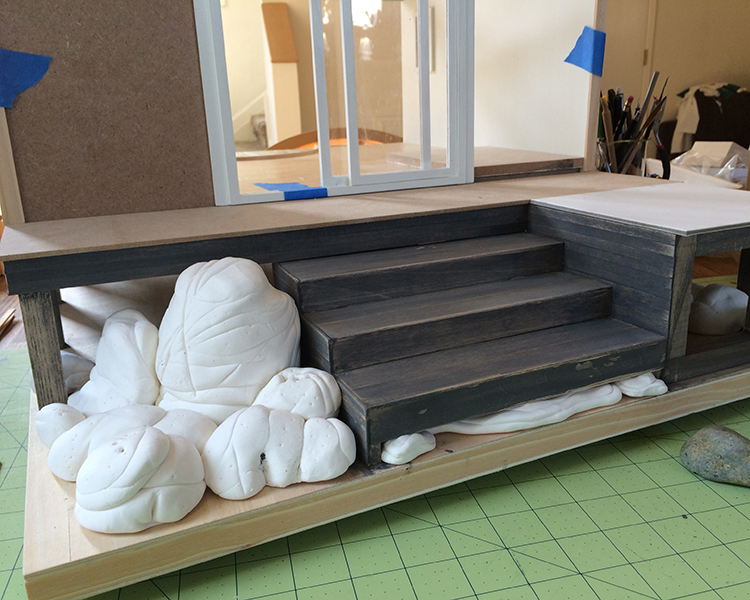
I’m using air dry clay to sculpt the boulders that populate the Warming Hut foundation. For the largest one I used a small tin and a plastic cup as a base, then coiled unevenly-rolled lengths of clay around it.

www.nancyland.com

I made certain decisions about the type of rock I wanted to see, then used my hands, a small metal ruler and a ball point stylus to make like the earth, wind, water and all the other magics of geology.

www.nancyland.com

This is my model rock for style and color.

www.nancyland.com

Even though the clay’s just one day dry, I’ve put the first coat of acrylic glaze on. There are a lot of rocks to build and paint. Most of them will fit under the foundation, as if the posts have been drilled and set into them, so the painting part will be a wee bit tricksy. (That was part of my conundrum of when best to glue or not to glue the hut in place.)

www.nancyland.com

The gaps between the boulders will be filled with beach gravel and tiny pebbles (from my prized collection), with some driftwood logs wedged in here and there, and small bits of greenery.

Warming Hut Paint Prep

Warming Hut nancyland.com

There are many, many sides of many windows that must be masked, with many small strips of masking tape. But still, the paint will leak.

With 90 percent honesty, prepping and painting miniature woodwork is as tedious as prepping and painting their full-size counterparts. For the Sea House Warming Hut, I considered staining all the trim — a mildly less tedious process — using the same Minwax Classic Gray that the exterior cladding will be. Instead, I opted to paint a semigloss “Simply White” for contrast. My impatient paint application suggests the multiple paint layers slapped on over the years in an effort to preserve coastal buildings from salty corrosion.

And so I carry on, striving for both mindfulness in the process and the satisfaction that only sanding with tiny squares of 600-grit paper can bring.

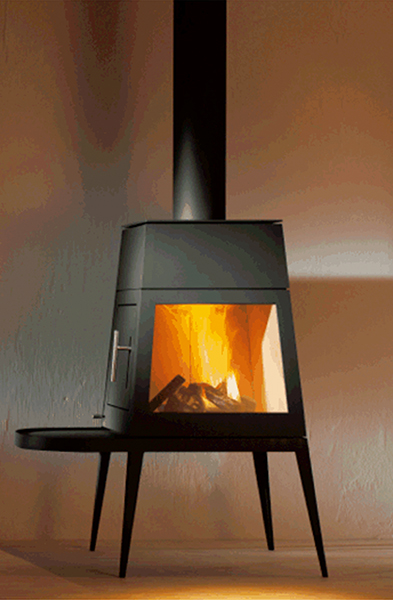
Through the unpainted window above you can see the Chrysnbon kit stove I assembled and painted like 300 different colors before returning to matte black, that will heat the hut. Still unsure if I’ll use it. I’m rather taken with this modern “Shaker” stove, designed by Antonio Citterio with Toan Nguyen in 2006. I think it would translate to 1:12 scale beautifully, and be fun to build.

Shaker wood burning stove/fireplace, designed by Antonio Citterio with Toan Nguyen. Beauty.

Shaker wood burning stove/fireplace, designed by Antonio Citterio with Toan Nguyen. Beauty.

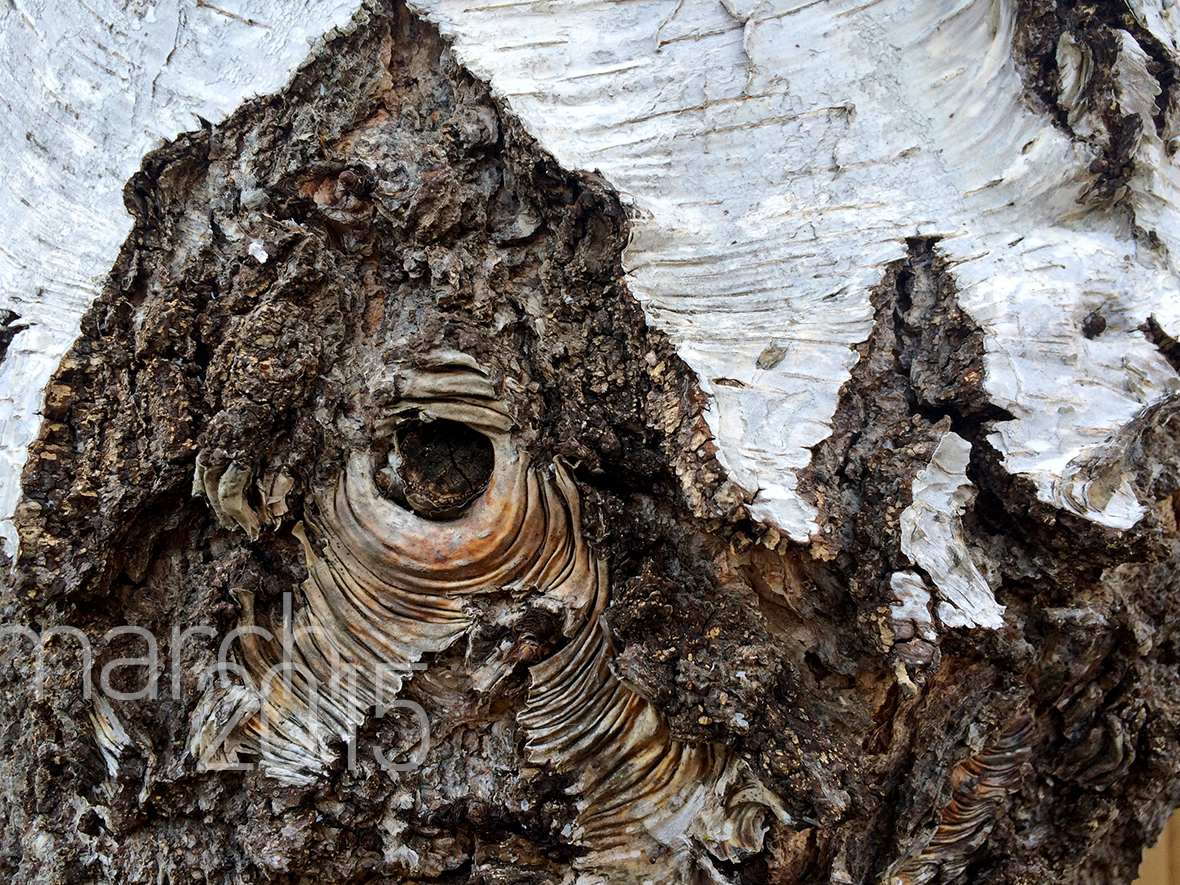
Finally, this is the unobscured featured image for March on this site’s landing page. It’s a birch tree in Soquel, California that wants to see you.

nancyland.com march 2015 header

Until next time, when the paint is dry, and ready to be sanded, then painted. And sanded.

Rafters and Stonework

modern miniatures, Sea House Warming Hut

Sand. Paint. Wait. Sand. Paint. Wait. Sand. Paint. Wait.

Got the first and second coats of paint on the rafters. I’m going to glue it up, then put a third coat on the whole assembly. And yes, it’s the same green (MSL 106 Rhododendron Leaf) used on the Sea House Pavilion :)

The floor is going to be wide-plank salvaged wood from the original Pleasure Pier, inset with a circle of native-quarried stone for the vintage wood-burning stove.

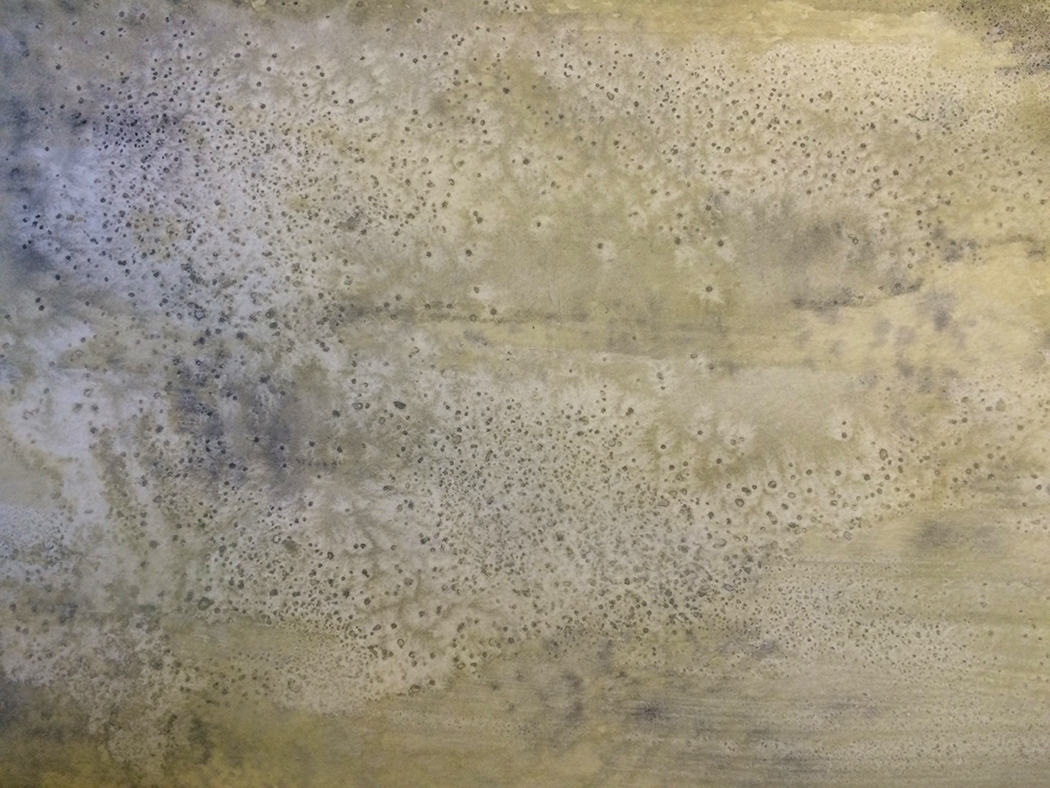
I painted several acrylic washes ( warm and green-gray, black, and “sand”) on 140 lb. watercolor paper and while still wet, sprinkled it with sea salt. Science magic!

modern miniatures, Sea House warming Hut, stone

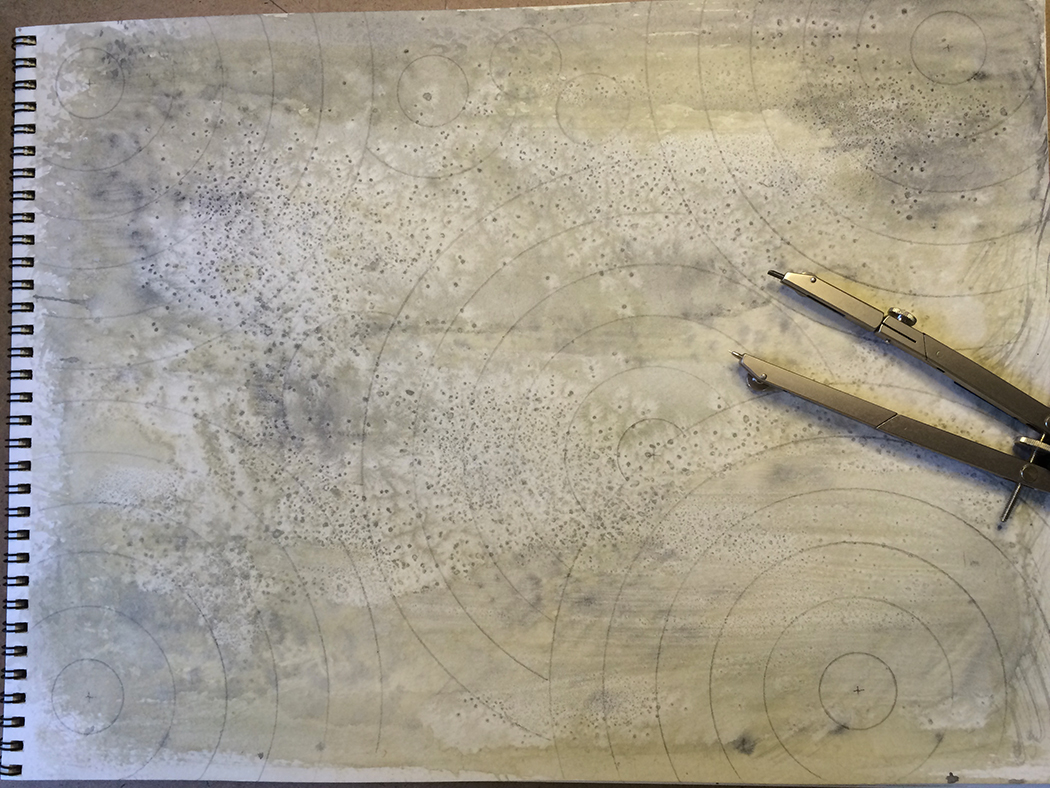
When it was dry, I brushed the salt crystals off, and drew concentric circles the diameter of the surround.

modern miniatures, Sea House Warming Hut, painting stone texture

And cut them out. With scissors.

modern miniatures, Sea House Warming Hut, making stone tile

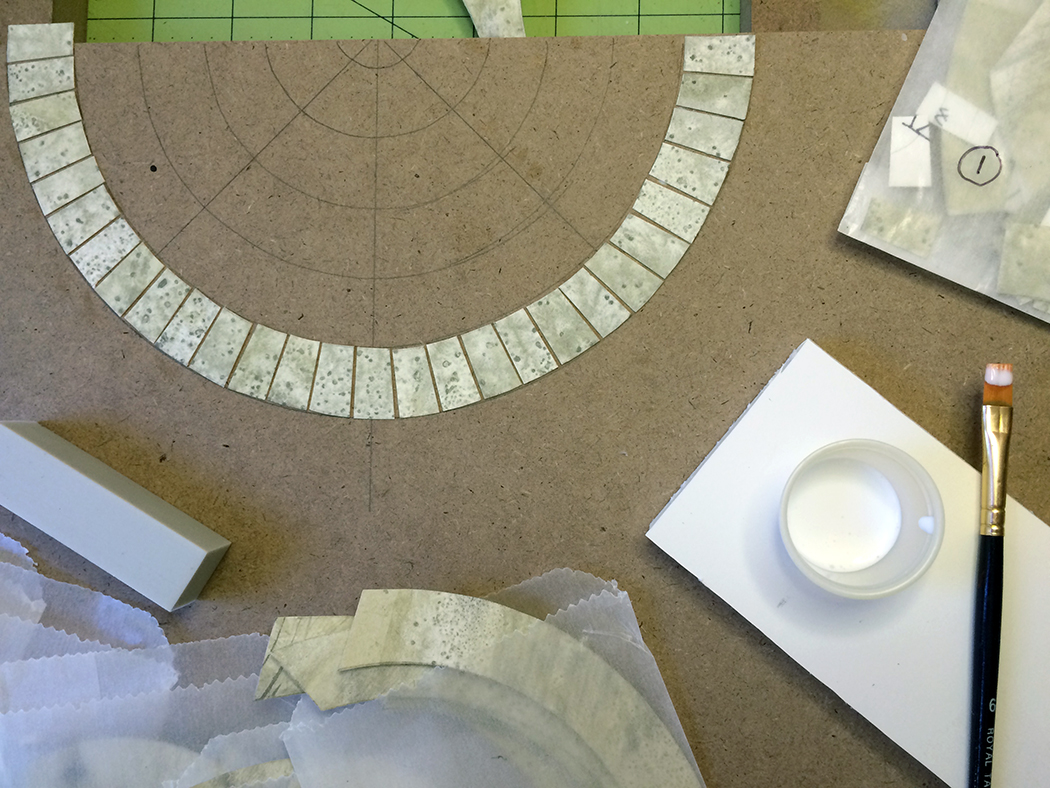
I cut individual tiles to fit the area and glued them down.

modern miniatures, Sea House Warming Hut, stone tiles

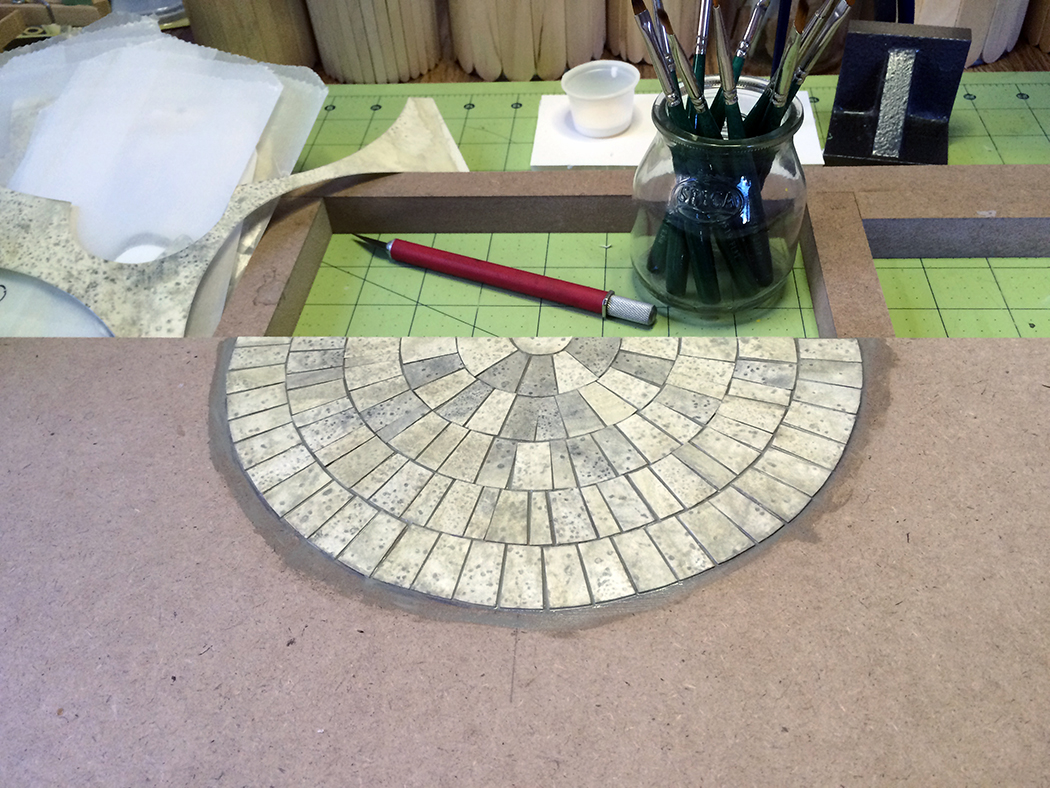
I “mortared”with a medium gray acrylic glaze. When that dries, I’ll give a coat or two of matte varnish.

Sea House Warming Hut, modern miniatures, faux stone tile

Next: wood plank flooring.

in no particular order

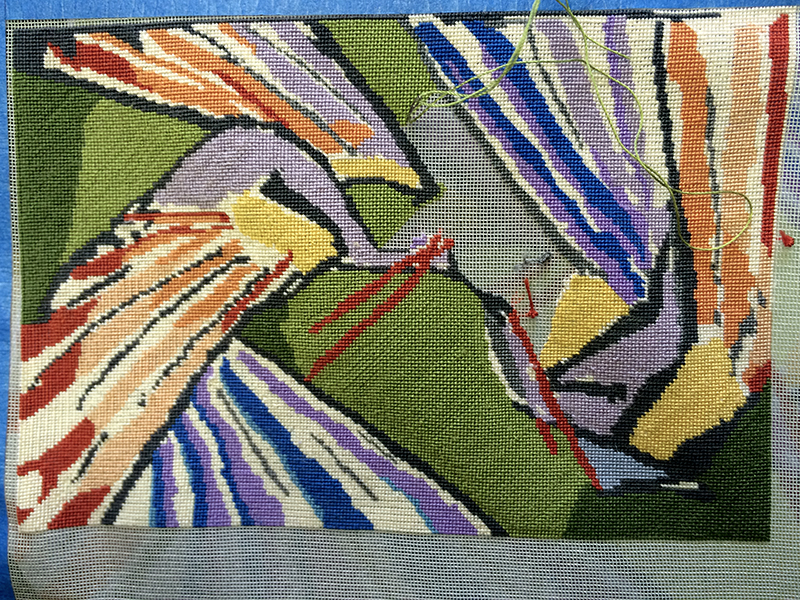
peacocks_120214Peacock rug getting there! Just the remaining green background left to stitch. Then blocking and binding.

(Finished size will be 4.625 x 3.125 inches (11.75 x 7.9 cm), 227 x 153 stitches, Gütermann silk on 49-count silk gauze, from a design by Roger Fry, as charted by Melinda Coss in Bloomsbury Needlepoint From the Tapestries at Charleston Farmhouse.)

Then I’ve been playing around with Kris Compas’s current tutorial for an upholstered parsons chair, using this great cotton stripe from a thrift store shirt. Other than (endless) work on the Peacock rug, I think this is the first miniature building I’ve done since I packed everything up to move in the summer. (The cording is made from three strands of DMC floss, and is more true to scale than using all six strands. In case you noticed.)

parsons_chair_120214

Penultimately, here is my first repeating pattern!

fish_seaweed_00

The color palette is a combination of hues drawn from photos of the ocean and from the persimmon tree in Soquel. The simplicity is perhaps underwhelming, but this represents hours and hours of work. Onward!

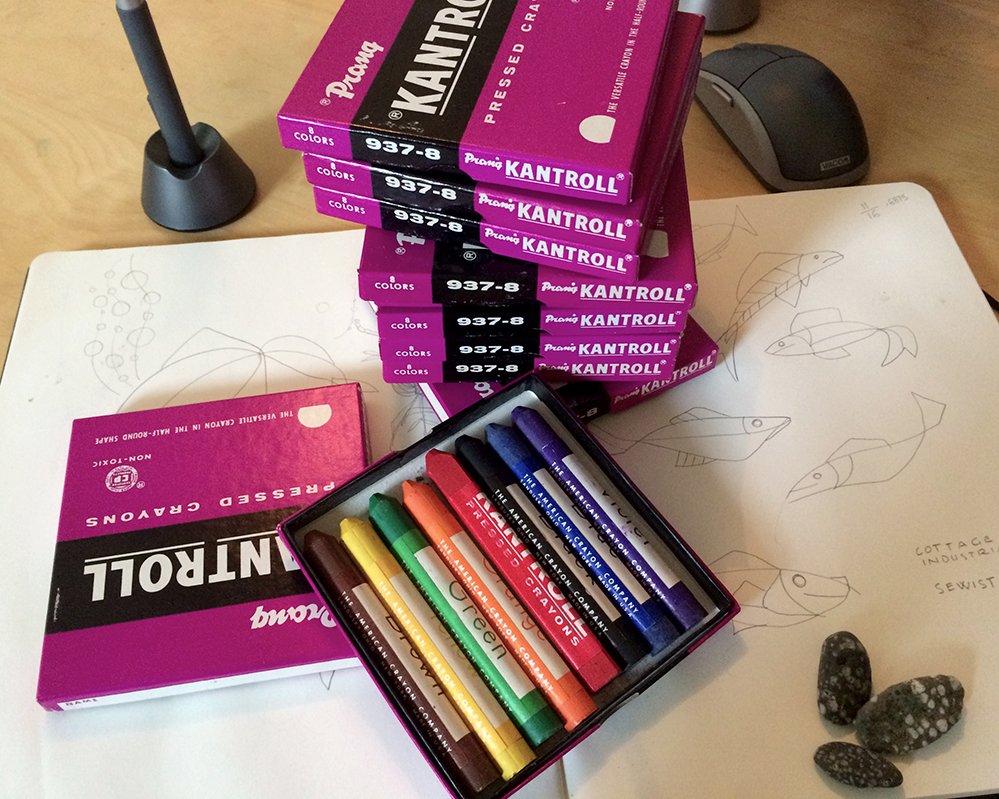
And finally, I did go back to the indie dollar store and buy up all the boxes of Prang KantRolls.

allthecrayons

Mostly because this:

crayons_120114

Prang

Prang_111914

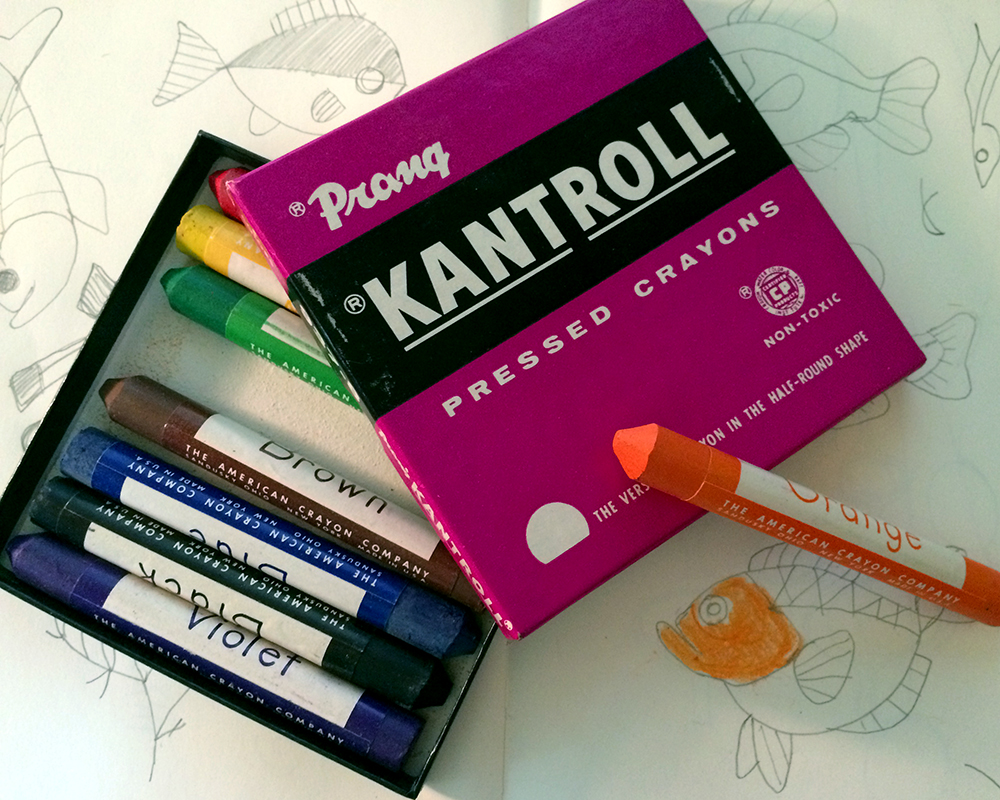
I was checking out our neighborhood indie dollar store for art supplies and found these ®KANTROLL pressed crayons. I’m pretty sure these were the same crayons we used in elementary school, and by the looks of them, they were probably manufactured waaaay back then, too.

NAME_111914

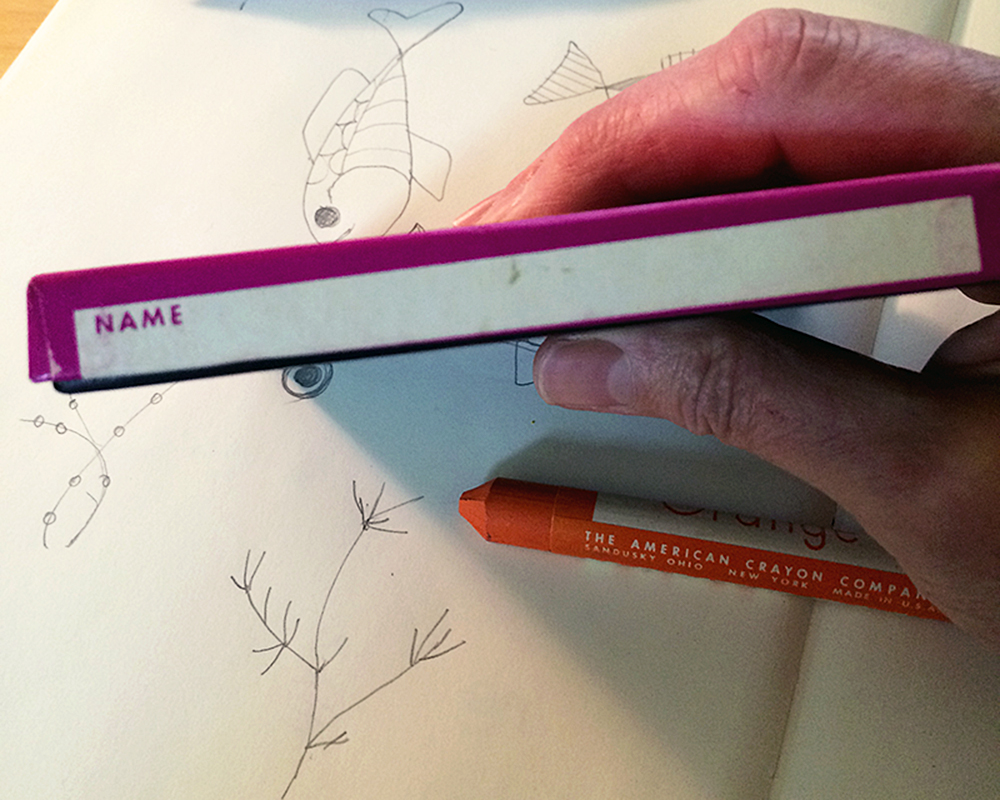
Possibly the best part is the space to write your name in on box.

Think I need to go back and buy up all of them.